
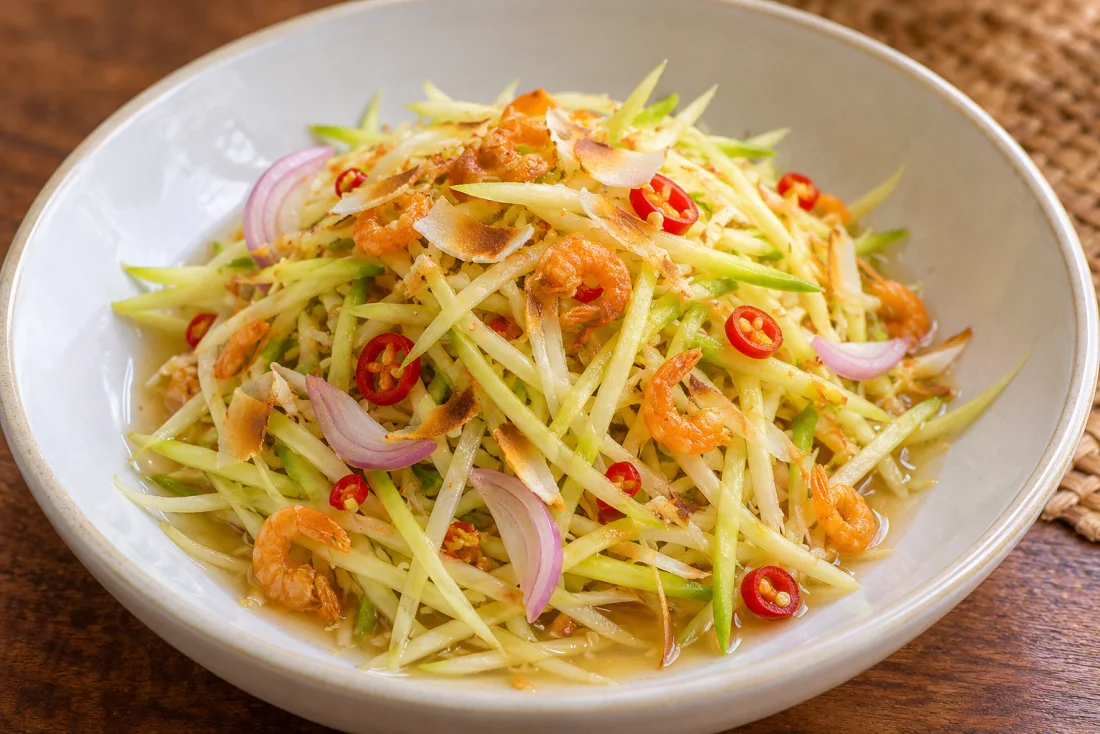

 dried shrimp
 fish sauce
Green mango in a Thai yam salad
Yam mamuang uses firm, unripe mango instead of ripe dessert fruit. Shredded mango is mixed with a hot, sweet-salty dressing. It is served as a salad or alongside rice and fish. Southern kitchens can use intensely sour local mamuang bao, with ingredients varying by place and cook.
Sour mango, shallots, dried shrimp and fish sauce
Green mango gives the dish crunch and acidity. Shallot and fresh chilli are cut fine. Fish sauce and palm sugar season the dressing, and the amount of lime depends on how sour the fruit is. Dried shrimp, fried shrimp or young ginger appear in documented recipes.
Slicing fruit and dressing at the last minute
Cut the green mango into fine shreds or slices. Mix the dressing separately, taste the fruit and adjust the lime if needed. Toss with shallot, chilli and dried shrimp just before serving. Add fried fish, shrimp or nuts near the end to keep them crisp.
Bright fruit acidity, crisp strips and savoury shrimp
The mango brings bright fruit acidity and a crisp bite. Chilli and shallot bring heat, softened by palm sugar and savoury fish sauce. Dried or fried shrimp contributes a salty seafood note. A version with ginger or crispy fish adds another layer of fragrance or texture.
Dried shrimp, crispy fish and sweet fish sauce
Some versions use dried shrimp, while others add fried fish or nuts. A sweet fish sauce version has a thicker, sweeter dressing. Green mango has a distinct fruit acidity compared with green papaya. It can be served as a salad or as a garnish beside cooked fish.
Allergens in dried shrimp, dressing and toppings
The reference uses shrimp and fish sauce. Shrimp paste, crispy fish, cashews or peanuts may be used in other versions. A mixed dressing can contain seafood that is not visible. Ask about the dressing, toppings and any shared mortar, bowls or spoons.
If you have a food allergy, tell the restaurant before ordering and ask about ingredients, sauces and shared cooking equipment.