

 fish sauce
What the Thai menu name means
Yam means a dressed salad and taeng kwa is cucumber. Use thin slices, strips or thicker chunks. A pounded tam taeng and a vinegar-based cucumber relish can be different dishes. The general salad name leaves the dressing and additions open.
A side for everyday meals
Thai recipes include a simple cucumber, shallot and lime dressing and a home version with finely ground dried shrimp. Other cooks add cooked shrimp or pork. Cucumber salad can sit alongside grilled fish, fried chicken or rice. The published versions do not identify a single birthplace.
Cucumber, shallot, chili and lime
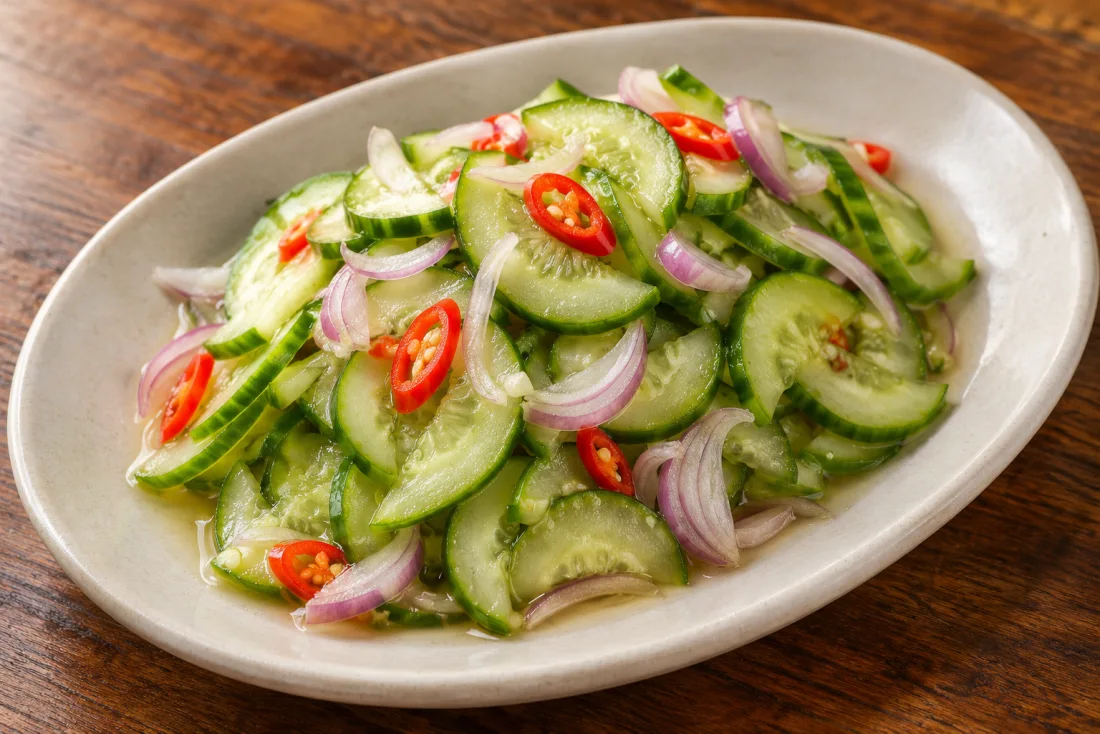
A fresh version uses cucumber, shallot, chili, coriander, lime, fish sauce and palm sugar. A published preparation also uses black pepper, vinegar and a little oil. Dried shrimp, peanuts or cooked shrimp can change the flavor and texture, according to the recipe.
Wash, drain and dress at serving
Wash cucumber and trim it. Leave tender skin or remove soft seeds as desired. Drain thin slices before tossing. Mix lime, sugar, fish sauce and fresh chili separately, then fold in cucumber and shallot. Add herbs close to serving. Any added shrimp or pork should be cooked through.
Juicy crunch and a late chili warmth
Cucumber starts cool and crisp, then lime brings acidity and fish sauce a mild salty finish. Chili registers later. Shallots and fresh herbs add a sharp, fresh aroma. Thick pieces show more crunch, while thin ones take up more dressing.
Allergens in dressings and garnishes
Fish sauce contains fish. Dried shrimp, shrimp and shrimp paste are crustaceans. Peanuts can be a garnish, and premixed sauces may contain soy, wheat or oyster. Ask about the dressing and tools even when no seafood is visible. People avoiding animal products should ask about fish sauce and shrimp ingredients.
If you have a food allergy, tell the restaurant before ordering and ask about ingredients, sauces and shared cooking equipment.