
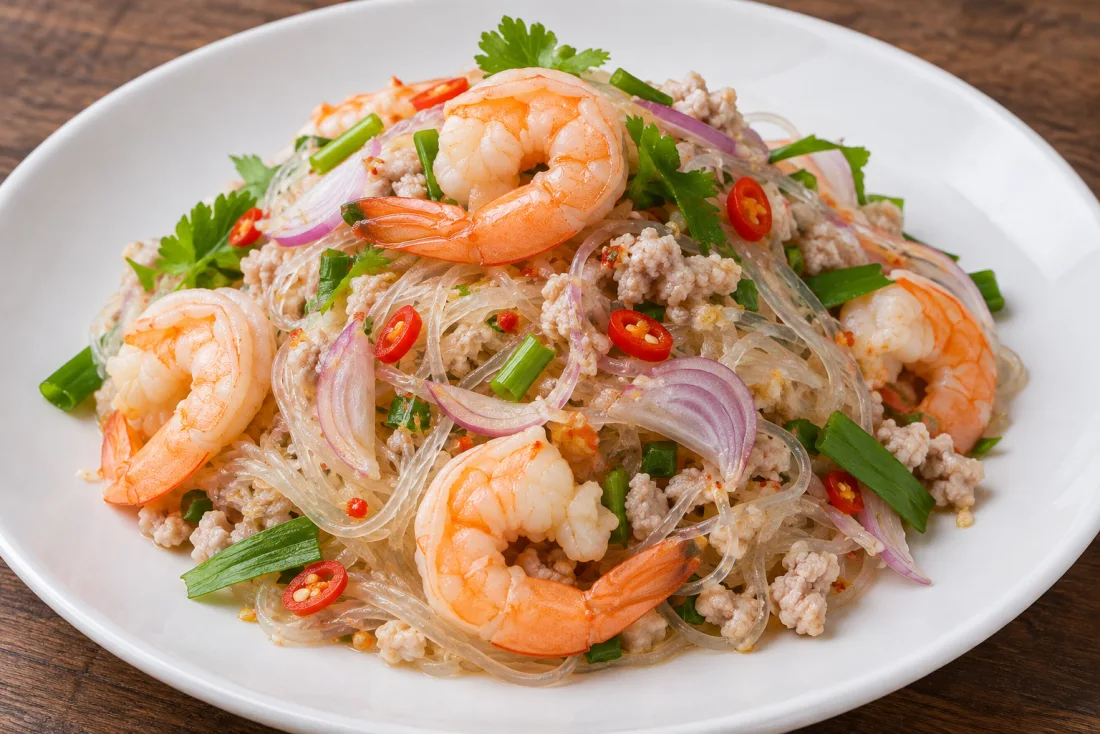

 prawn
 minced pork
 fish sauce
The name and where it is served
Yam describes a dressed salad, and woon sen are glass noodles. Pailin Chongchitnant records a home version with prawns and pork. Phuket and Bangkok menus document other versions. These records show present-day servings without finding a single province of origin.
Glass noodles, protein and vegetables
A typical example uses fine mung bean noodles, prawns, pork, tomato, onion and Chinese celery. Lime, fish sauce, chillies and palm sugar form the dressing. Restaurants may offer pork, chicken or mixed seafood.
Why cook first and then dress it
The noodles and cooked proteins are drained and tossed with raw vegetables and lime dressing. It can arrive warm. Adding dressing shortly before serving helps the vegetables stay crisp and the strands springy.
Bright dressing and contrasting textures
Lime brings tartness, chilli brings heat and fish sauce adds savoury depth. Tomato adds juice, onion gives a fresh bite and celery contributes crunch. Taste a little of the dressed noodles before spooning up extra liquid.
Reading the menu and ordering variations
Talay indicates seafood. It may contain several species; images alone cannot identify them. The pounded, lime-forward dressing distinguishes the salad from pad woon sen with wok-fried egg and vegetables. Ask which protein and dressing the kitchen uses.
Allergens and shared strainers
Fish sauce contains fish, and shrimp is a crustacean. Mixed seafood may include molluscs or more fish. Ask about sauces, noodle ingredients, shared boiling water and strainers. Removing a prawn after mixing does not remove contact.
If you have a food allergy, tell the restaurant before ordering and ask about ingredients, sauces and shared cooking equipment.