
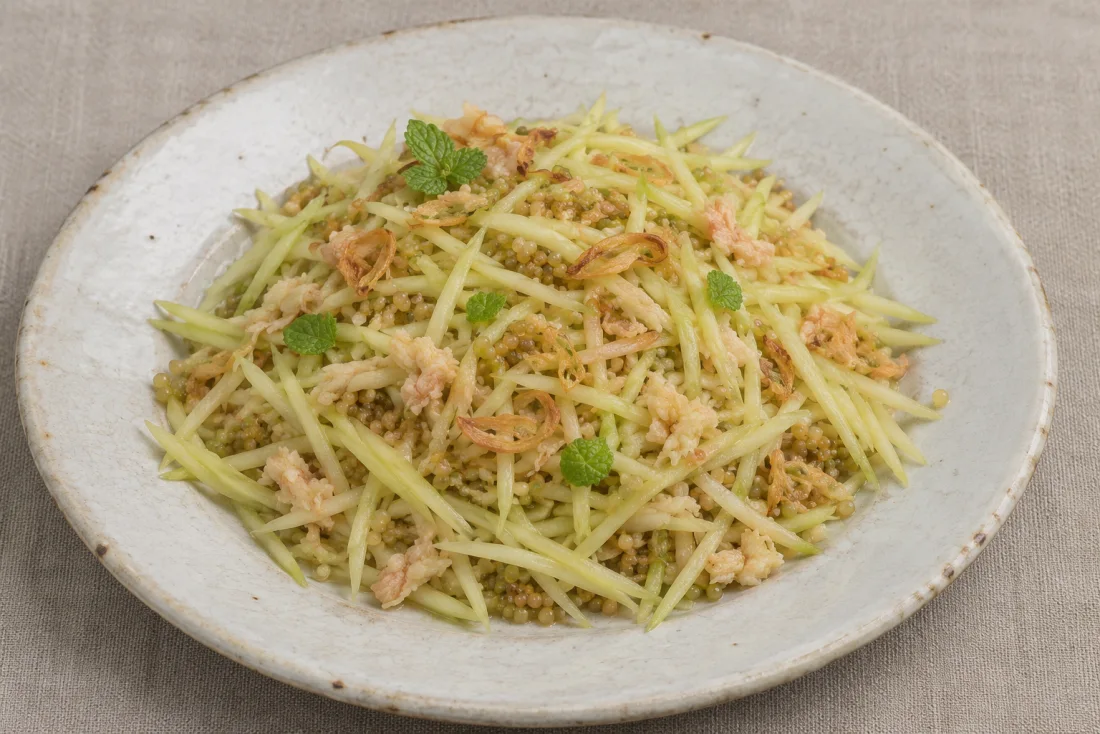

 shrimp
The name in the archive
ยำไข่แมงดา refers here to the eggs of a marine horseshoe crab, not to bird eggs or the roe of a finfish. The old entry records a specific salad with shrimp, green mango and mint. It does not establish that a species, batch or modern item is safe.
Composition recorded in the cookbook
The archival ingredient list describes roe, cooked shrimp, roasted shallot, unripe mango, mint and a roasted chili seasoning with lime, sugar and a savory condiment. This identifies the historical composition. The notes do not include toxicology results or reliable modern safety evidence. This entry does not offer preparation or sourcing instructions.
The flavor description in context
Mango and lime signal acidity; roasted aromatics and chili suggest a savory, roasted aspect. Mint is the fresh aromatic note in the record. The two illustrations show differing plates of those components. Appearance, smell or color cannot show whether the ingredients contain a toxin. Neither image shows an animal, shell or species markers.
Reading meal records and health records together
Thai food records preserve the name, while Chon Buri Hospital and other authorities record poisoning after consumption. Both records belong in a historical account. Neither the name on a menu nor the way a dish is presented demonstrates safe identification or testing.
Tetrodotoxin and emergency care
Thai clinical research identified tetrodotoxin and related compounds in toxic eggs. The toxin is heat-stable, so ordinary cooking does not remove the risk. Numbness, muscle weakness and difficulty breathing are reported. If symptoms suggest poisoning after horseshoe crab exposure, seek emergency medical care immediately and tell medical staff what was eaten.
Allergens are a separate issue
Shrimp is a crustacean allergen, and savory seasonings can contain fish or shrimp. Horseshoe crab is a marine arthropod distinct from poultry eggs and ordinary crab meat. Even a person with no seafood allergy can develop toxin poisoning. An ingredient list and a cooked appearance do not establish safety.
If you have a food allergy, tell the restaurant before ordering and ask about ingredients, sauces and shared cooking equipment.