
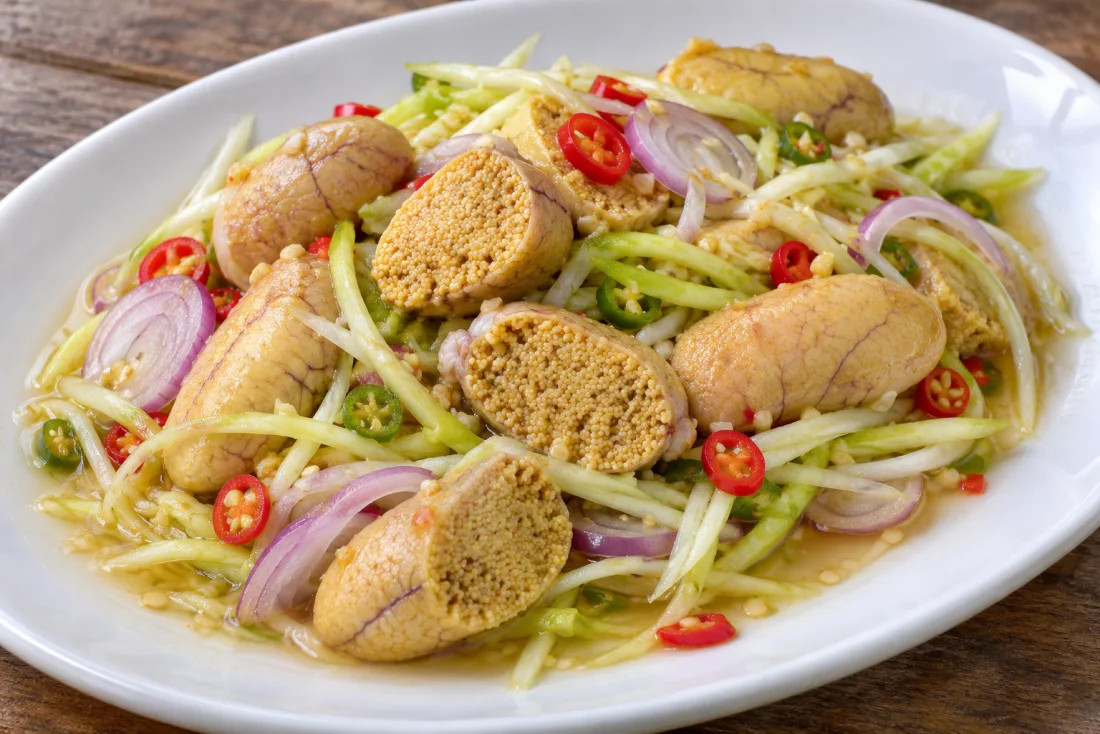

 steamed catfish roe
 traditional shrimp seasoning
Catfish roe in the menu name
Khai pla duk means catfish roe. It is roe from the fish, with dense fine eggs in pale sacs when steamed and cut. Mango shreds and shallot surround the pieces. This name specifies catfish but does not identify a precise species or the brand of dressing.
Thai cookbooks and today's tables
A historical Bangkok cookbook records steamed catfish roe with green mango, shallot and chili. A Thai culinary school also documents this pairing. Availability depends on the kitchen. Share with steamed rice or choose a version using another tart fruit when mango is unavailable.
Roe, green mango and savory seasoning
The older recipe uses cooked roe, green mango, shallot, bird's eye chili and nam khoei di, a traditional savory seasoning associated with small shrimp. Modern cooks may use fish sauce and lime. Cucumber with lime or other tart produce can replace mango. Ask about the kitchen's exact seasoning.
Cook the roe before mixing
Keep fresh roe properly chilled and steam it through the center. Use clean tools to cut the firm cooked sacs. Wash and cut fruit and shallots. Mix with the dressing at serving and handle gently. Citrus and salt cannot substitute for cooking, and cooked seafood must be stored appropriately.
Tender roe and crunchy sour fruit
Fine roe grains taste mildly savory, while green mango is crisp and tart. Shallots give a sweet sharpness, chili adds heat and the dressing extends savoriness. Thicker roe slices let the fish flavor stand out. Serve with rice to soften the dressing.
Allergens in roe and seasoning
Catfish roe contains fish, separate from poultry egg. Traditional shrimp seasoning or shrimp paste contains crustaceans, while fish sauce contains fish. Oyster is a mollusk. Ask about soy or wheat in mixed sauces and tools shared with seafood.
If you have a food allergy, tell the restaurant before ordering and ask about ingredients, sauces and shared cooking equipment.