
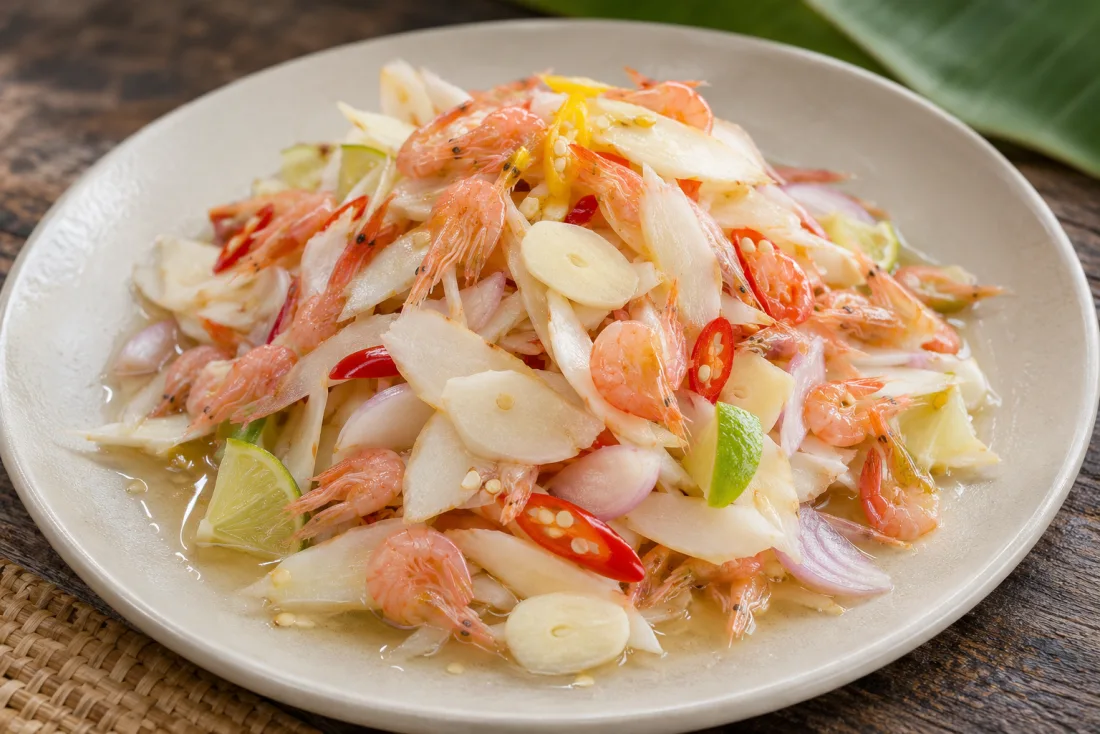

 salt-cooked shrimp
 fish sauce
White turmeric and salted shrimp
Khamin khao refers to white turmeric, a rhizome related to ginger. Pale slices are crisp and aromatic. Kung khem is salted shrimp, which in the older recipe are small shrimp cooked with salt. Ask about the shrimp preparation and whether it is fully cooked.
Two Thai preparations
A historical Thai cookbook uses sliced white turmeric with salt-cooked shrimp, garlic and lime. A Thai chef also publishes a related spicy salad with cooked prawns and herbs. Availability varies with the rhizome and seafood. This is a dish to share with rice or other plates.
Rhizome, shrimp, garlic and lime
The historical ingredients are white turmeric, salt-cooked shrimp, garlic, lime, bird's eye chili, yellow chili and fish sauce, with sugar optional. The salt level of the shrimp affects the seasoning. Other cooks can add shallots, mint, makrut lime leaves or chili jam.
Cook shrimp and slice the rhizome
Use properly stored shrimp and cook it firm and opaque through the center. Salt and lime cannot substitute for heat. Clean the rhizome and cut thin slices with clean utensils. Toss near serving and separate raw shrimp utensils from the finished dish.
Crunchy rhizome and sour-salty shrimp
White turmeric is crisp and aromatic, sometimes with a young mango-like note. Salted shrimp gives savory depth, lime brings a fresh sour note and chili lingers. Thin slices are easier to chew. Plain rice softens the salt and heat.
Allergens in the seafood and dressing
Shrimp is a crustacean and fish sauce contains fish. Oyster is a mollusk. Prepared dressings may contain soy, wheat or other additives. Ask about the shrimp, seasoning and tools shared with other seafood. Heating does not remove the shrimp allergen.
If you have a food allergy, tell the restaurant before ordering and ask about ingredients, sauces and shared cooking equipment.