

 fish sauce
 dried shrimp
A traditional salad for the shared table
Thai cookery schools and household cookbooks preserve Yam Thawai, and teaching accounts associate it with formal or court food. Cooks vary the vegetable selection with season and kitchen.
Distinct vegetables
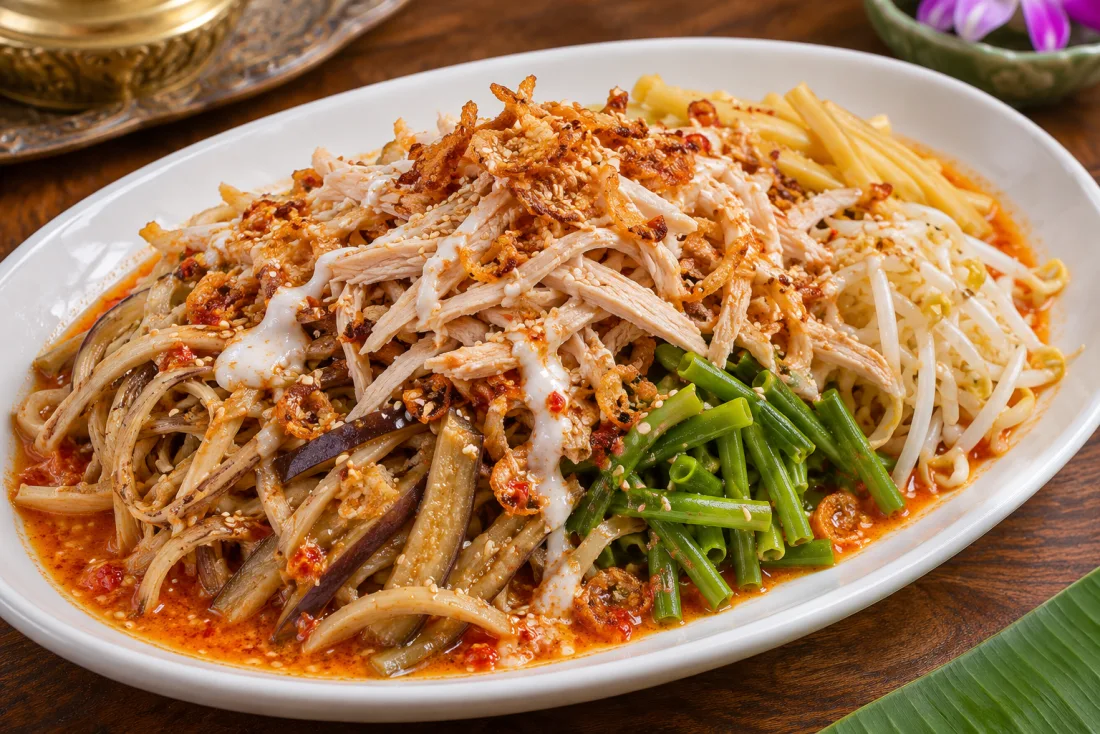
Morning glory stems, long beans, Thai eggplant, bamboo shoots, bean sprouts and mild peppers offer different textures. Some versions add banana blossom or shredded cooked chicken. Cut into long pieces and cooked separately, the vegetables retain individual character.
Red chilli and white coconut
Dried red chilli and roasted aromatics form the dressing with coconut milk, tart tamarind or citrus and fish sauce. Old recipes also include pounded roast fish and dried shrimp. Toasted sesame, fried shallots and a drizzle of thick coconut cream add aroma.
How the flavours develop
The coconut initially softens the chilli. Sour fruit and savoury fish sauce emerge as the crisp vegetables are chewed. Milder bean sprouts and aubergine alternate with more fragrant stems and a nutty accent from sesame.
Two ways to plate it
Cooks may lay the blanched strands apart and spoon over red dressing and white coconut cream. A separate sauce bowl keeps the vegetables crisp for longer and lets diners choose the amount. The dressed vegetables work with plain rice.
Allergens and dietary needs
The recipe may contain fish, crustaceans, sesame and coconut. Chicken is used in some kitchens. Dressing utensils and fryers can create cross-contact. Ask about the actual dressing, bottled seasonings and shared equipment when allergies matter.
If you have a food allergy, tell the restaurant before ordering and ask about ingredients, sauces and shared cooking equipment.