

 chicken
 dried shrimp
 fish sauce
Recognizing the chicken and vegetables
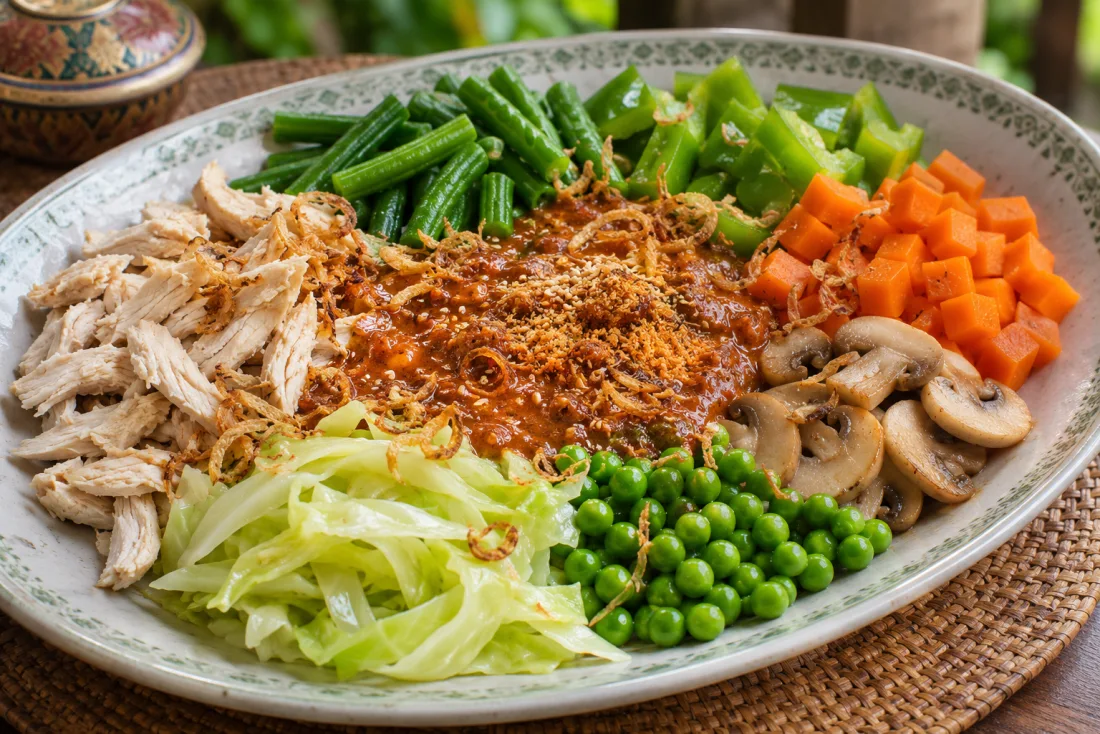
The Thai name describes a seasoned salad in what the cookbook calls a newer style. Cooked chicken can be shredded or cut small. Several vegetables remain recognizable. The reddish coconut dressing may be tossed through the salad or served separately with crisp shallot.
Why the historical title says newer style
Tamrap Ahan labels this a newer-style yam thawai and lists canned vegetables among the ingredients. The name distinguishes a preparation in a Thai book. Other yam thawai recipes can use water spinach, bamboo shoots or long beans with related coconut dressings.
Chicken, vegetables and two uses for shallots
Tender chicken and mixed vegetables are accompanied by thick coconut milk, dried chili, roasted shallot and garlic, tamarind, palm sugar, fish sauce and dried shrimp. A second portion of fried shallots goes on as a topping with white sesame. Fresh vegetables can be blanched and drained.
Coconut, tamarind and toasty finish
The dressing is rich with coconut, then sweet-tart from tamarind and palm sugar. Dried shrimp and fish sauce bring depth. Chicken and vegetables add contrasting textures, and fried shallot and sesame have toasted aromas.
To share or dress at the table
Arrange cooked chicken and vegetables around the dipping bowl, or toss them just before serving. A side of rice works well. Dressing packed separately helps the vegetables stay firmer, and serving it separately lets diners adjust the amount.
Allergens in the dressing
Dried shrimp contains crustaceans and fish sauce contains fish. Sesame is part of the recipe, and coconut is prominent. Ask about soy, oyster sauce, peanuts or shared utensils in a restaurant. The chicken and vegetables have already contacted those ingredients after tossing.
If you have a food allergy, tell the restaurant before ordering and ask about ingredients, sauces and shared cooking equipment.