
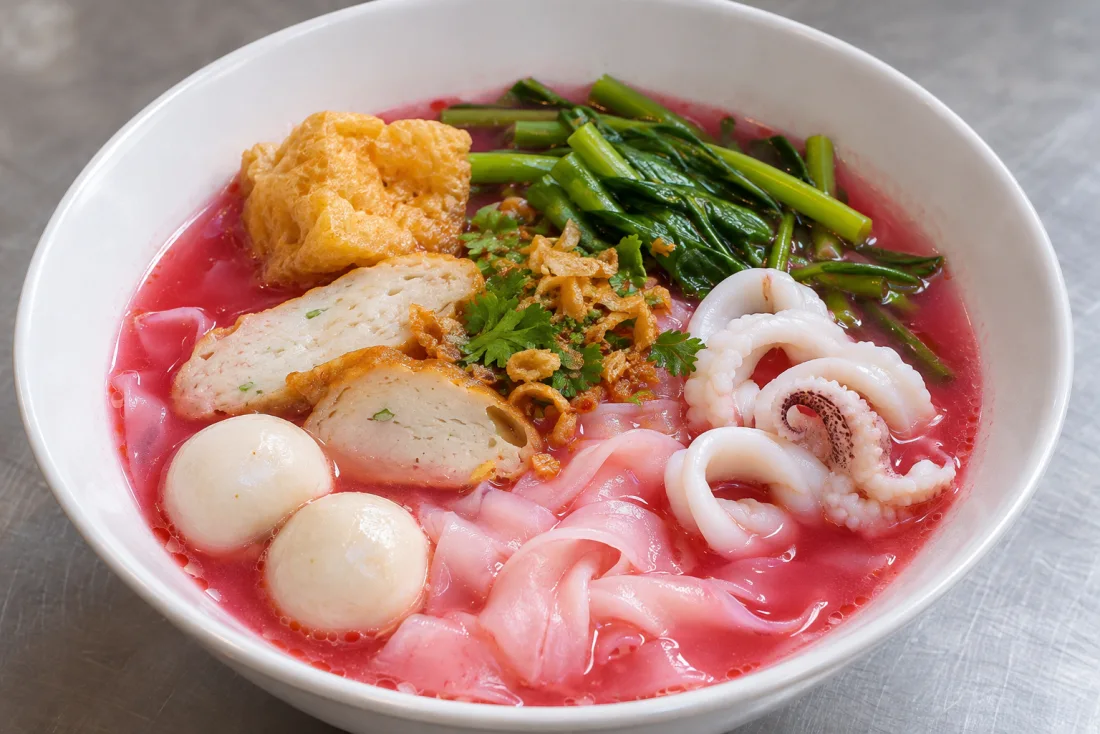

 fish balls
Recognizing Thailand’s pink noodle soup
Pink broth makes yen ta fo easy to spot at Thai noodle stalls. Cooks prepare broth and noodles, then season them with a sauce that can use red fermented bean curd. At the stall, choosing noodles and toppings meets preparations using fish balls and stuffed tofu. Thai cookbooks also document Hakka-style yen ta fo.
The Hakka-style recipes help explain toppings such as stuffed tofu and fish paste balls at some shops. These are culinary connections. The name and color are not enough to locate the dish’s first appearance in Thailand or establish one recipe for all shops.
Red bean curd sauce, stock, noodles and toppings
Red bean curd is fermented tofu. The cubes and their liquid can both go into the sauce. Vinegar, sugar, garlic and chilli are possible seasonings, and cooks can add a bottled red sauce or tomato sauce. Clear pork bone broth seasoned with garlic and coriander root is one base. The proportion of sauce changes the shade.
Wide rice noodles are common, with thin options at some stalls. Blanched noodles and water spinach can come with fish balls, fish cake, shrimp balls, tofu puffs or fish wontons. Some kitchens add squid, cooked pork blood cubes or fried wonton wrappers. Check the menu for the toppings in the actual bowl.
Fermented savor, sweet acidity and crisp toppings
Red bean curd brings a fermented saltiness. Vinegar or pickled garlic liquid contributes acidity and sugar rounds it out. Extra chilli can add heat. Fish balls have a springy bite, fried tofu takes up broth, and water spinach and a fresh fried wonton wrapper add different textures.
Similar shades can taste more sour, more sweet or more heavily seasoned. Taste the broth before adding vinegar or chilli. The color comes from the seasoning sauce and cannot tell you how spicy it is or whether it contains meat.
Ordering and eating a bowl
Choose the noodles, then look at the toppings and portion options. Soft wide rice noodles carry broth along their surface, while tofu puffs gather it inside and a fried wrapper can stay crisp around the rim. Trying the broth and separate toppings helps show how each changes the bite.
Some shops serve noodles tossed dry in the sauce with broth separately. Takeaway soup can sometimes be packed apart from fried toppings. Ask about removing a topping if you prefer, and also ask what broth and shared equipment are used.
Regular, tom yum and noodleless versions
Regular soup emphasizes the sweet, sour and salty fermented bean curd sauce. A tom yum version may add lime, roasted chilli paste, ground peanuts or dried shrimp. Its additional seasonings depend on the shop.
Kao lao usually asks for broth and toppings without noodles. Some vendors also offer a dry version. A Hakka-style menu may emphasize stuffed tofu, while fine noodles, wide noodles and egg noodles change the texture. The color tells you less than the menu’s description of the broth and seasonings.
Allergies in the red sauce, fish balls and toppings
Red bean curd and tofu contain soy. Fish balls, fish cake and fish sauce can contain fish. Fish balls can also contain egg white. Shrimp balls contain crustaceans, and squid is a mollusk. Wonton wrappers or egg noodles can contain wheat and egg. A tom yum or premixed sauce may use peanuts, dried shrimp or other seasonings.
Ask separately about the sauce, stock, noodles, balls and fried toppings. Shared blanching water, strainers, ladles and frying oil can cause cross-contact. The kitchen can confirm which ingredients it uses and whether it can prepare a separate portion.
If you have a food allergy, tell the restaurant before ordering and ask about ingredients, sauces and shared cooking equipment.