

 shrimp
 fish sauce
What the Thai shrimp salad name means
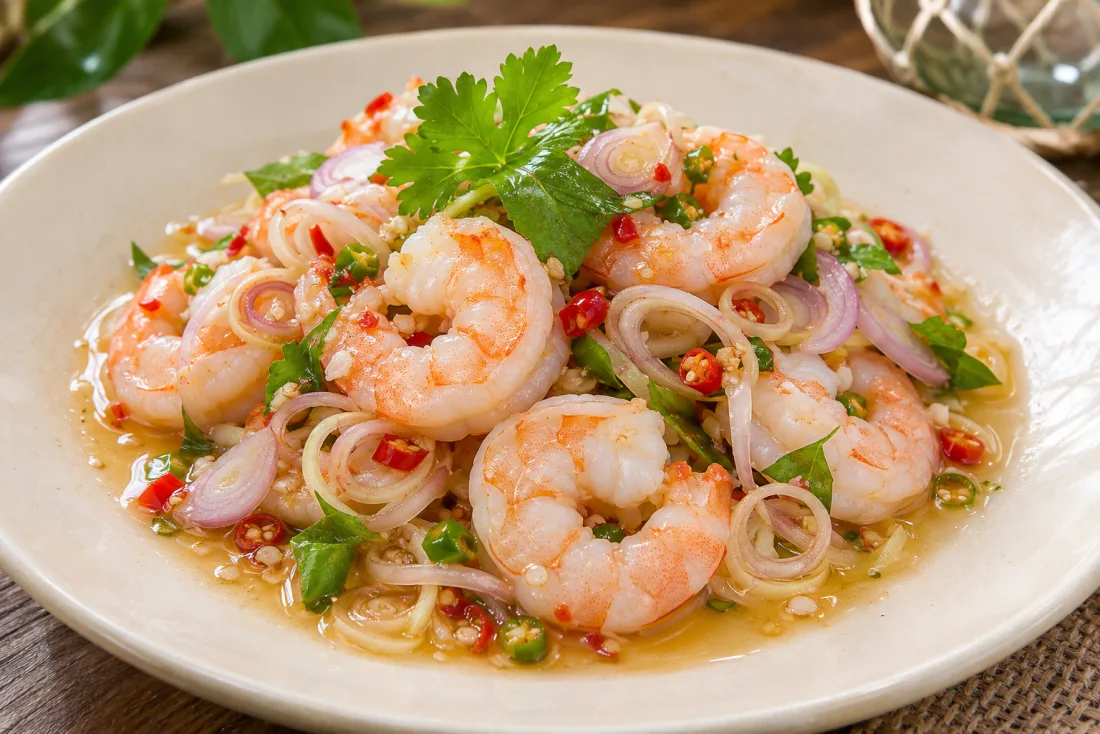
Yam means a dressed salad and kung means shrimp. Yam kung suk specifies cooked shrimp. Peeled tails can curl beside shallots and thin lemongrass rings. Some herb-heavy preparations are called phla kung. This entry covers fully cooked shrimp, and a mixed seafood salad can contain other species.
Cooked shrimp at Thai salad restaurants
A Thai restaurant serves cooked shrimp with bird's eye chili, lime, garlic and herbs. A Thai culinary college teaches a blanched prawn version with lemongrass, shallot, mint and roasted chili jam. These are current preparations rather than evidence of a single origin. Ask for fully cooked shrimp if offered a choice.
Shrimp, lime, fish sauce and herbs
A basic dressing can use lime, fresh chili, fish sauce and a little sugar. Add garlic, sliced shallots, lemongrass, mint, makrut lime leaf or cilantro according to the style. A sharper restaurant version can include tomatoes or onion. A roasted chili jam makes the herbal version richer.
Cook the shrimp through before tossing
Cook peeled shrimp until firm and opaque through the thickest part, then drain with clean tools. Citrus and chilled dressings do not replace heat. Toss cooked shrimp and washed aromatics with the prepared sauce. Add mint at serving and keep raw-seafood utensils away.
Natural sweetness with a citrus-chili finish
Cooked shrimp is sweet and springy. Lime adds quick acidity and fresh chili brings heat, followed by fish sauce. Thin lemongrass can contribute a citrus aroma. Roasted chili jam adds a richer sweet note. Rice helps soften a strong dressing.
Allergens in shrimp and the dressing
Shrimp is a crustacean and fish sauce contains fish. Roasted chili jam can contain shrimp paste. Ask about soy, wheat, peanut or sesame if used, and about any squid, oyster or other mollusks prepared with shared tools.
If you have a food allergy, tell the restaurant before ordering and ask about ingredients, sauces and shared cooking equipment.