
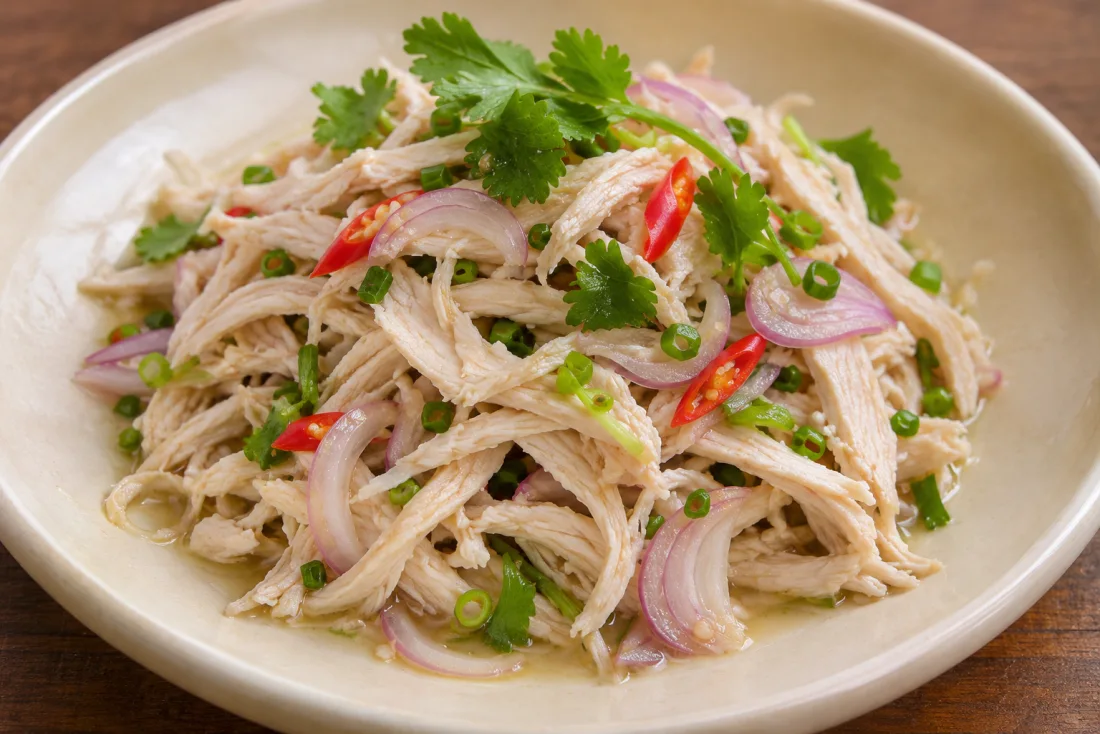

 cooked chicken
 fish sauce
The Thai menu name
Yam means to toss with a dressing, and gai chik means shredded chicken. It can be eaten with hot rice or a crunchy vegetable side. A shorter chicken salad name can also describe fried chicken or another cut, so look for the full name.
Shredded breast or thigh
Fully cooked boneless breast pulls into slender strands. Thigh can make thicker, moister pieces. Pulling along the grain lets the dressing coat many surfaces. Toss gently to avoid crushing the soft cooked meat.
Lime, fish sauce and aromatic herbs
Lime adds acidity, fish sauce supplies savoury salt and chopped chilli sets the heat. Shallots can stay crisp. Lemongrass and finely sliced makrut leaves add a citrus fragrance. Other cooks use scallion and coriander, with a little cooking broth or sugar in the dressing.
Two textures and vegetable sides
Fine shreds with coriander take up the dressing readily. Coarser thigh pieces can go with lemongrass, lime leaf and roasted chilli. Cucumber or cabbage can be served alongside when offered, and extra chilli can be kept separate for a shared plate.
Recognising the salad
Shredded meat is characteristic here. Minced chicken larb may use toasted rice, while holy basil chicken is cooked as a stir-fry. Ask if the chicken is poached or fried and which herbs are used. A version can come warm or cooled.
Allergens in dressings and prepared ingredients
Fish sauce contains fish. Prepared sauces or stock can contain soy, wheat, oyster or shrimp. Optional peanuts, egg or sesame also matter if used. Ask about actual ingredients and shared mixing bowls. Lime adds flavour to cooked chicken.
If you have a food allergy, tell the restaurant before ordering and ask about ingredients, sauces and shared cooking equipment.