

 fish sauce
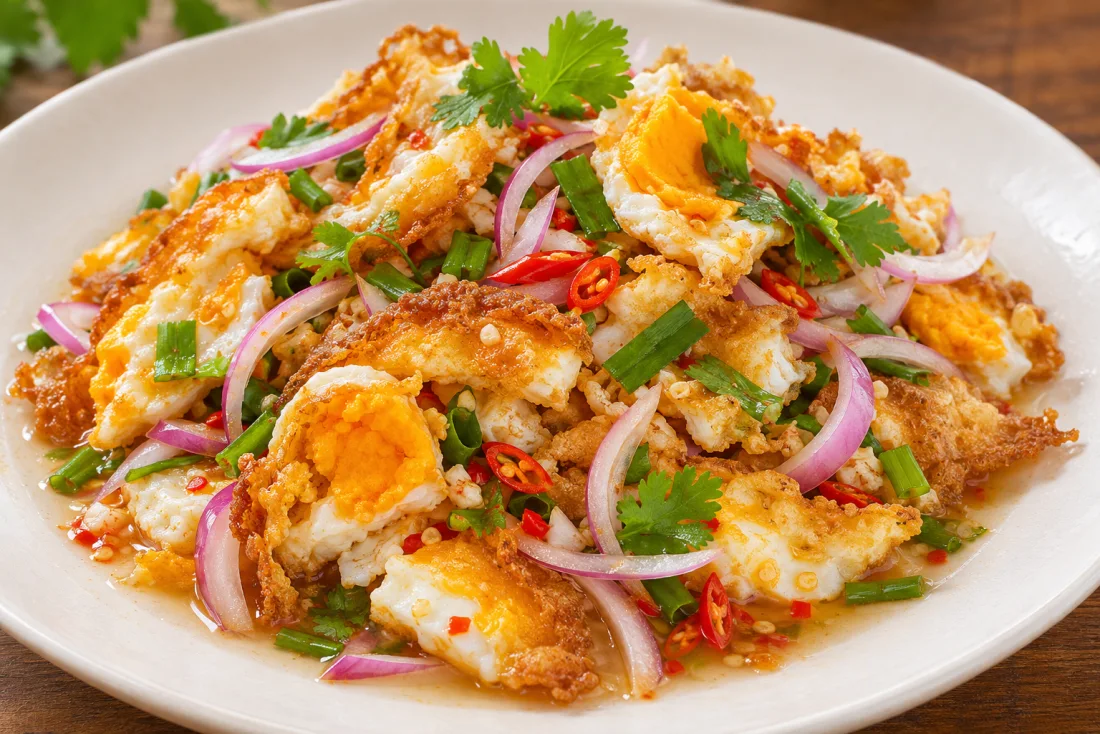
Fried eggs as the base of a Thai yam
Khai dao are fried eggs with golden edges. This yam serves them with a tart, hot and savoury dressing and sliced vegetables. Eggs can be served whole or cut for sharing. Thai recipes document both plain eggs and salted egg variations.
Egg, lime, fish sauce, chilli and vegetables
The reference uses chicken eggs, onions, tomatoes and celery. Pounded garlic and chillies season lime juice, fish sauce and sugar. Some cooks use crisp fried celery leaves as decoration. Cooked pork or chicken can also be mixed with the vegetables.
Frying the eggs and adding the dressing
Fry the eggs until their edges turn crisp, then drain them. Mix the dressing separately and toss it with the vegetables. Spoon the dressing and vegetables over the eggs just before serving so the crisp bits stay noticeable.
Tart lime, fried egg fragrance and crisp edges
Lime and chilli give a bright first impression, with savoury fish sauce and egg underneath. The edges are crisp while the centre is softer. Tomatoes and celery add juice and crunch. The fried edges soften as they absorb the dressing.
Plain fried eggs, salted eggs and meat additions
A salted version can have a firmer, richer yolk and can include shrimp or minced pork. A boiled egg salad gives a smoother surface without the fried edge. Read the menu or ask whether the dressing also includes cooked meat or seafood.
Allergens in egg, dressing and frying oil
The main ingredient is egg, and fish sauce contains fish. Some versions use shrimp or prepared seasonings. Celery is present in the reference and can be used in more than one component. Ask about the actual dressing, extra toppings and shared frying tools if needed.
If you have a food allergy, tell the restaurant before ordering and ask about ingredients, sauces and shared cooking equipment.