

 fish sauce
The dark egg wedges on the menu
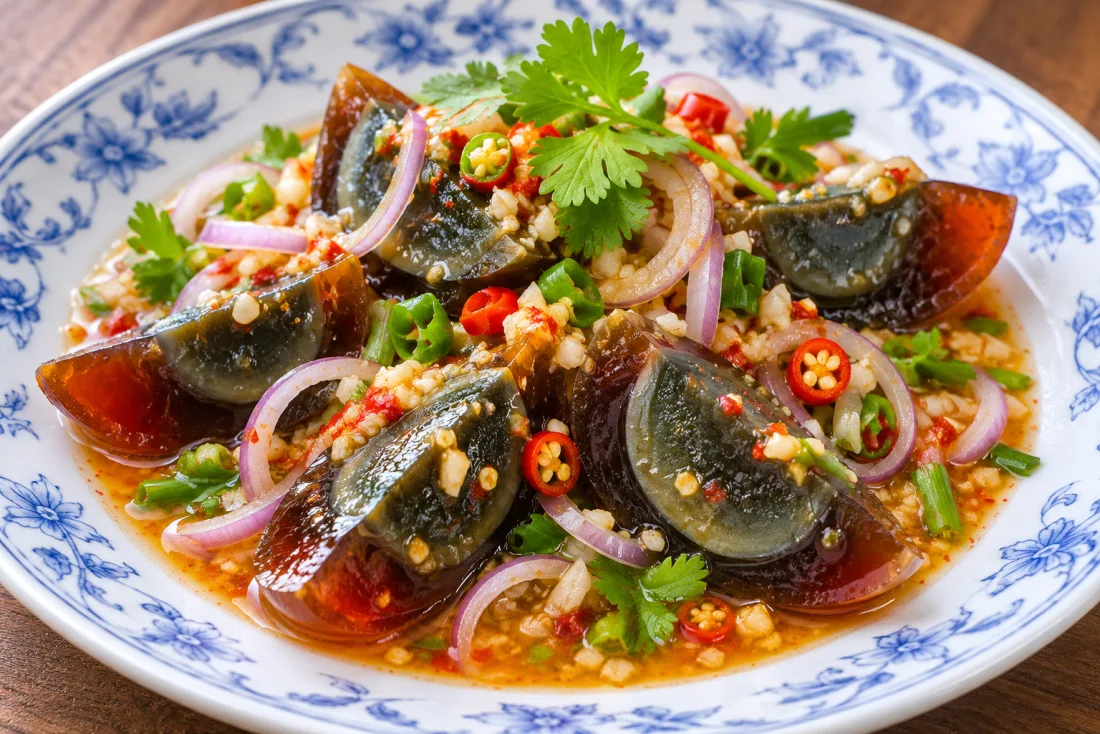
Khai yiao ma is century egg and yam indicates a dressed salad. The preserved white becomes dark and translucent, while the yolk can be gray-green and soft or firm. Salted eggs are made differently and have a different texture. Ask if the kitchen uses duck egg or another type.
Thai dressing and rice-porridge meals
Century eggs have a long history in Chinese food. Thai versions pair them with lime, chili and fish sauce. Thai recipes use fresh ginger and shallot or add other garnishes. Serve the wedges as a small dish with hot rice porridge or steamed rice.
Century egg, lime and aromatics
A Thai recipe uses preserved eggs, fish sauce, sugar, lime juice, fresh bird's eye chilies, sliced garlic, ginger and shallots. Herbs or extra cooked toppings depend on the kitchen. Dressing can be mixed first to keep the wedges intact at serving.
Use packaged edible eggs and cut them cleanly
Choose eggs from a reliable supplier and follow packaging directions. Peel and cut wedges with clean tools. Mix the dressing separately and spoon it over the egg near serving. Cook any optional shrimp or pork thoroughly before adding. Lime cannot make improperly stored eggs safe.
Silky egg and a sharp dressing
The dark white is gently springy, while the yolk feels creamy. Lime and shallot freshen the preserved flavor, and fresh chili adds heat. Ginger is crisp against the soft yolk. Rice or porridge gives a mild bite between spoonfuls.
Allergens in eggs and dressing
Century egg contains egg, usually duck egg. Fish sauce contains fish. Some seasonings contain soy or wheat. Added shrimp or shrimp paste brings crustaceans, while oyster is a mollusk. Ask about the egg type, ingredients and shared knives or chopping boards.
If you have a food allergy, tell the restaurant before ordering and ask about ingredients, sauces and shared cooking equipment.