
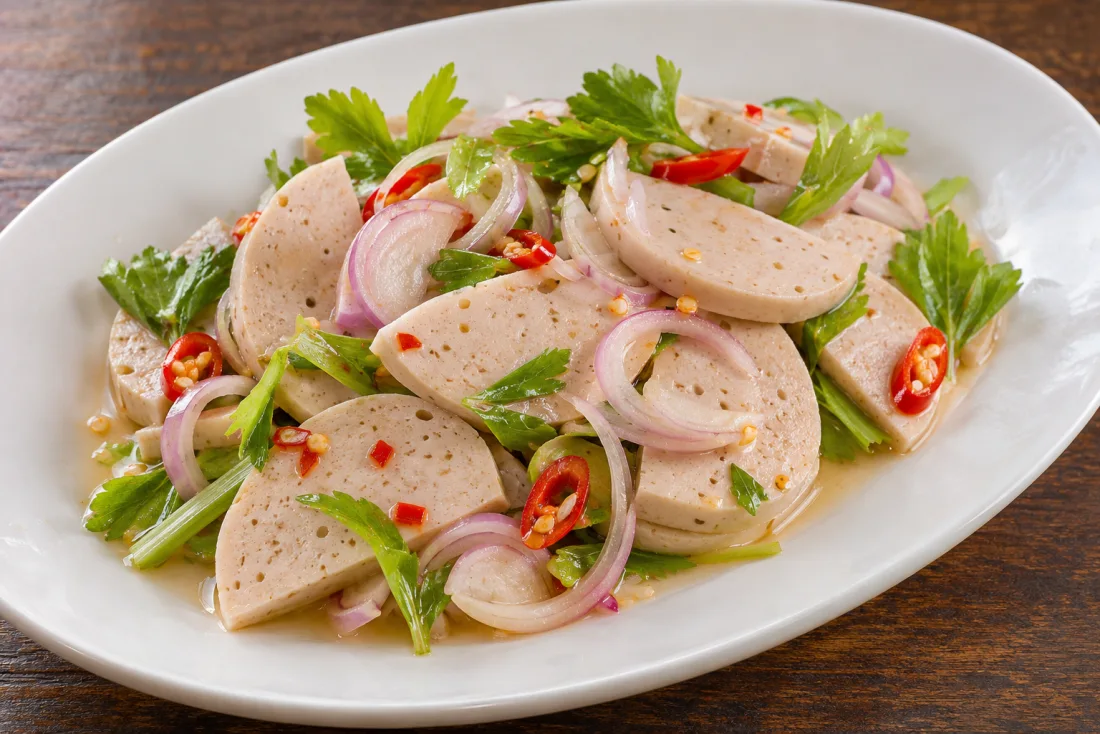

 vietnamese pork sausage
 fish sauce
What moo yor means
Moo yor is a Vietnamese-style cooked pork roll or sausage widely used in Thailand. Slices are pale and smooth, sometimes flecked with pepper. A banana-leaf or other wrapper is removed before cutting. Yam refers to the dressed salad. Onion, tomato and celery commonly accompany the pork.
Ubon-style sausage and other Thai preparations
One Thai restaurant offers Ubon-style pork roll with its fermented fish dressing. Home preparations can use the simpler fish sauce and lime pattern. Ubon describes one style of sausage rather than the established birthplace of every version. The salad can be shared with rice and other yam dishes.
Pork, onion, celery and lime
A Thai home recipe uses pork roll, chilies, lime, fish sauce, a little sugar, onion and celery. Another adds tomatoes and pickled garlic liquid. Salted egg yolk, ground pork or glass noodles can appear as variations. Pepper in the pork roll can contribute its own warmth.
Prepare the sausage and toss
Check the cooked roll’s label for storage and heating directions. If needed, heat the slices thoroughly. Cook any added ground pork through. Mix lime, fish sauce and sugar, add chilies, then toss the meat and washed vegetables in a clean bowl. Serve promptly for the freshest celery aroma.
Springy pork and sharp herbs
The roll is savory and springy, and lime makes the dressing bright. Onion, celery and tomatoes add fresh contrast. Fermented fish dressing gives a deeper savory taste, while pickled garlic liquid rounds out the acidity. A little rice can soften the heat.
Allergens and sausage labels
Fish sauce and fermented fish contain fish. Processed sausage can contain soy, wheat or egg depending on the brand. Salted yolk adds egg, and celery matters to diners with celery allergy. Ask about the roll’s label, the dressing and tools used for other dishes with shrimp, crab or mollusks.
If you have a food allergy, tell the restaurant before ordering and ask about ingredients, sauces and shared cooking equipment.