
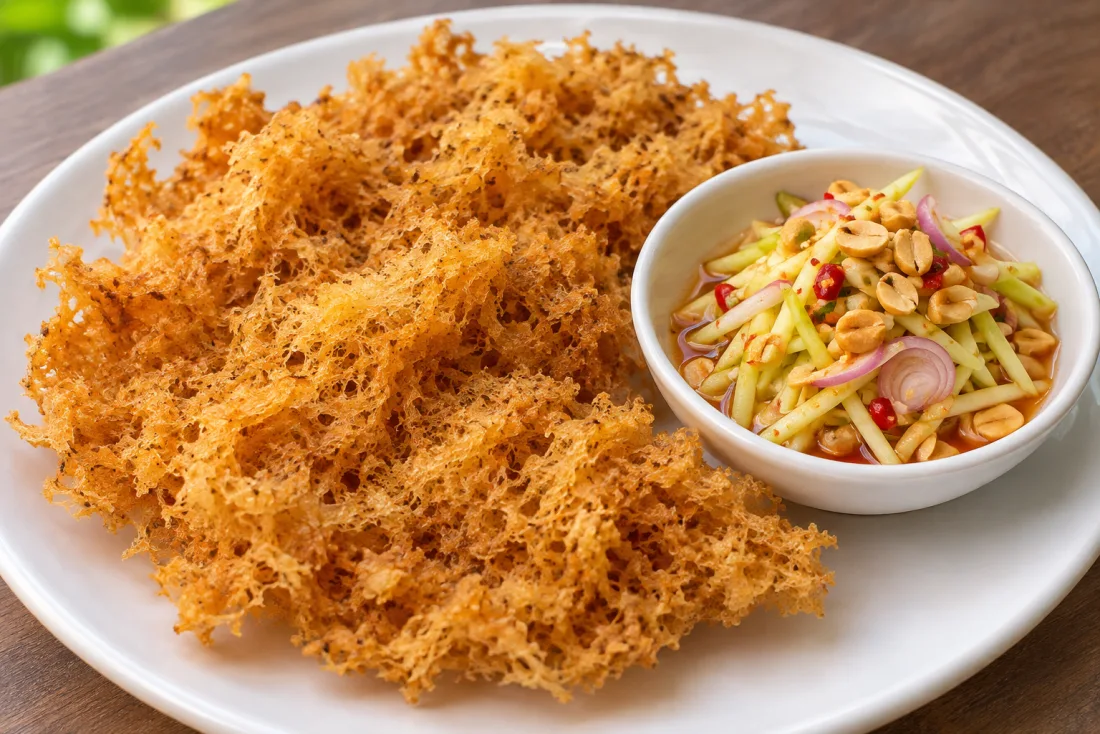

 catfish
What the name means and where it is served
Pla duk means catfish and foo refers to the airy texture. Yam points to the dressed salad served with it. Phol documents versions in Thai cookery, and a Samui restaurant menu pairs it with green mango. These examples show how it is served rather than identifying a single birthplace.
Fish flakes, green mango and dressing
Cooked catfish is flaked and the green mango finely shredded. Shallot, chilli, fish sauce and palm sugar can flavour the dressing. Lime and garlic appear in some recipes. Phol serves it with peanuts, while another menu uses cashews.
How the fish forms a crisp
Drier fish flakes can link together during frying, leaving thin gaps and crisp edges. The cook can form a larger sheet or a few smaller pieces. Serving mango and liquid dressing separately keeps more of the fish crisp until it is eaten.
Balancing crisp fish with tart fruit
The crisp has a savoury, lightly toasted taste. Green mango gives acidity and crunch; chilli and shallot add heat and bite. Start with a piece of fish alone, then add a little mango and dressing to see which balance you prefer.
Serving whole or already dressed
A restaurant may serve a crisp sheet beside the mango salad or put the dressing and nuts directly on top. The key difference is how long the fish has touched liquid. Other kinds of fish can be cooked similarly; check for pla duk if you want catfish.
Allergens, nuts and shared fryers
Catfish and fish sauce contain fish. Ask separately whether the kitchen uses peanuts, cashews, a binder or a premixed sauce. Shared fryers and utensils can matter for fish, crustaceans, wheat or other allergens. Removing a garnish does not undo cross-contact.
If you have a food allergy, tell the restaurant before ordering and ask about ingredients, sauces and shared cooking equipment.