

 squid
 fish sauce
Squid rings and scored pieces
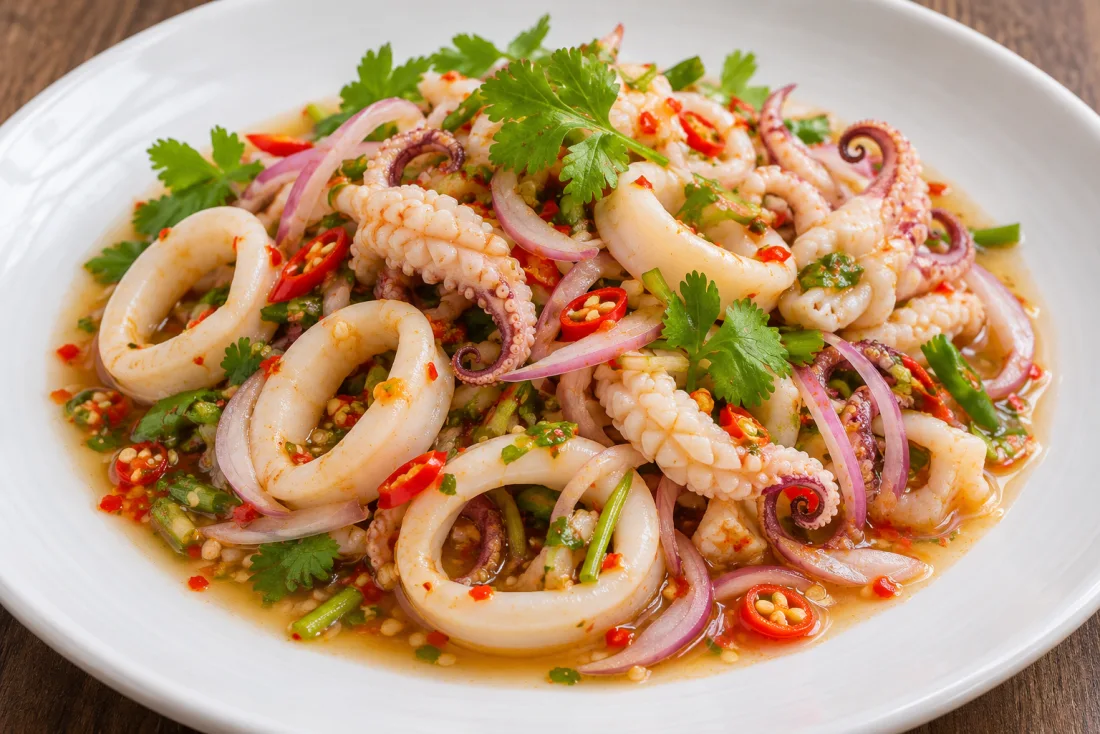
Yam pla muek means dressed squid salad. The body can be cut into rings or opened and scored so that chunks curl. Tentacles can be served too. The exact species varies. A menu naming takrai adds lemongrass and thale may mean mixed seafood.
At Thai meals and seafood shops
Thai cooks publish versions with squid, lemongrass, chili, shallot and mint. Seafood restaurants can use whatever squid is available. It is a dish for sharing with rice and other plates. Order fully cooked squid where the kitchen offers a choice.
Squid, lime and fresh herbs
A Thai lemongrass version uses squid, lime, fish sauce, sugar, bird's eye chilies, shallots and mint, with lemongrass and makrut lime leaves for more aroma. Onion, celery, tomato or cilantro can be added. Thin tender lemongrass can be eaten with the squid.
Cook thoroughly before tossing
Prepare squid with clean tools and cook it through. Curling or changing color alone cannot confirm doneness. Drain with clean equipment, then combine with mixed dressing, washed herbs and shallots. Lime is a flavoring and cannot substitute for cooking. Keep tools for raw squid separate.
Springy squid and sharp lime
Squid is mild and springy. Lime tastes bright, fish sauce adds savoriness and chili lingers. Scored pieces take up more dressing. Mint leaves or lemongrass add a fresh, citrus-like scent. Rice softens the stronger flavors.
Allergens in seafood and seasonings
Squid and oysters are mollusks. Shrimp and crab are crustaceans, and fish sauce contains fish. Soy or wheat can occur in premixed dressing. Check whether the kitchen uses shared blanching water, strainers, bowls or tools for different seafood.
If you have a food allergy, tell the restaurant before ordering and ask about ingredients, sauces and shared cooking equipment.