

 fish sauce
Two ways crab can appear on the plate
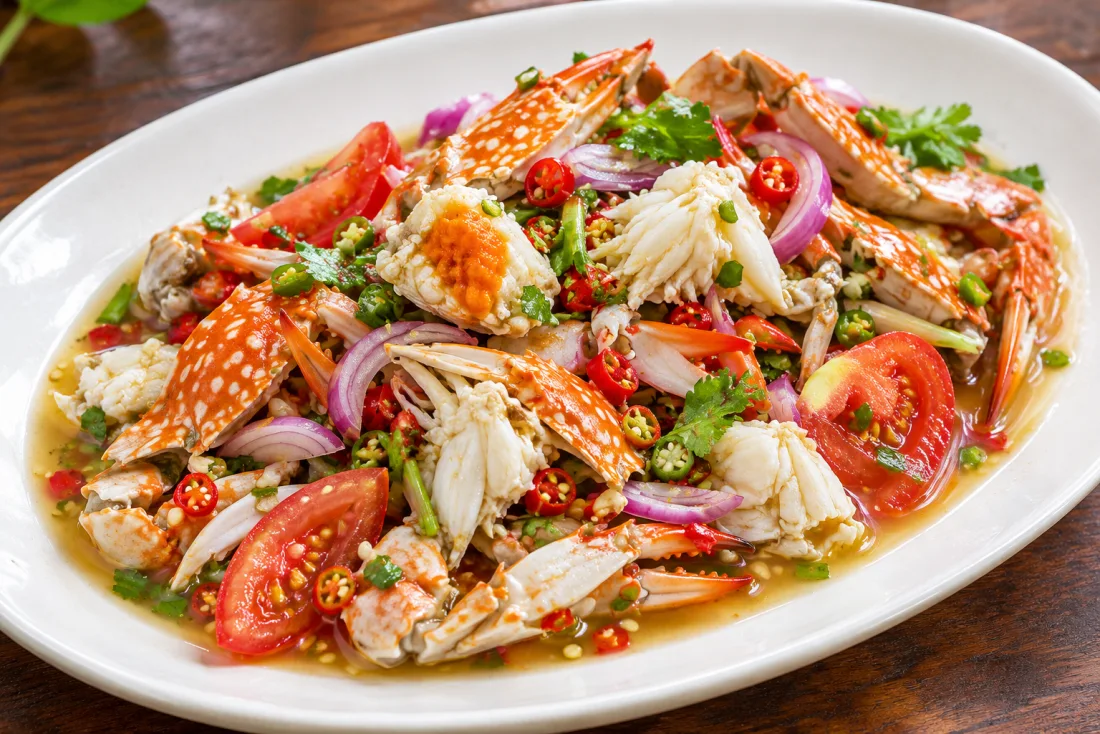
Yam is a dressed salad and pu is crab. Pu ma denotes blue swimming crab, and suk means cooked. One presentation includes claws or opened shell-on pieces. Another uses picked meat with tomato, onion or herbs. Unlike salted crab som tam, the structure need not include shredded green papaya.
Cooked crab salads on Thai seafood menus
Thai salad and seafood restaurants offer versions with cooked blue swimmer crab. This entry covers thoroughly cooked crab. Some serve shell-on pieces and others a fixed portion of picked meat. A home recipe includes tart mango. These are variations and do not establish a single province of origin.
Crab, lime, fresh chili and vegetables
A common dressing combines lime, fish sauce, fresh chilies and a little palm sugar. A Thai recipe adds tomato, scallion, cilantro and celery. A cooked crab and mango version adds tart mango. Onion, garlic and extra seasonings can vary between kitchens.
Cook through and toss gently
Cook crab through before opening it or mixing it with dressing. Thai health guidance recommends fully cooked crab. Citrus and chilling cannot substitute for heat. Follow the package’s storage directions for prepared crab, and use clean tools for cooked meat. Add it last to avoid breaking clusters.
Sweet crab and a bright chili-lime dressing
Claw meat is firm and body flakes can be delicate. Lime and fresh chili make an immediate impression, while a little sugar rounds the acidity. Tomato and onion add moisture and aroma. A light coating makes the natural crab flavor easy to taste.
Allergens and the source of seasonings
Crab and shrimp are crustaceans. Fish sauce and fermented fish contain fish. Oyster is a mollusk. Prepared sauces may carry soy or wheat, and celery matters to diners with celery allergy. Ask about the crab, dressing, garnishes and shared boards, bowls or utensils.
If you have a food allergy, tell the restaurant before ordering and ask about ingredients, sauces and shared cooking equipment.