

 shrimp
 squid
 fish sauce
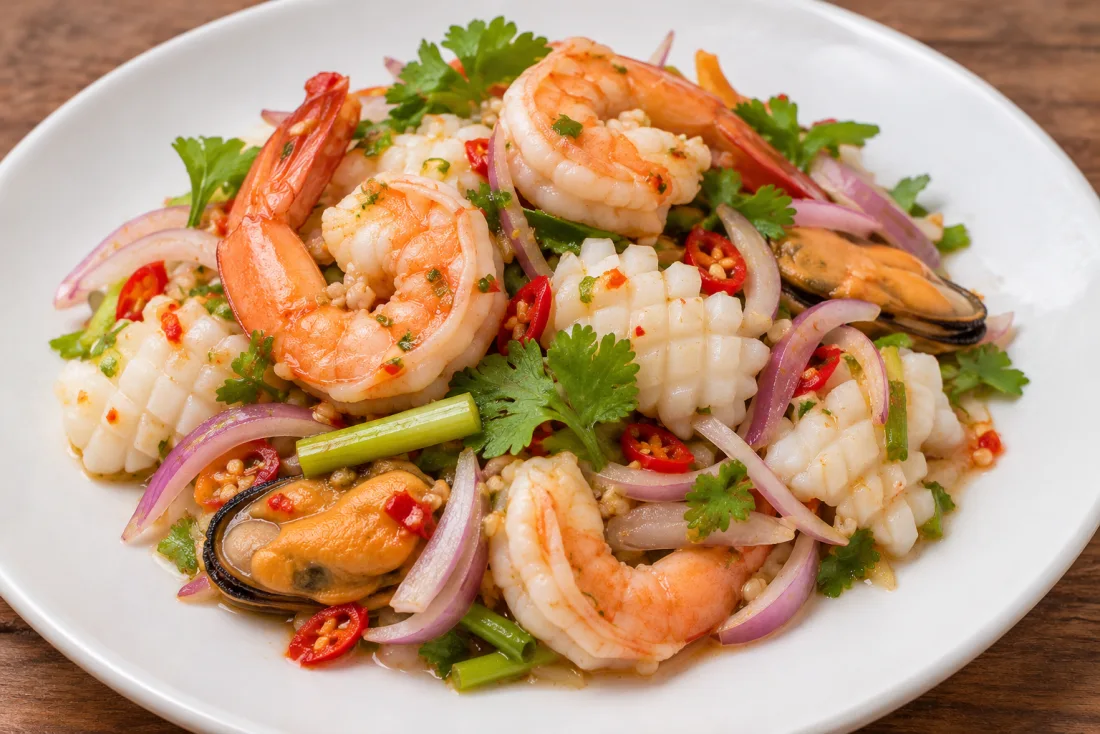
A Thai seafood salad with a tart dressing
Yam means a tossed salad and talay refers to the seafood. The regular style uses cooked seafood coated with a lime dressing. It can be slightly warm if tossed soon after cooking. Published Thai recipes show more than one seafood and vegetable combination.
Shrimp, squid, mussels and lime
A university recipe uses shrimp, squid and mussels with onions, celery and spring onions. The dressing can contain fish sauce, lime and fresh or prepared chilli. A chef’s variation adds imitation crab, white fungus, tomatoes or minced pork. Exact ingredients vary by cook.
Cooking the seafood, then tossing with dressing
The cook prepares and cooks the seafood separately as needed, then drains it. Lime, fish sauce and chilli are mixed separately and tossed with the cooked seafood and sliced vegetables just before serving. Lime flavours the seafood after it has been cooked.
Bright lime, sweet seafood and crisp vegetables
Lime brings a bright tang, followed by fish sauce and fresh chilli. Shrimp is firm, squid is springy and mussels are softer. Onion and celery add crunch, and a little sugar can bring balance. Chilli intensity depends on the recipe.
Plain, glass-noodle and crispy seafood versions
Regular yam talay centres on seafood and vegetables. Yam wun sen incorporates glass noodles, and a crispy version uses seafood that has been coated and fried. This article describes fully cooked seafood. Tom yum is a related sour-hot flavour in the form of soup.
Allergens in seafood, fish sauce and prepared items
Shrimp is a crustacean, squid and mussels are molluscs, and fish sauce contains fish. Imitation crab can include fish and possibly crustaceans, egg or wheat. Ask about the exact seafood, dressing and shared utensils or cooking water when avoiding an ingredient.
If you have a food allergy, tell the restaurant before ordering and ask about ingredients, sauces and shared cooking equipment.