

What the Thai name describes
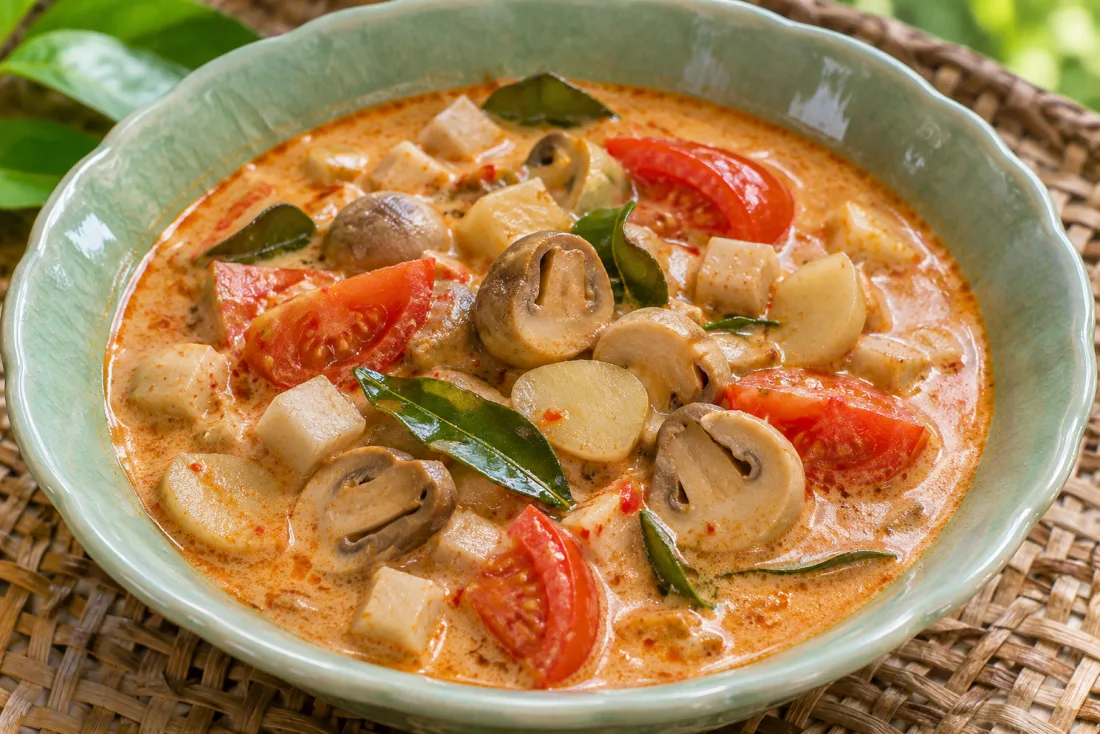
Het fang means straw mushroom and makhuea thet means tomato. A historical vegetable recipe records both in coconut broth. It provides a specific household example without establishing where the curry began or how common it is today.
Mushrooms, crisp roots and herbs
The archived recipe uses straw mushrooms, jicama, Chinese water chestnut, tomato and ma-uek, a hairy eggplant, with coconut milk. Dried chili, galangal, lemongrass, garlic, shallot, pepper, coriander root, salt and makrut zest form the seasoning. Thai sweet basil and makrut leaves add fragrance.
Mildly tart with coconut richness
Coconut rounds the chili aroma. Tomatoes lend acidity, mushrooms contribute savoriness, and jicama and water chestnuts retain a crisper bite. The chilli level varies.
What gives the broth body
Coconut carries the pounded aromatics. Tomatoes and mushrooms release juice as they soften. The choice of mushrooms, the stage at which the tomatoes are served and the concentration of coconut change texture and thickness.
Restaurant versions and serving
Vegetable curry menus may substitute mushrooms or vegetables. Commercial curry paste, fish sauce or stock may change the ingredient list. Rice suits the gently tart, aromatic coconut broth.
Allergens and plant-based versions
The archived recipe does not list shrimp paste, fish sauce, dairy or egg. Ask about coconut if relevant and check pre-made paste, fish sauce, stock, soy or wheat from extra seasonings, and shared equipment if these affect you. Confirm separately for a plant-based meal.
If you have a food allergy, tell the restaurant before ordering and ask about ingredients, sauces and shared cooking equipment.