
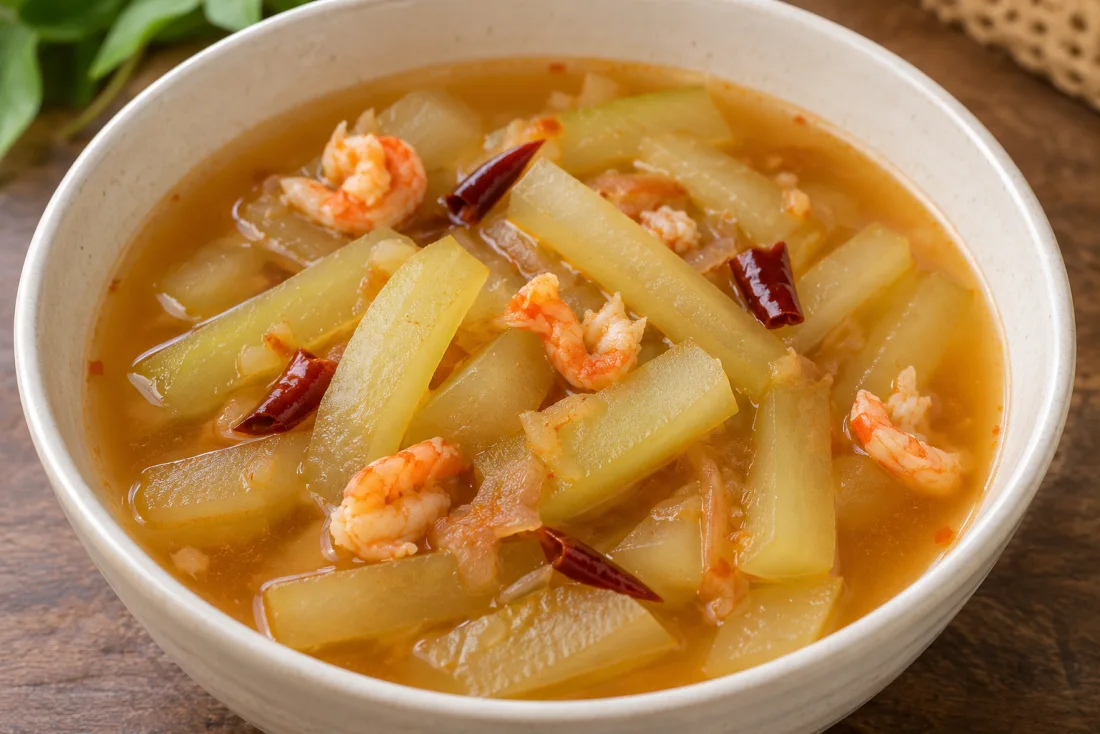

 shrimp
 dried fish
Which part of the watermelon is used
Plaoeak taeng mo means watermelon rind. The archived recipe peels away the green skin and uses the thick, pale flesh next to it, along with shrimp and fish. The documented preparation does not establish current regional popularity.
Shrimp, pale rind and fish in the broth
The recipe uses fresh shrimp, watermelon rind, threadfin, dried or grilled fish, lemongrass, shallot, pepper, shrimp paste, young eggplants, peas, makrut leaves, chili, palm sugar, fish sauce and lime.
Light acidity and seafood depth
The slightly firm rind absorbs the savory broth. Shrimp gives sweetness against the fish and fermented seasonings. Lime lifts the finish. The reference has no coconut milk, and much of the body comes from vegetables and pounded fish.
How the broth and rind are prepared
Pounded fish and spices are dispersed in water, and the rind is cooked with shrimp and vegetables. Fresh lime is squeezed into the serving bowl. Rind shape and thickness determine how much bite remains.
Similar sour curries and serving
Other sour curries may use tamarind. This documented recipe uses lime and can be served alongside rice. The sauce color alone cannot establish which acid a restaurant uses. Ask about spice and whether the shrimp come shell-on.
Allergens in the broth
Shrimp and shrimp paste contain crustaceans. The fish and fish sauce contain fish. Ask about mollusks from mixed stocks, additional seasoning with soy or wheat, shared tools and possible fish bones. Removing shrimp or rind leaves the other ingredients in the broth.
If you have a food allergy, tell the restaurant before ordering and ask about ingredients, sauces and shared cooking equipment.