
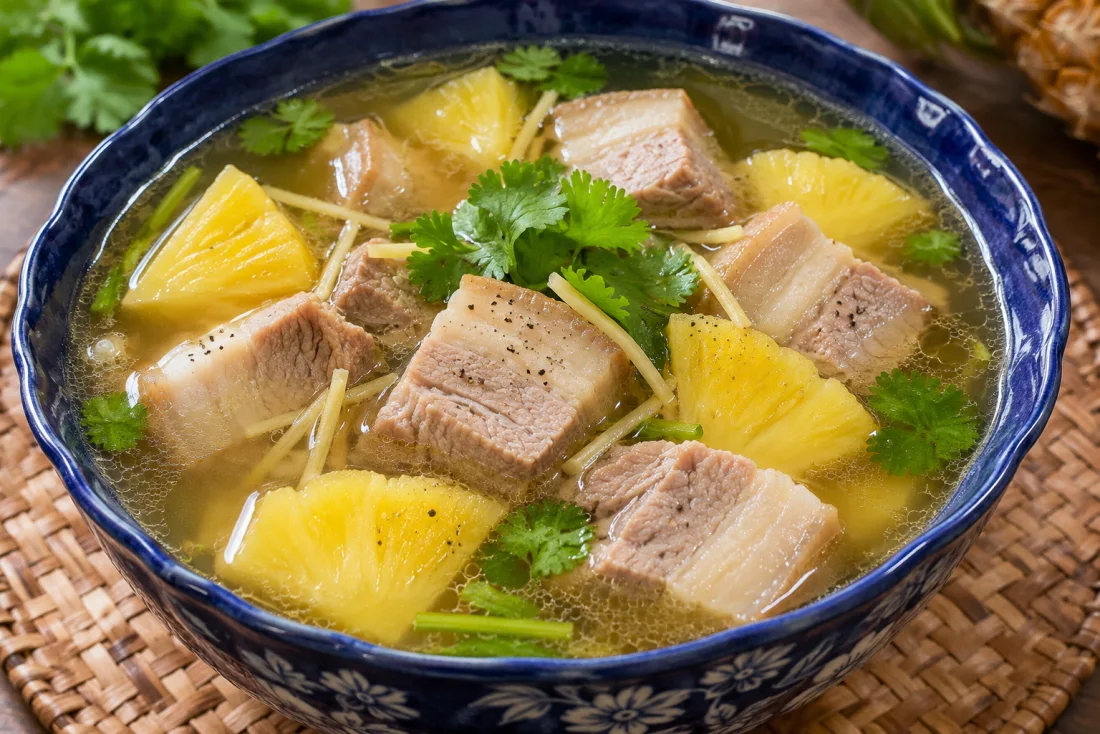

 pork belly
 fish sauce
Pineapple in the historical name
Sap rot is an older spelling for pineapple, now commonly written sapparot. Mu means pork. This archived preparation specifies pork belly and a water-based soup.
Pork belly, pineapple and aromatics
The old recipe uses pork belly, pineapple without its tough core, fish sauce, sugar, shallot, pepper, ginger, garlic and coriander root. The sweetness and acidity of the fruit affect final seasoning.
Fruity tang and meat savoriness
The pineapple softens slightly and contributes acidity and sweetness to the broth. Pork belly adds body and fat, fish sauce adds salty depth, and ginger and pepper bring mild warmth.
Why timing affects texture
The old method first simmers pork in water, then adds the pounded aromatics and pineapple. Cooking time determines how much fruit flavor transfers to the soup and how well the pieces hold their shape.
Serving and similarly named dishes
Some pineapple dishes are stir-fries or coconut curries. The described soup has a light broth with pork and fruit, and fits alongside rice, eggs or stir-fried vegetables. The archive establishes the recipe without ranking its present-day popularity.
Allergens and broth seasoning
Fish sauce contains fish. Pork and its broth affect pork-free diets. Ask about added soy sauce, prepared stock, wheat, other ingredients and shared equipment where relevant. Removing chunks leaves their cooking liquid behind.
If you have a food allergy, tell the restaurant before ordering and ask about ingredients, sauces and shared cooking equipment.