

 beef
The egg inside
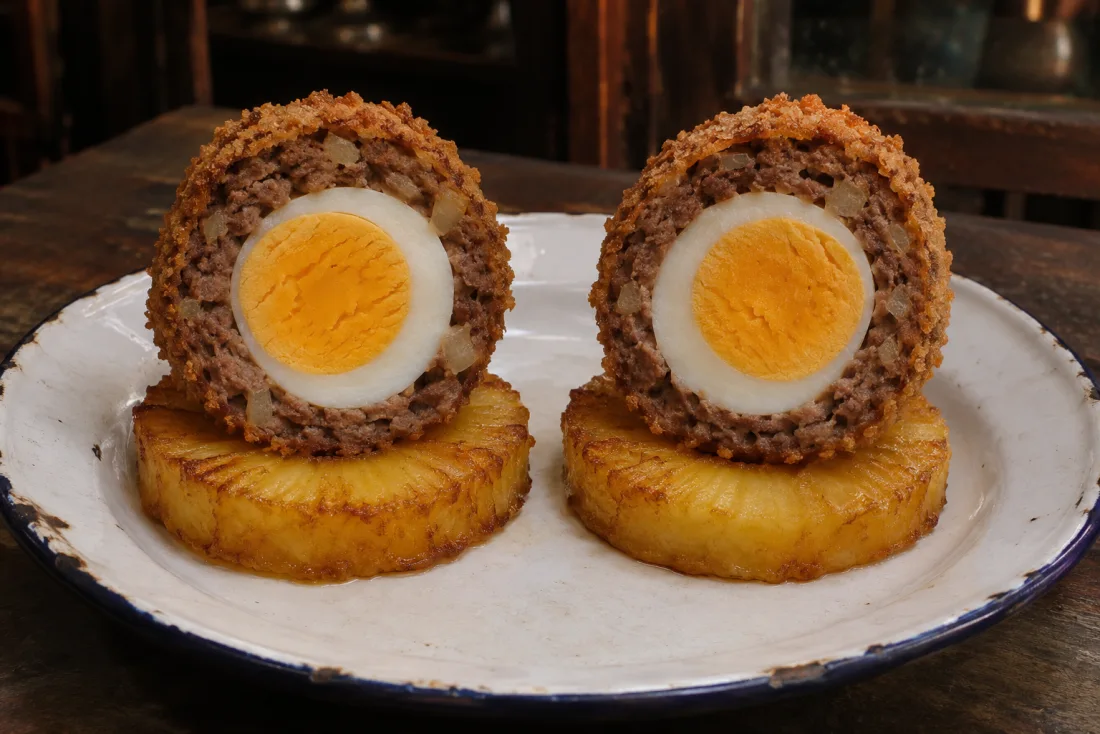
The archival Thai title is associated with ไข่ซ่อนรูป, an egg hidden from view. The intact fried parcel looks golden outside, then reveals white and yolk once cut. The cookbook records the assembly and plating without establishing a present-day restaurant tradition.
Duck egg, beef, bread and pineapple
Boiled duck eggs form the centers. Beef, onion and softened bread are worked together with salt, pepper and nutmeg. Another egg yolk helps the outer coat, and bread pieces provide crunch. The recipe includes lard and separately cooked thick slices of cored pineapple.
Crisp outside and savory within
The golden crumb gives way to the deeper-colored beef layer. Onion and nutmeg round out the meat. The egg gives a firm white and tender yolk, while the pineapple adds fruit acidity. Both egg and filling should be fully cooked. Browning the coat alone does not establish doneness.
Cross-sections on pineapple
The archive cuts the fried parcel in half and sets each portion upright on a golden pineapple ring. One plate shows two halves; the other shows three for sharing. This outward-facing cross-section helps identify the egg while the cooked fruit forms the base.
Reading a contemporary menu
A restaurant adapting this recipe can name the beef, duck egg and pineapple. Its structure differs from Thai fried boiled eggs served with tamarind, and it differs from a plain meat patty. The archive does not prescribe an additional dip or side of rice.
Allergens and substitutions
Duck egg and the egg used for the coating are egg allergens. Bread typically contains wheat and gluten and can include milk, soy or sesame. Ask about pineapple, spice and shared frying equipment if relevant. Lard also matters for dietary restrictions. Removing crumbs does not remove bread mixed into the filling.
If you have a food allergy, tell the restaurant before ordering and ask about ingredients, sauces and shared cooking equipment.