

 river prawns
 fish sauce
How to identify the egg and its topping
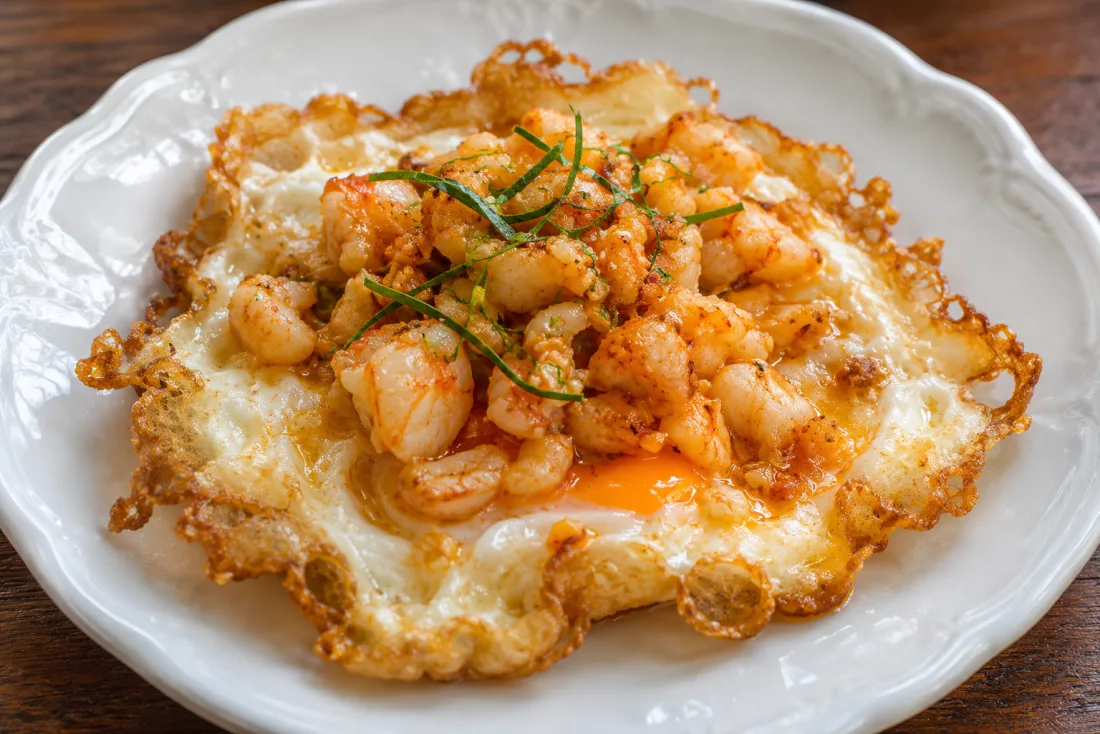
Khai dao is a fried egg with the yolk still formed. Na kung tells you that prawn goes on top. Look for a white border around the juicy prawn pieces and sometimes an exposed patch of yolk. The egg is cooked whole and the prawn separately, giving the plated dish two distinct layers.
A Thai cookbook's topped egg
Tamrap Ahan records one egg with river prawns and uses hot oil to set the white. The name does not identify a province. In Thai meals a fried egg can be a simple extra, while here the prawn topping defines the dish. The cookbook plates the two by themselves. Rice underneath is another way to serve them.
Egg, prawn and aromatics
The recorded combination uses egg, river prawn, lard, fish sauce, a little sugar, makrut lime leaf, coriander and pepper. Chopped prawn is seasoned and fried, then cooked prawn head fat enriches the topping. Lime leaf and cilantro bring different herbal aromas. Chili fish sauce can be offered separately.
Savory layers with a citrus-leaf finish
The topping is springy, with the salt of fish sauce and a touch of sugar. The fried white has a warm oil aroma and can be crisp at the edge. A soft yolk binds the rice when broken. Makrut lime leaf comes through late, and pepper leaves a gentle warmth.
Eating it with rice
Cut out a bite with both layers if ordering it as a side. On a rice plate, spread the topping over the rice a spoonful at a time. Cucumber gives a cool contrast. Ask for both white and yolk to be fully cooked if you prefer them that way.
Allergens and lard
The prawn and its head fat contain crustaceans, the fish sauce contains fish, and the base contains egg. Removing the visible pieces will leave juices behind. The original recipe uses lard. Ask about the cooking fat, shared pans and replacement sauces, which can contain soy or wheat.
If you have a food allergy, tell the restaurant before ordering and ask about ingredients, sauces and shared cooking equipment.