

 ground pork
What the layers are
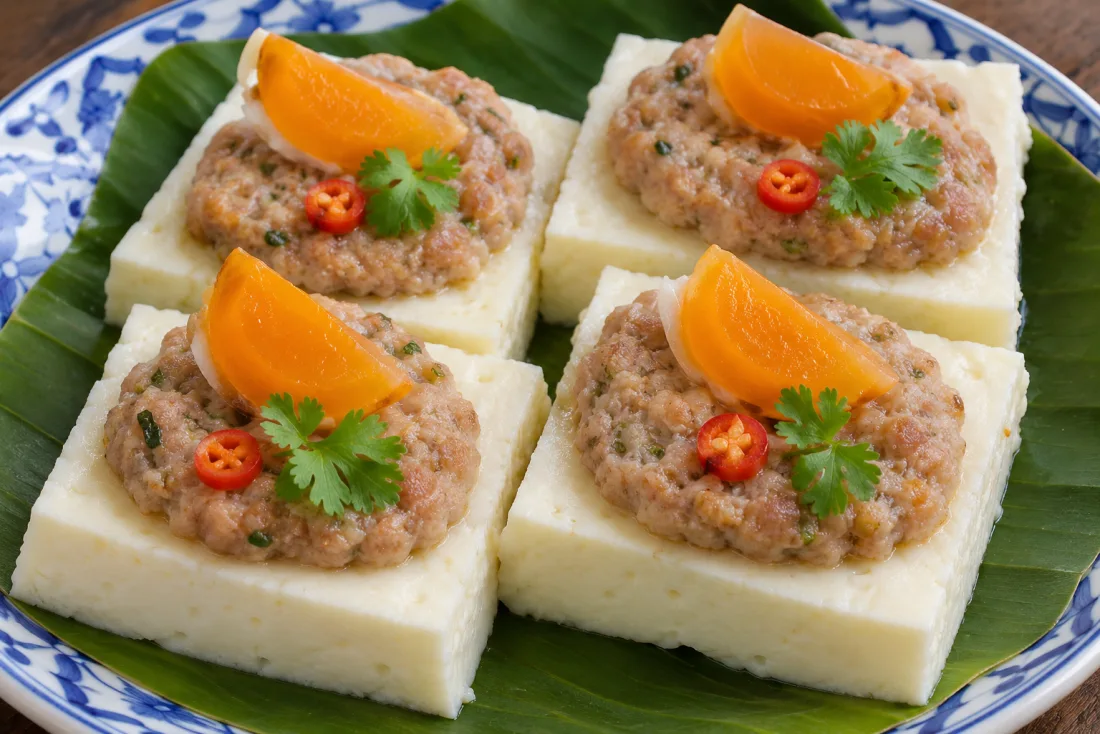
Khai khem means salted egg and chan means layers. White cooked egg supports seasoned pork and orange salted yolk. Cut portions show distinct layers. Fresh egg is used as well as salted egg in the historical recipe. Ask if the filling contains pork.
A Thai cookbook tray-steamed dish
A historical Bangkok cookbook sets mixed egg whites in a shallow tray before adding seasoned pork and yolk. The tray can be cut into small servings for a shared meal. A differently named steamed pork and egg dish may not have the same base.
Salted egg, fresh egg and seasoned pork
The original lists salted and fresh eggs, pork, garlic, cilantro root, pepper, red chili and cilantro leaf. Fresh yolk mixes with the minced pork. Salted yolk provides salt and a grainy richness. Garnishes and exact egg type vary by kitchen.
Steam the layers through
Set the egg white base, add pork and yolk, and cook through. USDA guidance specifies 71°C for ground pork. Color alone does not establish doneness. Use clean serving utensils and keep raw egg and pork away from cooked portions.
Tender egg white and rich salted yolk
Set whites are mild and tender. Pork and its aromatics give savoriness, while salted yolk tastes concentrated and slightly grainy. Rice can soften the saltiness. Cilantro and red chili give a fresh finish.
Allergens in egg and seasonings
Both salted and fresh eggs are egg allergens. Ask about soy, wheat, fish, shrimp or oyster in any additional seasonings, as well as shared steamer trays and knives. Removing top yolk leaves egg in the other layers.
If you have a food allergy, tell the restaurant before ordering and ask about ingredients, sauces and shared cooking equipment.