
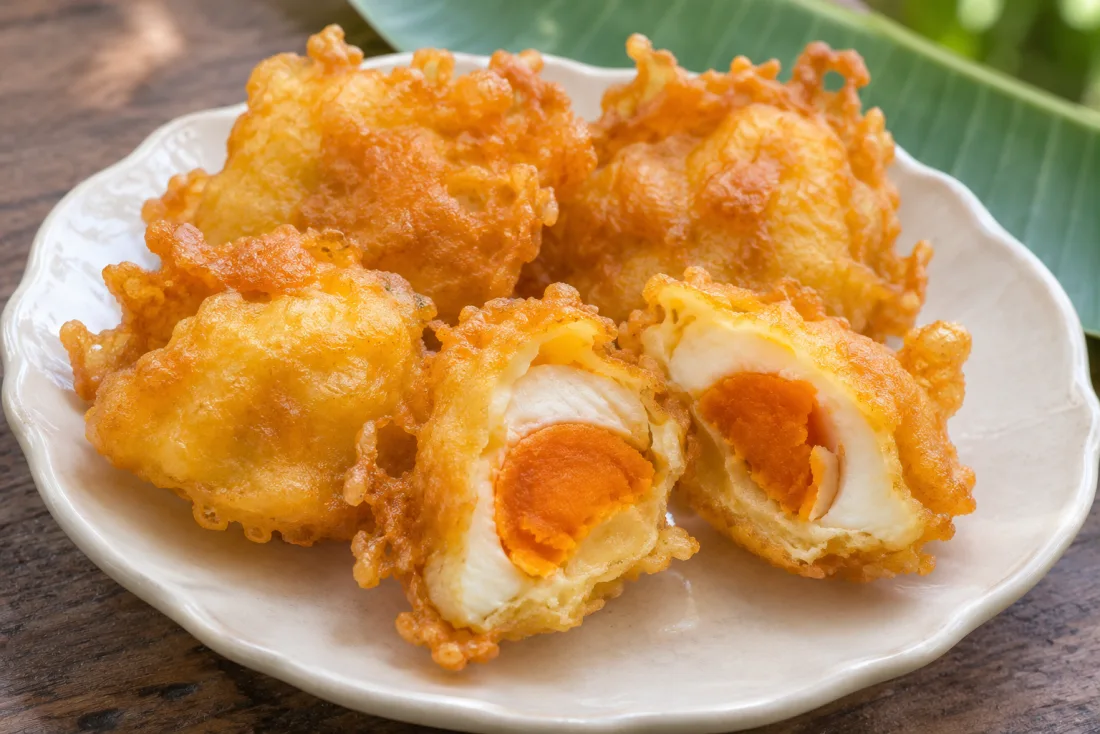

A visible orange yolk centre
A cut fritter exposes a piece of cooked orange salted yolk beneath its light yellow, craggy shell. It may be rounded or a little flat. Menu portions can alternate whole and halved pieces.
Two old cookbook preparations
A historic Thai recipe uses coconut cream and rice flour to make crisp small pieces. Another old cookbook describes frying whites and adding cut salted yolk. The records show a cooking tradition without establishing a single birthplace.
Rice flour, coconut and duck eggs
The traditional batter combines rice flour, coconut cream, salted egg white and fresh duck egg. A piece of salted duck yolk goes in the middle. Older recipes may fry in lard.
Frying the small portions
Small portions of batter cook around the yolk pieces. The outside crisps as the inside cooks. Draining before serving and keeping any sauce separate helps preserve the texture.
Crisp edges and salty yolk
The crust crackles first, followed by a rich, slightly grainy salted yolk. Coconut contributes aroma. Try with plain rice to soften the saltiness or with a small dip to add acidity.
Egg, coconut and shared oil
Egg is present in the batter and centre, and the traditional batter contains coconut. Other flours and shared fryers can introduce wheat or seafood, and dip ingredients vary. Ask about the fat, equipment and sauce as well as the batter.
If you have a food allergy, tell the restaurant before ordering and ask about ingredients, sauces and shared cooking equipment.