

 pork
 fermented shrimp seasoning
Eggs and the platter shape
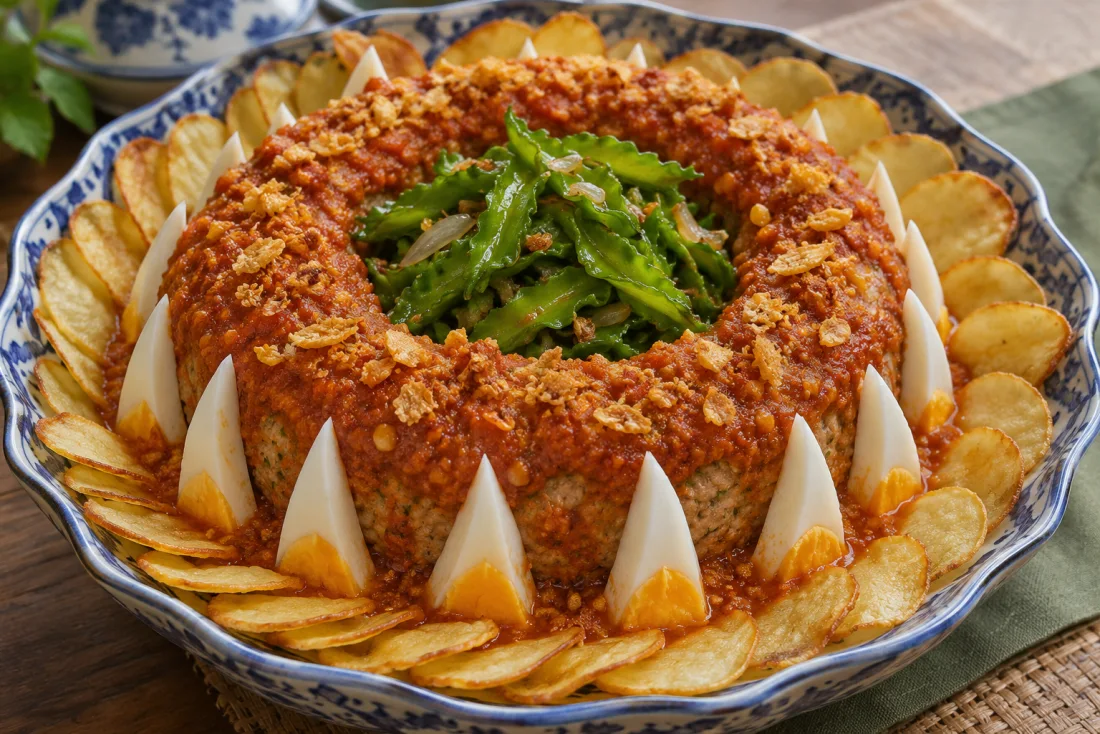
Khai krachang is a historical Thai egg dish. A ring presentation can place egg wedges around the cooked pork and winged beans in the center. Potato may form part of the border. The name alone does not tell diners about pork or the shrimp-based seasoning.
A dish to divide at the table
The old Thai recipe combines boiled eggs, pork, winged beans, roasted aromatics, coconut, mung bean and potato. A ring arrangement is easy to divide for sharing with rice. This documents a Thai preparation rather than a single place of origin.
Pork, winged beans and tamarind
The ingredients include pork, fresh eggs, winged beans, chilies, roasted shallot, garlic and galangal, cilantro root, toasted mung bean, tamarind, traditional shrimp seasoning, grated coconut, potato, sugar and lard. Roasting lends aroma and tamarind adds tartness.
Cook each component before arranging
Boil the eggs, cook the pork thoroughly and use clean tools for the finished food. USDA guidance for ground pork is 71°C. Wash and cook the beans and potatoes. Arrange cooked parts together and add any crisp topping close to serving.
Roasted aromatics and tender egg
The pork is savory and the tamarind adds rounded acidity. Boiled egg and potato feel soft, while the winged beans have more bite. Roasted shallot, garlic and mung bean offer different kinds of fragrance. Plain rice can soften the seasoning.
Allergens in eggs and seasoning
Egg is an allergen. Traditional shrimp seasoning may contain crustaceans, and fish sauce or oyster sauce would add different seafood allergens. Check ingredients for wheat or soy and ask about mung beans, coconut and shared tools if relevant. The original uses pork and lard.
If you have a food allergy, tell the restaurant before ordering and ask about ingredients, sauces and shared cooking equipment.