

 pork
 shrimp
 fish sauce
Egg skin and a sausage centre
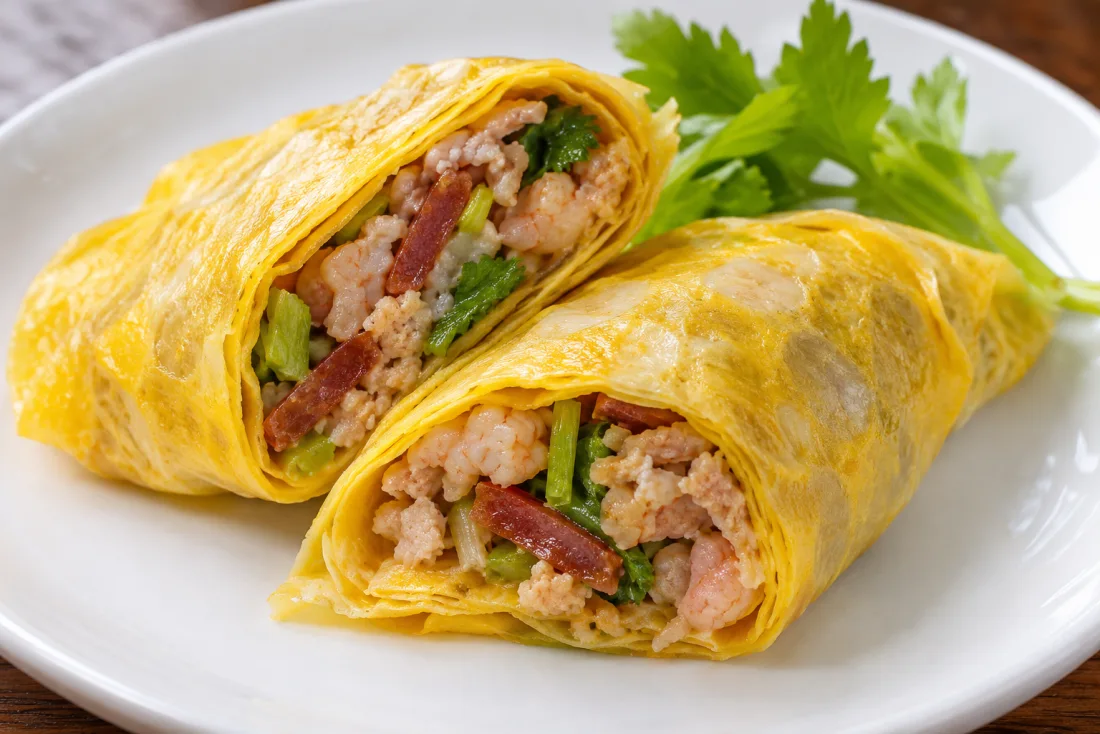
The older filled version has a thin yellow egg skin, minced pork and shrimp, and a darker stripe of Chinese sausage. Scallion and Chinese celery give it green flecks. It may be served in long sections or cut into bites.
A recipe in a historic Thai cookbook
Tamrap Ahan records the duck egg, shrimp, pork and Chinese sausage combination. It documents a Thai preparation but does not establish a particular province of origin. Menus using the broad name khai muan may refer to other egg rolls.
Duck egg, pork and shrimp
Duck egg makes a flexible wrapper. Minced pork and shrimp form the savoury layer; the cooked Chinese sausage adds a sweet-savoury centre. Green onions, Chinese celery, fish sauce and pepper contribute aroma.
Roll the wrapper, then finish cooking
Cook the duck egg into a thin sheet, spread the filling and fold it around the sausage and greens. Steam the roll until the enclosed filling is fully cooked. The recorded recipe then coats the roll in wheat batter and fries it crisp. A steamed-only presentation leaves the egg skin more visible. Let it settle briefly before cutting to expose the layers.
Soft layers and a lightly sweet centre
Warm egg feels tender against the pork and shrimp layer. Chinese sausage adds fragrant sweetness and firmness. This version is usually mild, and can be eaten with rice or served as bite-sized pieces. The classic optional serving choice of a tomato, soy sauce and vinegar dip adds acidity.
Egg, shrimp, fish sauce and celery
Duck egg and shrimp are inherent in this version, and fish sauce can contribute fish. The historic frying batter contains wheat. Chinese celery is used, and sausage or sauces may contain soy or wheat. Ask about the actual filling, oil and shared tools if avoiding an allergen or pork.
If you have a food allergy, tell the restaurant before ordering and ask about ingredients, sauces and shared cooking equipment.