
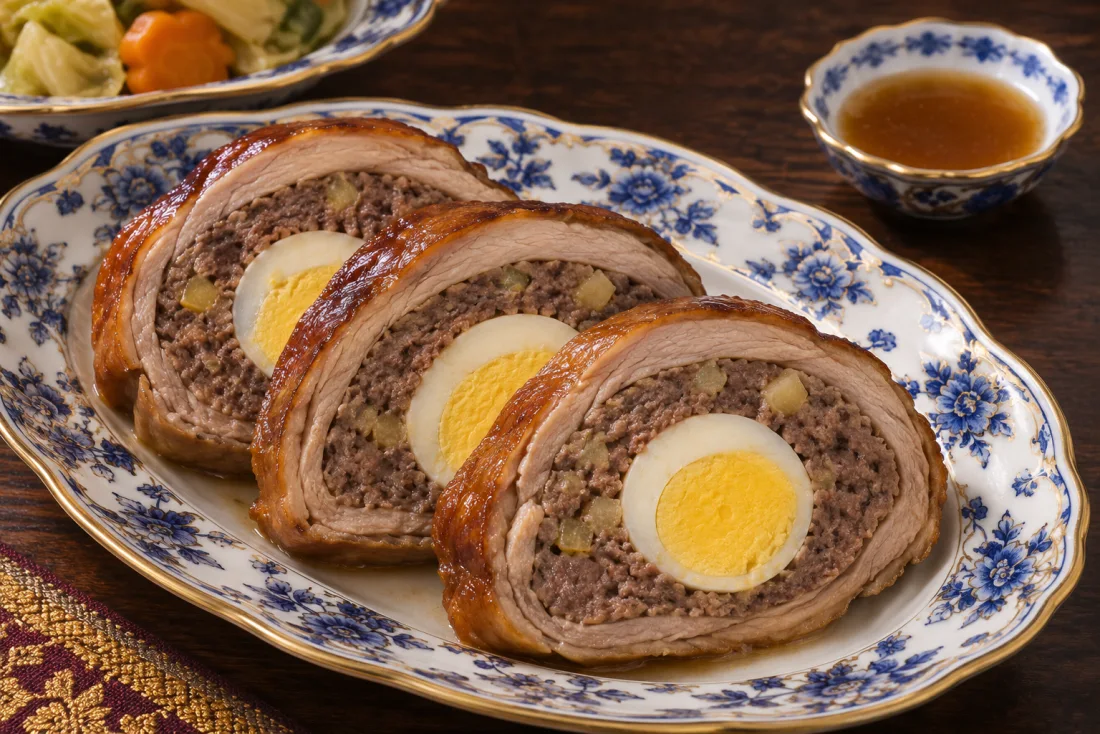

 minced beef or pork
What the three layers are
The old recipe is called ไข่สามชั้น. Browned duck and skin surround a minced meat layer with a boiled egg center. It is a savory sliced preparation. A cookbook records the method without setting out a single provincial origin or current restaurant availability.
Duck, filling and fruit
Start with a duck that can be deboned and spread into one outer sheet. The recipe allows beef or pork filling and apple or pineapple in small pieces with nutmeg, salt, pepper and a little sugar. Peeled boiled duck eggs lie end to end through the center.
From a roll to a fully cooked slice
The outer skin holds the roast shape. As the duck browns, the meat layer firms around the egg. Savory fat, ground meat, warm nutmeg and the soft yolk are distinct in a bite. Fruit may provide a small sweet-tart accent. The inner filling and outer duck should both be thoroughly cooked.
Cooling and serving with pan juices
The cookbook cools the roll before slicing it obliquely and arranging slices in an overlapping row on an oval plate. The cooking juice can be seasoned mildly sweet, salty and sour. One scene shows sliced service and the other leaves a section of the intact roll visible.
Reading a menu description
Other three-layer egg dishes may use entirely different ingredients. Explain the duck exterior, the minced filling and the boiled egg center. For this archival preparation, pan juice is described as an accompaniment; a fixed modern restaurant set is not implied.
Allergens and meat
Duck egg is an egg allergen. Ask whether the mince is beef or pork and which fruit and spice were used. A current kitchen can add sauces or shared processing with soy, wheat or milk. State the actual recipe and use fully cooked preparations.
If you have a food allergy, tell the restaurant before ordering and ask about ingredients, sauces and shared cooking equipment.