

 cooked chicken
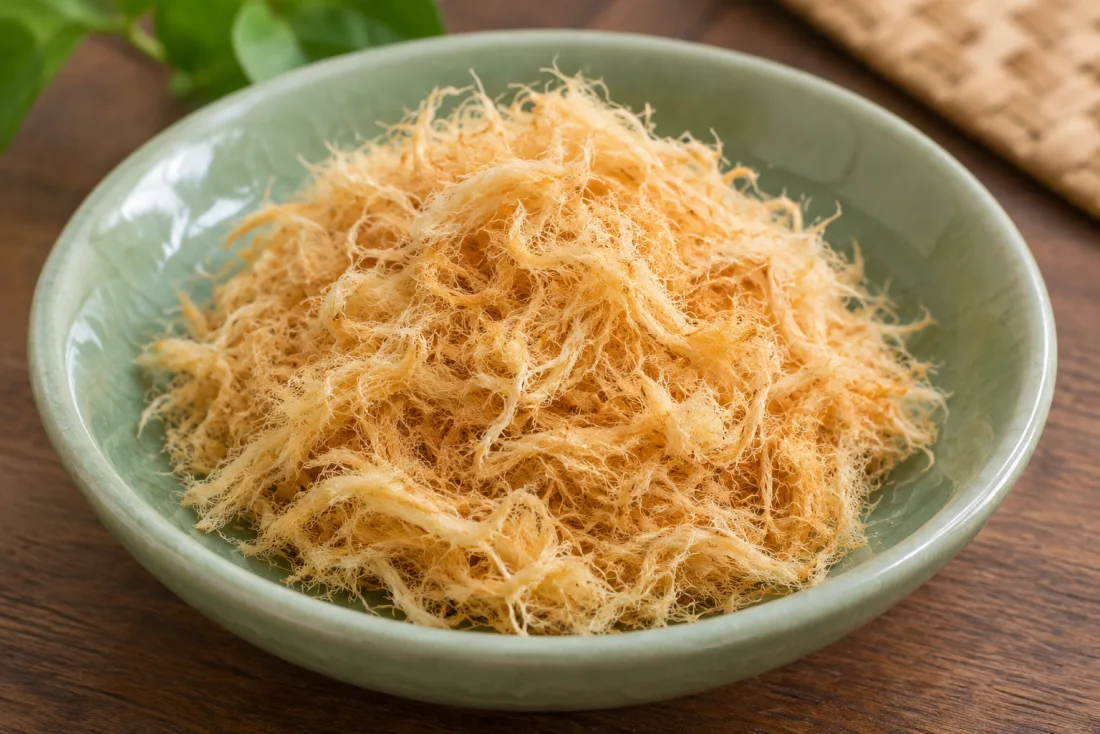
Fine cooked chicken fibres
The finished pile contains feather-fine chicken fibres rather than moist strips. It ranges from light gold to tan depending on seasoning and drying. A small plate commonly accompanies porridge. Check the name to distinguish it from pork floss.
An old recipe and southern examples
An old Thai recipe uses cooked soup chicken, soy sauce and sugar. Kasetsart University records chicken floss in food processing, and a government heritage record from Narathiwat documents a mulberry version. These examples do not establish one birthplace.
Cooked chicken, light soy and sugar
A simple recipe uses cooked lean chicken, soy sauce and a little sugar. Removing skin and sinew helps the meat separate. Some shops add a different seasoning or make a sweeter batch for bakery fillings.
Drying and separating the fibres
Cooked chicken is pulled apart, seasoned and stirred over moderate heat. Pressing and turning breaks up coarse clumps as moisture leaves. Some producers dry the strands further. Dry appearance alone does not establish storage conditions.
With porridge, toast or bakery fillings
Floss softens gradually where it touches hot porridge. On toast it keeps more of its light dry texture. It can also fill waffles or soft buns. The sweet-savoury flavour is usually used in fairly small portions.
Soy, wheat and serving allergens
Soy sauce commonly introduces soy and may contain wheat. Fish sauce, oyster sauce, sesame oil or other variants also change the allergen profile. Bread, custard or mayonnaise can add wheat, egg or milk. Ask about the floss and how it is served, including any shared equipment.
If you have a food allergy, tell the restaurant before ordering and ask about ingredients, sauces and shared cooking equipment.