

 deboned chicken
 pork
 fish sauce
What the Thai name describes here
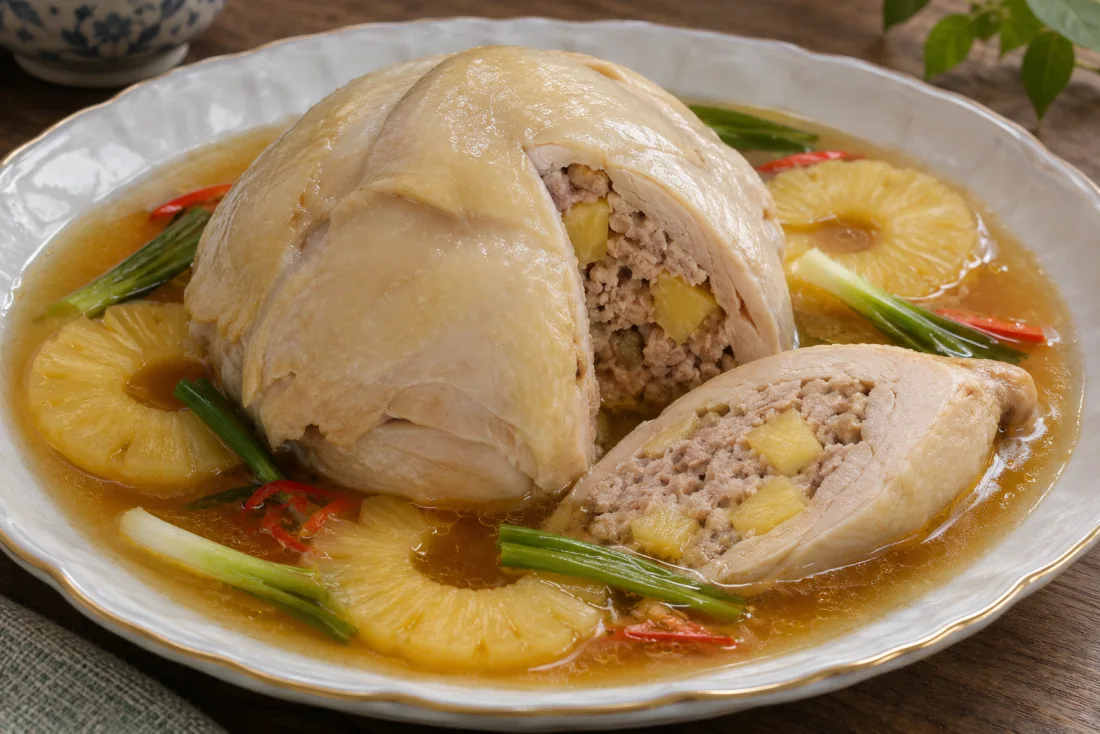
Kai than samai is the name of a historical chicken dish. The older recipe separates the chicken from its bones and lists pork and pineapple. A cooked slice can show the pale chicken outside and the denser filling inside. Ask about pork and sauce ingredients.
Deboned chicken from a Thai cookbook
A historical Bangkok cookbook begins by removing the chicken bones while keeping the flesh and skin usable. The cooked preparation can be sliced for sharing. A restaurant may arrange pineapple separately or alongside the chicken. This does not establish a single place of origin.
Chicken, pork, pineapple and sauce
The recipe lists chicken, pork, pineapple, scallion, salt, tamarind, fish sauce, sugar and red chilies. Ginger, shallot, pepper and cilantro root supply the sauce aroma. Pork is part of the filling. Ask about any additional binder.
Cook the filling through
Keep meat properly chilled and use clean tools. Cook the chicken and stuffing fully through the thickest part. USDA guidance uses 74°C for poultry and stuffing. Separate raw tools from cooked food. Use clean utensils to slice and serve.
Tender chicken and tart-sweet pineapple
The chicken is tender and the pork center has more bite. Pineapple and tamarind give different kinds of fruit acidity. Ginger and pepper bring warmth. Rice can absorb some of the savory juices.
Allergens in sauce and filling
Fish sauce contains fish. The filling contains pork. Prepared sauces or binders can contain wheat, soy, egg, shrimp or oyster. Ask about pineapple and shared equipment when appropriate. Removing fruit or sauce at the table cannot undo contact.
If you have a food allergy, tell the restaurant before ordering and ask about ingredients, sauces and shared cooking equipment.