

 pork
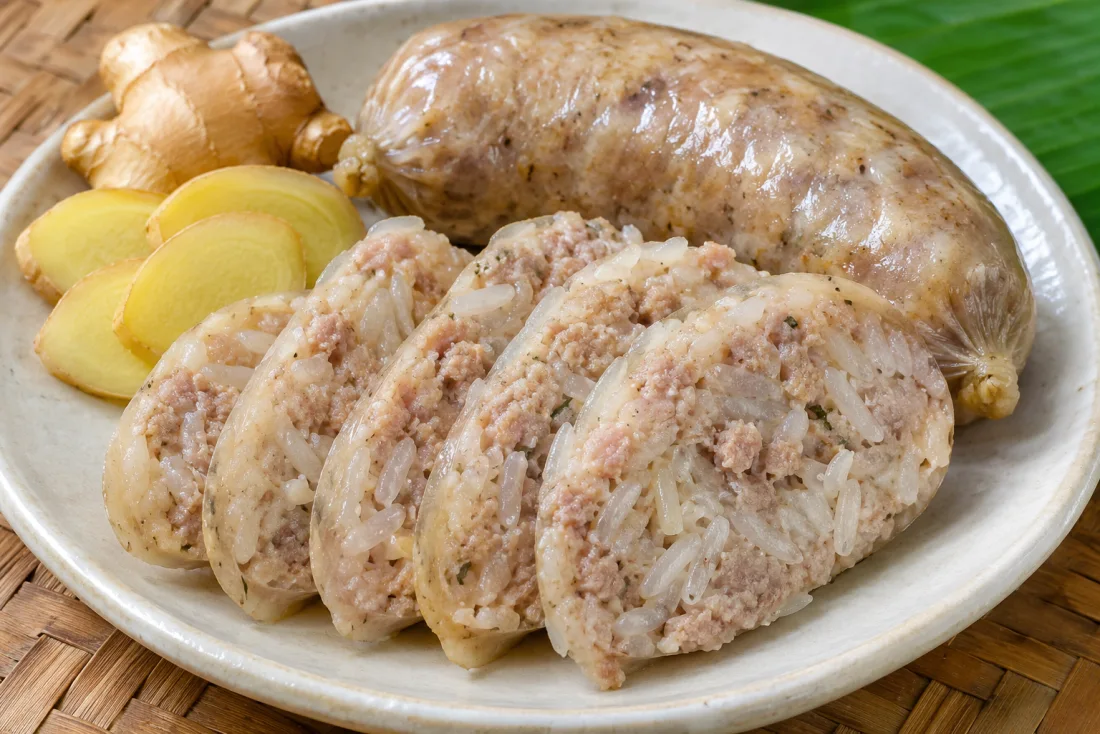
Rice grains visible in the cut sausage
Sai krok khao means rice sausage. Cooked rice is mixed into the casing with the meat, so light grains appear through the cut face. A steamed skin can be pale and a browned skin golden. Other Thai rice sausages, including fermented ones, are separate preparations.
A variant of a recorded Thai pork sausage
The Thai source gives the rice sausage as a variation of a pork sausage in the same collection, with less pork and more coconut milk. This documents one recipe. Different vendors may use other fillings or serve slices with cucumber or ginger.
Cooked rice, pork, coconut milk and egg
The historical recipe uses cooked rice, pork and fat, a pork casing, coconut milk and duck egg, taking its base from a recipe that lists crab or shrimp. Cooked jicama or winter melon shreds may be used in the base. Ask about the actual sausage before assuming it contains only rice and pork.
Fill and steam, then brown if preferred
Mix the cooked rice with the seasoned filling and put it into the prepared casing. Steam until cooked through and set. The cooked links can be sliced or browned for a more fragrant surface. A darker skin alone does not indicate fermentation.
Soft rice in a savoury filling
The casing surrounds tender grains, seasoned pork and rich coconut milk. Steamed slices are softer at the edges, while browned slices have toasted aroma. A nonfermented version does not need to taste sour. Ginger or cucumber provides contrast.
Crustacean, egg, coconut and other allergens
The base recipe can contain crab or shrimp and uses duck egg and coconut milk. It also uses pork and pork casing. Ask about fish sauce, soy, wheat and shared grinding, filling or slicing equipment. The filling ingredients cannot be avoided by removing the casing.
If you have a food allergy, tell the restaurant before ordering and ask about ingredients, sauces and shared cooking equipment.