
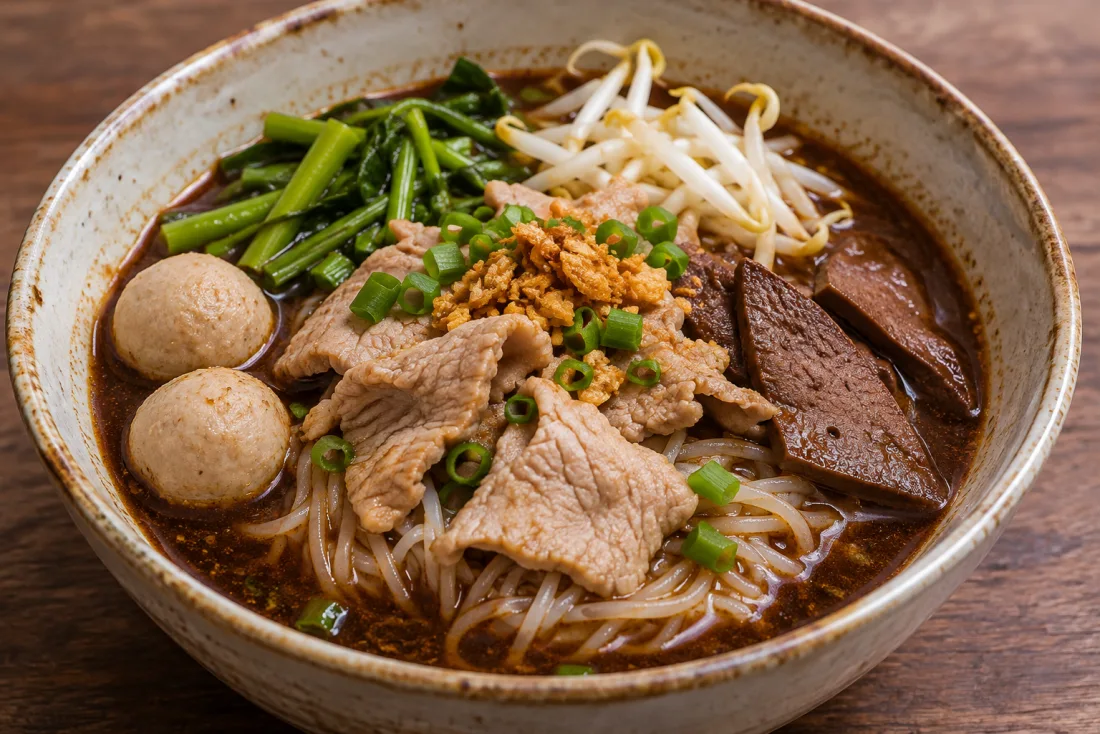

 pork stock
Boat noodles and the waterways of central Thailand
Kuay tiew means noodles and ruea means boat. The name links the dish to vendors on central Thailand’s waterways. Ayutthaya’s visitor guides record several boat-noodle shops near rivers and canals. Today they are cooked on land as well, and one shop does not define every version.
Small bowls are associated with the dish and remain one way to serve it. Check which broth, meat and noodles a shop offers. An Ayutthaya-style label can appear, and some shops use shredded chicken. A photo of dark broth alone cannot identify the meat.
Bone broth, noodles and meat
A common base is pork or beef bones with spices, herbs and seasonings such as soy or fish sauce. Some cooks add cooked pork or beef blood for color and body. Lighter versions can leave it out. Ask separately about stock and meat when ordering.
Fine or wide rice noodles can be used, and some shops serve egg noodles. Thin meat slices have a distinct grain and meatballs give a springier bite. Bean sprouts, water spinach, fried garlic and pork crackling can be added at service.
How the dark broth gets its flavor
Bone broth and sauces bring savory flavor. Spices, pepper and chilli can add lingering warmth. Some shops season slightly sweet, while chilli vinegar makes the bowl tangier. Blood-enriched broth can coat the noodles more heavily. A small amount of flavorful broth is different to a large bowl of clear noodle soup.
Fried garlic and pork crackling start crisp and soften where they touch the broth. Bean sprouts can give a fresh crunch. Ask whether the broth is already spicy and whether chilli vinegar is added separately. Color alone does not tell you whether blood or chilli was used.
Small portions and bowls to compare
A few small bowls let diners compare noodles or choose sliced meat and meatballs. Some people order another bowl after finishing or eat one alongside crackling. Ask whether a regular larger size or takeaway with broth packed separately is available.
Wide noodles can carry the broth, while fine ones disperse it among more strands. Try the original broth before adding chilli vinegar. The number of bowls does not indicate a standard portion, because bowl sizes differ.
Blood-enriched, lighter and chicken versions
Ask whether nam tok means the cook enriches this broth with blood. Some vendors have a lighter broth, while a dry noodle order can come with stock separately. Chicken versions may keep the boat-noodle name. Read the meat and broth options on the menu.
Nam tok in this context describes a noodle style, while Isan nam tok refers to sliced grilled meat dressed with lime, fish sauce and toasted rice. The concentrated broth and small bowl are useful clues when comparing boat noodles with regular pork noodles.
Allergies in the broth, meatballs and seasonings
Fish sauce can contain fish, and soy or fermented soybean seasonings can contain soy and wheat. Ask about meatballs, prepared sauces and stock powders. Egg noodles can bring egg and wheat. Frying oil may be shared. Anyone avoiding specified meats or blood can ask separately about them.
With food allergies, ask about stock, noodles, toppings, condiments and shared strainers, noodle water and ladles. Removing meat or toppings cannot take seasonings out of broth. The kitchen can confirm if it can prepare a portion separately.
If you have a food allergy, tell the restaurant before ordering and ask about ingredients, sauces and shared cooking equipment.