

 optional fermented fish seasoning
Why the cookbook discusses seasoning separately
The chapter treats amounts and proportions when a recipe gives room for judgment. The cook can adjust to the meats, vegetables, liquids and flavor in the pot. These observations constitute culinary reference material, not a single sauce or retail product.
Coconut curry as one example
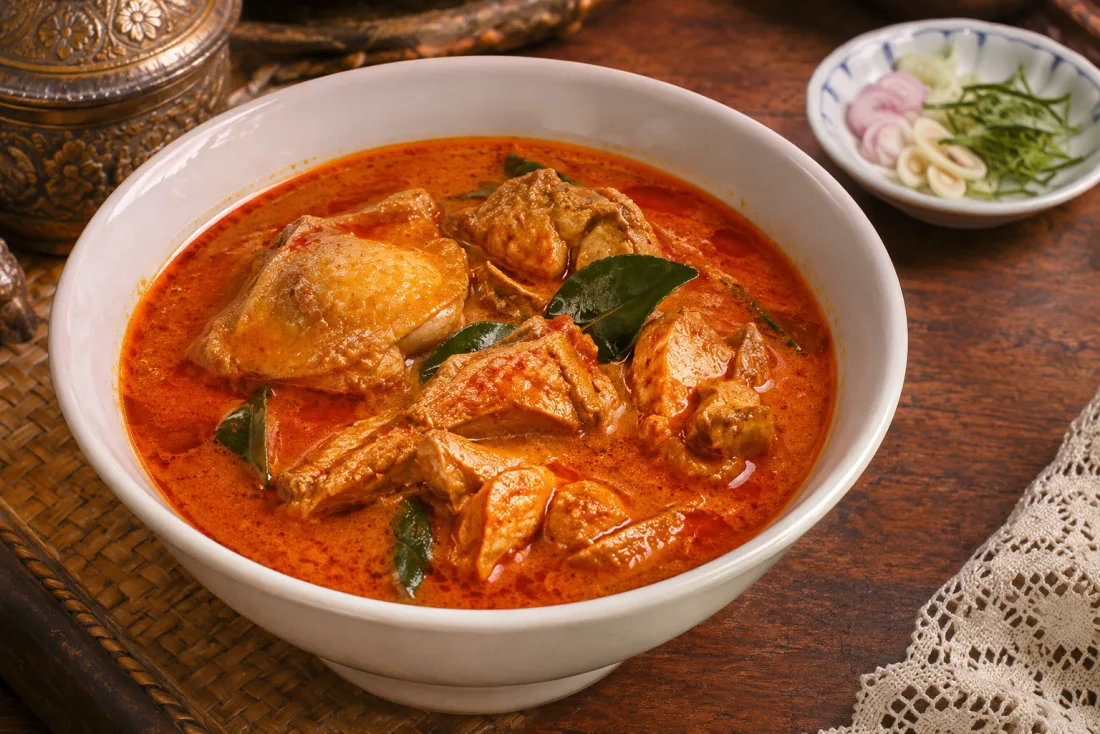
Chicken, beef or other meat can be used in curry, and the text discusses coconut in that context. Coconut milk contributes body and soft sweetness to an aromatic curry. Older directions may count coconuts, whose yields vary with fruit and extraction. One image represents this idea with cooked chicken in a red coconut curry.
A vegetable-heavy broth as another example
The original passage also mentions dishes with abundant vegetables and fermented-fish seasoning. A thinner broth can still have notable savor if seasoned with fish. Vegetable sweetness and liquid shift the balance. Fish seasoning can be present without visible pieces of fish.
Why aromatics vary
The note treats shallot and garlic sizes as practical judgments. Large cloves do not have the same effect as a similar count of very small ones. Older instructions can describe ingredients as used in the cook’s own kitchen. A modern menu still needs to describe its actual recipe.
Reading the two finished dishes
The curry illustration shows the denser orange coconut broth and chicken. The other shows vegetables in a visibly thinner, brown-toned broth. These are finished examples of seasoning patterns, not required versions. Use their cooking liquids and aromas as points of comparison.
Allergens depend on the finished dish
Coconut may be in the curry. Shrimp paste adds a crustacean ingredient and fish sauce or pla ra adds fish. Commercial seasonings may introduce molluscs, soy or wheat. Consider shared equipment and ask about the actual recipe, including broths that look mostly like vegetables.
If you have a food allergy, tell the restaurant before ordering and ask about ingredients, sauces and shared cooking equipment.