

 fish sauce
A leaf-wrapped bite
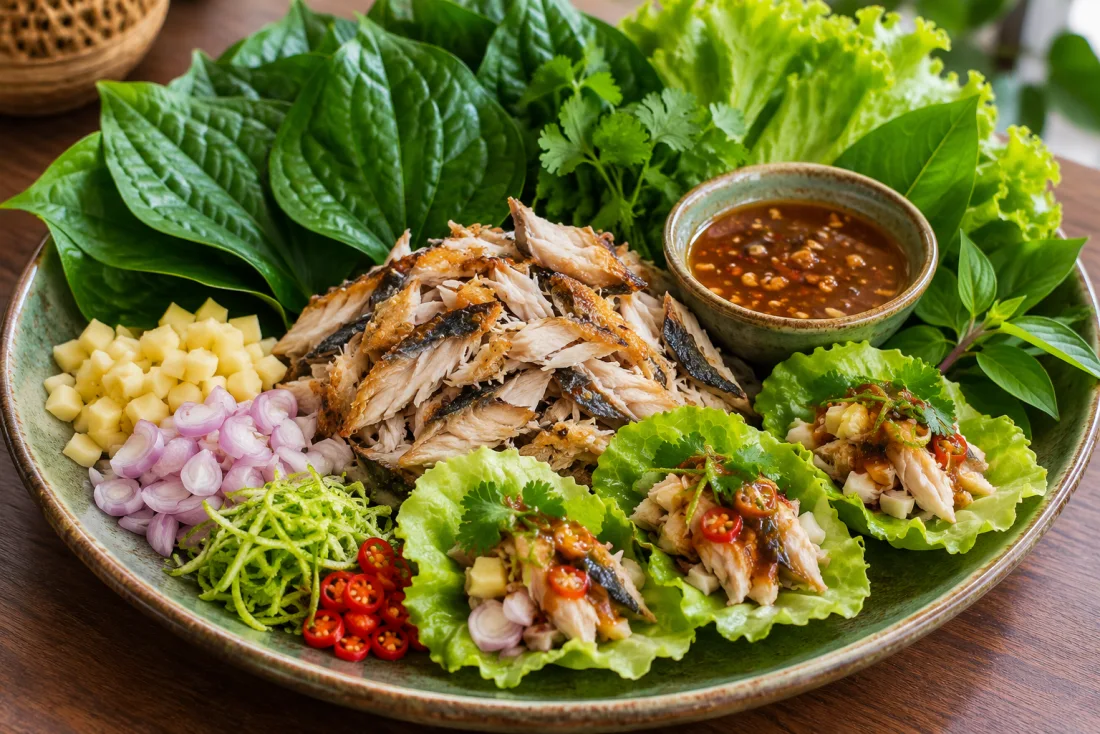
Miang here describes small, individually wrapped bites. Pla thu is mackerel. An edible wild pepper leaf or lettuce leaf holds the fish and aromatics. Some restaurants arrange everything separately and others serve ready-made leaf cups.
Mackerel miang on a Thai table
A historical Thai cookbook uses mackerel, pork, ginger, shallot, citrus, peanuts and lettuce. A modern Thai studio uses fried mackerel, wild pepper leaves and rice vermicelli. A shared platter lets diners choose their own mix and level of heat.
Fish, edible leaves, rice noodles and dip
A modern Thai recipe uses mackerel, wild pepper leaves, roasted peanuts, rice vermicelli, young ginger, shallot, lime and bird's eye chilies. Tamarind, fish sauce, coconut sugar and ground peanut make the dip. Older or restaurant versions can use lettuce, roasted rice or cracker crumbs.
Cook and debone the fish before wrapping
Cook mackerel through and use clean tools to remove the bones. Check for small bones near the fins. Wash and drain the leaves and vegetables, cook the noodles, and assemble near serving. Keep tools used for raw seafood separate.
Fish, gingery bite and roasted peanut
The fish tastes savory, ginger and shallot give a sharp note, and lime and tamarind bring different kinds of acidity. Peanuts add crunch and rice vermicelli carries the sauce. Lettuce adds crisp wateriness, while wild pepper leaves bring a stronger aroma.
Allergens in dip and divided ingredients
Mackerel and fish sauce contain fish. Peanuts can be in the dipping sauce itself. Shrimp is a crustacean and oyster is a mollusk. Crackers can contain wheat, milk, egg or soy. Ask about the fish, fillings, sauce and tools shared across dishes.
If you have a food allergy, tell the restaurant before ordering and ask about ingredients, sauces and shared cooking equipment.