

 shrimp
From Vietnamese gỏi cuốn to rice-paper rolls on Thai menus
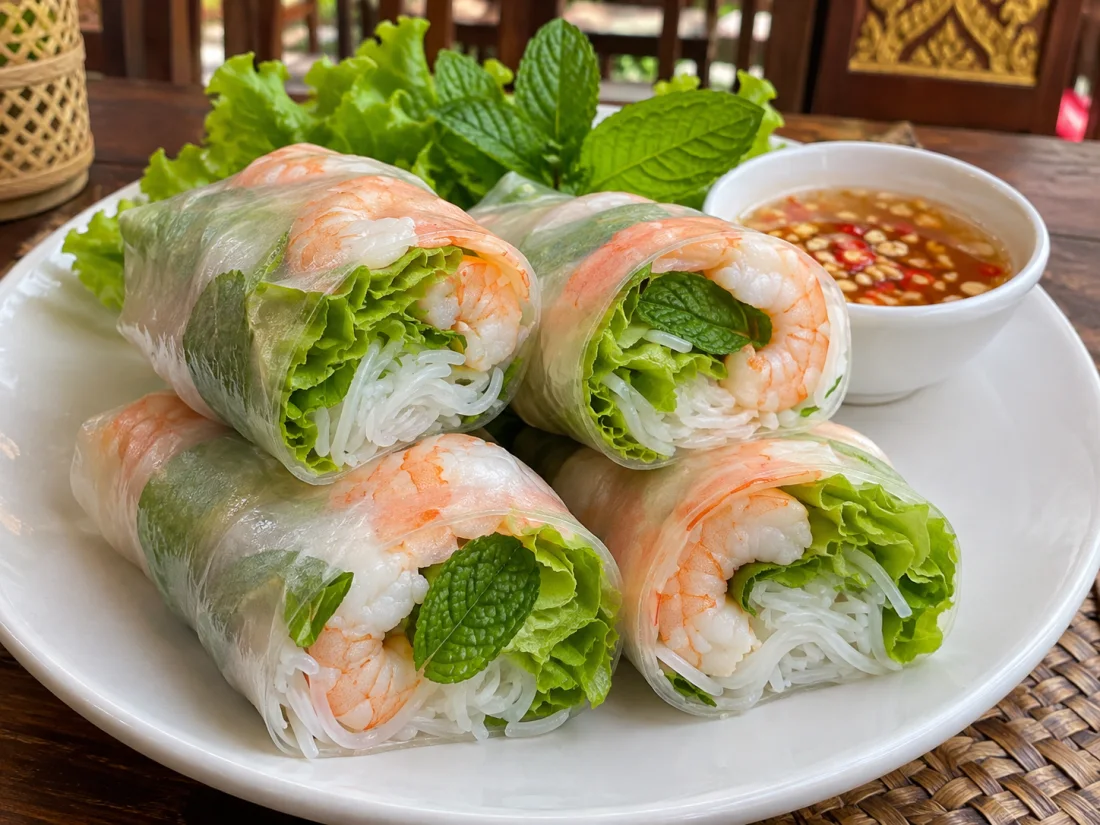
Vietnamese gỏi cuốn is a rice-paper roll with vegetables, fine noodles and cooked meat or seafood. Vietnam Tourism documents it as a familiar snack in Ho Chi Minh City and describes a common pork-and-shrimp version. Bangkok menus also use the name fresh prawn spring roll for a rice roll with greens and chilli dip. The same broad Thai name can include a different Chinese-style roll, so the translucent paper and visible shrimp help identify this version.
How the wrapper, noodles, greens and shrimp work together
Moistened rice paper is flexible enough to hold the filling. Drained vermicelli gives the roll body, lettuce adds crunch and herbs provide fragrance. Cooked, shelled shrimp may be cut lengthwise and placed against the wrapper so their colour shows. A Vietnamese version may also include thin cooked pork. Restaurants may add cucumber, surimi or other greens, so a similar photo does not establish the same filling.
How soft the rice paper should be
Cook and drain the noodles, cool the cooked shrimp and wash and drain the greens first. Moisten the paper only enough to soften as you assemble the fillings. Line up the greens and noodles, fold in the sides and roll firmly with the shrimp near the outer surface. Some shops halve the rolls to show the filling. Others keep them whole and pack the dip separately.
Fresh crunch, a supple wrapper and mild shrimp sweetness
The wrapper is supple, lettuce or cucumber is crisp, and cooked shrimp adds a mild sweetness. Mint or coriander gives a fresh herbal finish. A fish sauce, lime and chilli dip is thinner than a peanut-based sauce. One Bangkok menu serves a spicy chilli dip. Taste the roll first and dip as you eat, because dressing can soak the exposed filling and rolls can turn sticky or dry when left uncovered or touching for too long.
Distinguishing other dishes called fresh spring rolls
Look for a translucent wrapper with visible shrimp, vermicelli and green leaves. Bangkok’s Yaowarat-style fresh roll can instead use a soft flour wrapper, braised tofu, sausage and sprouts, with a thick seasoned gravy over it. Both can be translated as fresh spring rolls. Fried spring rolls are a separate golden, crisp form. Comparing a fresh roll and a fried roll is a quick way to experience the difference in texture.
Allergens in the filling, the dip and the work surface
Shrimp contains crustaceans and fish sauce contains fish. Dipping sauces may include peanut, sesame, soy or wheat. Surimi can contain fish, wheat or egg depending on the product. Even if the wrapper is rice paper, preparation surfaces may be shared. Ask separately about the wrapper, filling, sauce and utensils. A vegetable or tofu roll should have its own confirmed ingredients if you need to avoid shrimp.
If you have a food allergy, tell the restaurant before ordering and ask about ingredients, sauces and shared cooking equipment.