

 pork
 shrimp paste
 fish sauce
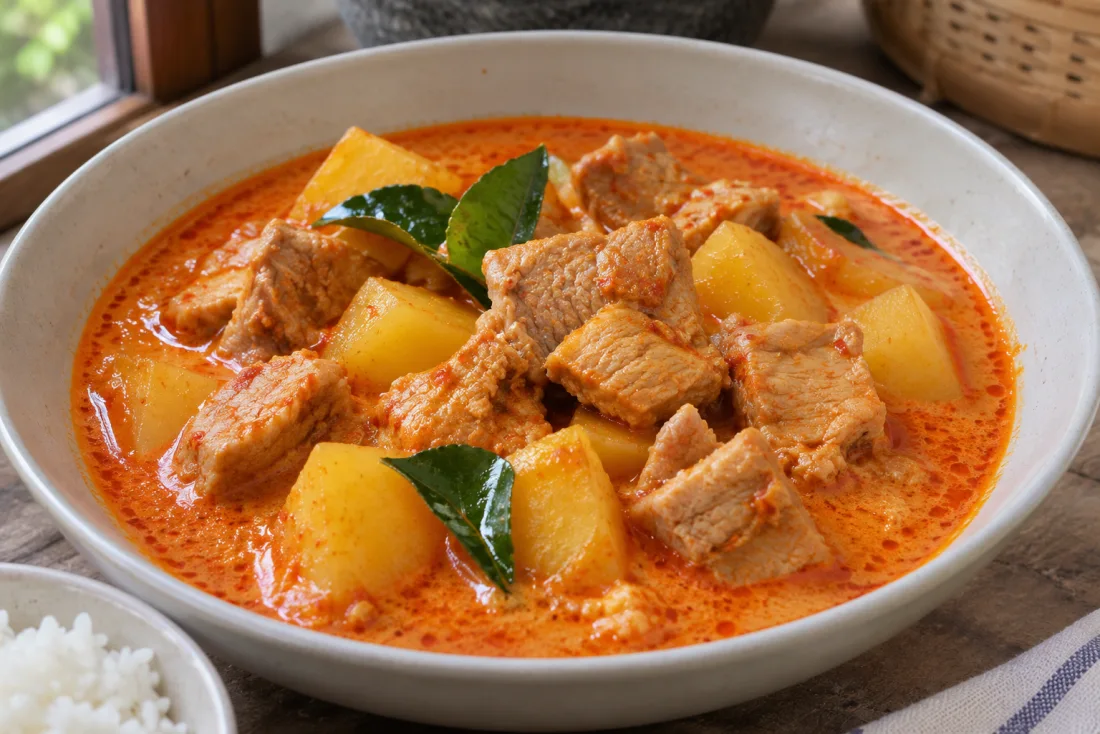
What the dish looks like
The Thai description names a fried curry paste, coconut milk, pork and potatoes. Warm red or orange gravy surrounds pale potato chunks and cooked pork. The two main ingredients distinguish this preparation from red curry variations with eggplant or bamboo shoots. The amount of broth can vary by kitchen.
Southern paste in home cooking
One Thai home cook uses southern-style khua curry paste, coconut milk, shrimp paste and torn makrut lime leaf. Another adds coconut milk to a khua kling-style curry paste, then cooks meaty bones, potatoes and bitter melon in the sauce. Thai culinary research documents the broader variation within red curry. These are household preparations using southern-style paste, with no single established place of invention.
Meat, vegetables and aromatics
Pork can be cooked in pieces or on the bone. Potatoes turn tender in the gravy while thicker chunks can keep their form. Coconut milk gives the sauce body and fish sauce adds savouriness. The first example uses shrimp paste and makrut lime; the second adds bitter melon at the end. Chilli pastes can include lemongrass, galangal and turmeric. Neither documented version calls for adding tamarind and onions.
Flavour and texture
Chilli heat and coconut richness meet savoury pork. Potatoes carry the sauce on the outside and keep a soft centre. Torn makrut leaves lift the aroma. Bitter melon adds a lightly bitter note, with texture depending on how it is cooked. Curry colour is affected by its paste and coconut milk, and is a poor guide to heat.
Service and related curries
Serve the curry in a bowl with plain warm rice. The bone-in recipe also suggests white rice noodles. Massaman can contain coconut milk, pork and potatoes, but commonly uses a different spice paste and may have tamarind or peanuts. A dry-fried curry using related paste is another preparation; in this dish coconut gravy remains visible.
Allergens and bones
Both recipe examples contain fish sauce. One explicitly uses shrimp paste; ask what is in any prepared curry paste. Oyster sauce, if added, can contain molluscs, and soy seasoning can contain soy or wheat. Coconut is present. Ask about shared paste grinders, pots and ladles where relevant, and watch for small bones in the bone-in preparation.
If you have a food allergy, tell the restaurant before ordering and ask about ingredients, sauces and shared cooking equipment.