

 pork
A curry on the northern Thai table
Chiang Mai University includes kaeng hang le in its Lanna food collection and introduces it as a northern Thai pork curry. Accounts of northern food sometimes connect this combination of meat, spices and seasoning to contact with neighbouring Myanmar. The exchange of culinary practices helps explain the regional setting. The current name and a modern recipe do not establish a single invention date.
A version at a Chiang Mai restaurant can reflect a family recipe, local supplies and what the kitchen likes to serve.
The ingredients and their roles
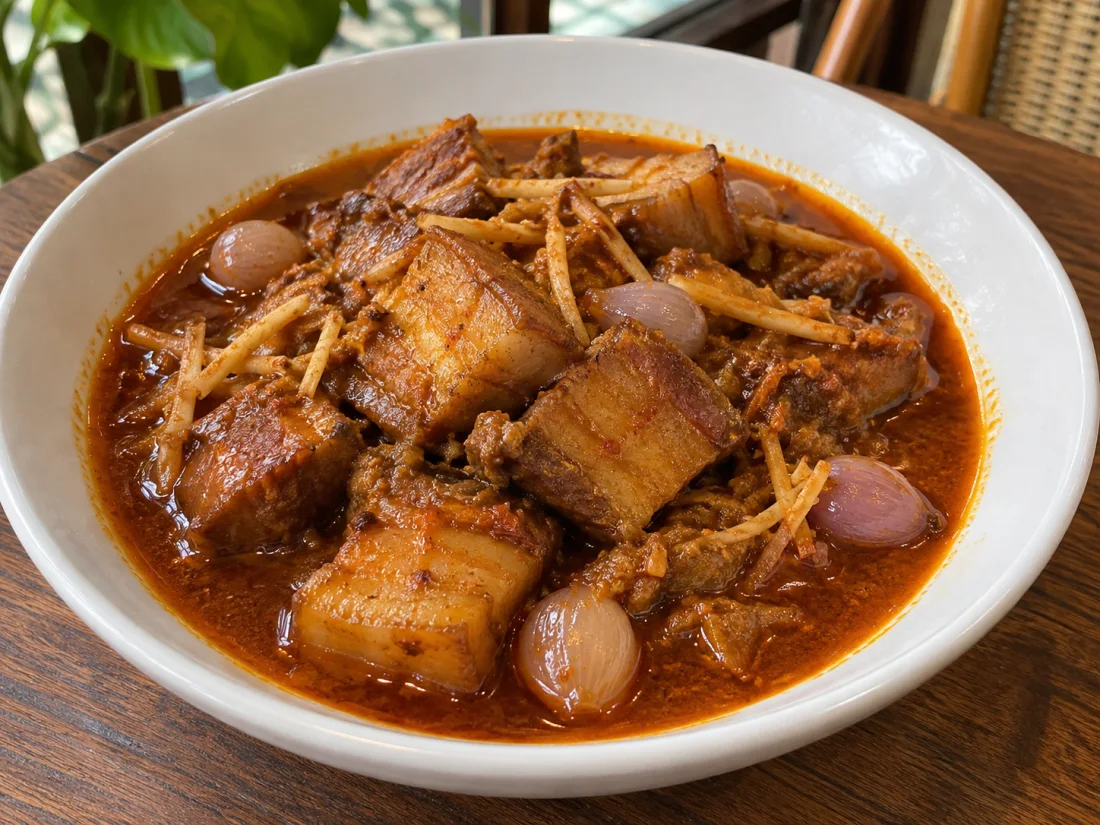
Pork is the main component in familiar versions. A cut with some fat brings a different texture from lean meat after braising. A reference recipe from Kasetsart University includes curry paste, hang le powder, tamarind, palm sugar, sweet dark soy sauce, ginger, garlic and pickled garlic. The paste gives the cooking liquid its base, and sour and sweet ingredients bring contrast to the brown sauce.
Visible ginger shreds deliver a sharper bite than the dried spices that have dispersed through the liquid. The exact contents of prepared pastes and powders depend on the kitchen or supplier.
What braising does to the pork and sauce
The pork is cooked in chunks with the seasoning. As it softens, the simmering liquid becomes able to coat each piece and rendered fat can rise to the surface. Tamarind and sugar sit alongside soy sauce, salt and the meat juices. Two versions that both use ginger and pickled garlic can still differ in acidity and sweetness.
Thick pieces of braised pork feel different from thin, quickly stir-fried slices. Lean and fatty pieces differ in how soft and rich they feel in a bite.
Flavour and the difference from coconut curries
The broth and seasonings give a savoury start, followed by tamarind acidity and palm-sugar sweetness. Ginger adds a distinct fragrance and dried spices leave warmer notes. Chilli varies with the recipe. A dark sauce gives little indication of heat by itself.
The cited recipe braises in water. The texture comes partly from simmering and the fat rendered by the meat. Unlike versions of other Thai curries where coconut milk gives an opaque, pale or orange body, hang le often appears dark and smells strongly of ginger and spices.
Maan and Chiang Saen preparations
Chiang Mai University records a meat-focused Maan preparation and a Chiang Saen style passed down in some families. One documented Chiang Saen version uses vegetables such as pickled bamboo shoots and has a different balance from the meat-heavy preparation found in many markets. A regional name on the menu can signal differences in the recipe.
A restaurant may also differ in acidity, sweetness and the cut of pork it uses. Try a little sauce with rice first, then take a bite with a piece of pork and ginger.
Where to look for it
The Tourism Authority of Thailand lists hang le pork curry alongside a northern mixed platter at a Chiang Mai restaurant. A restaurant serving Lanna food is a useful place to look for it. English menus may spell the name Hang Le, Hang Lay or Hung Lay. Pork, ginger and a sweet-sour braising sauce offer clues when the spelling varies.
Food allergens and ingredients to ask about
The example uses soy sauce, which commonly involves soybeans, and some soy sauces also contain wheat. Curry pastes, spice mixes and other sauces may have several ingredients. If you have an allergy, tell the kitchen what you need to avoid and ask about prepared ingredients and shared pans, utensils and work surfaces.
If you avoid pork for other dietary reasons, ask whether the sauce was cooked with the pork. Taking the pieces out leaves the cooking liquid that was in the same pot.
If you have a food allergy, tell the restaurant before ordering and ask about ingredients, sauces and shared cooking equipment.