
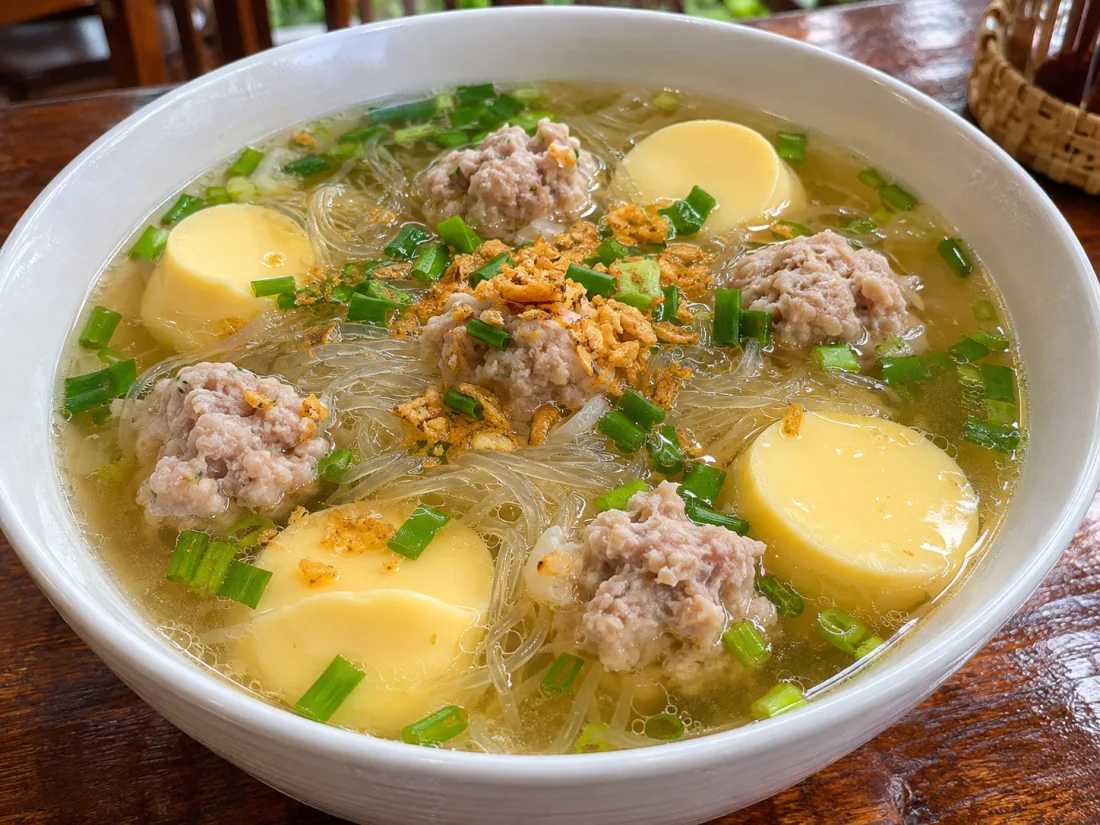

 minced pork
What the Thai name tells you
Gaeng jeud refers to a family of mild soups, and moo sab means minced pork. A menu may use tom jeud for this kind of soup. Although gaeng is often translated as curry elsewhere, in this combination it points to a clear soup with a different color and consistency from a coconut curry.
Clear soup is familiar in Thai home cooking and does not require a single city of origin to explain it. Minced pork is one version, using the savory taste of the pork or stock as a base. Menu names sometimes also specify tofu, Chinese cabbage or glass noodles. At home, it is common for the vegetables to change according to what is available.
Minced pork, clear broth and vegetables
The pork can be mixed with garlic, pepper, coriander root or a seasoning sauce and shaped into small soft portions. They cook through in the soup, leaving some of their aroma in the broth. Cooks can also spoon in irregular pieces. Pork or chicken stock may be used, or the cook can start with water and build flavor from the meat and vegetables.
Chinese cabbage leaves take up broth, while thicker stalks can retain a little crunch. Carrot gives color and mild sweetness. Tofu can go in toward the end so it does not break apart. Chopped scallions, coriander or fried garlic can be added when serving. Cabbage and tofu are familiar choices, but either can vary when the menu names only the minced pork.
How a clear soup gets its flavor
Meat, stock and seasonings give the broth its savory taste. As cabbage and carrots soften, their sweetness makes the broth more rounded. Pepper and garlic add fragrance, and fried garlic brings its own aroma and crunch. The pork pieces remain tender from cooking in broth, alongside ingredients with different textures such as cabbage or tofu.
A version starting with water can let the vegetable sweetness come through clearly, while a bone broth has a stronger meat aroma. Fish sauce and soy sauce can give different flavors and deepen the color. Pepper is usually the main source of warmth, but anyone avoiding chilli can ask about extra chilli or chilli oil, especially when sauces come with the bowl.
Eating it with rice and stronger dishes
A household soup can be brought out in a bowl or pot and ladled into smaller bowls alongside rice and other dishes. Rice takes up some of the broth, while vegetables and minced pork give each spoonful substance. A spicy curry, fried dish or seasoned meat can then alternate with milder mouthfuls of soup.
The soup can also be a simple meal over rice. When diners have different tastes, a clear soup and a hotter stir-fry on the same table let each person choose a balance. Family kitchens and restaurants may use the same menu name but adjust the size of the pork pieces, the vegetables and the strength of the broth.
Reading menus that specify tofu or glass noodles
Tao hu means tofu, and tao hu khai means egg tofu. A Chinese cabbage version can say phak kat khao, while glass noodles are wun sen. Glass noodles take up broth and add another texture and more substance. A soup can use several of these ingredients even though its name mentions only some of them.
A spoonful of hand-shaped minced pork can still show its grains and often feels looser than a springy factory-made meatball. If a photograph shows mainly clear broth and you want to know how much tofu, noodle or meat comes in the bowl, ask how that version is made.
Allergies in the broth, pork and tofu
Fish sauce or stock powder can contain fish. Soy sauce can introduce soy and wheat. Soy tofu and egg tofu have different ingredients. Egg tofu normally contains egg, and any soy depends on its formulation. Ask about the broth, pork mixture and toppings separately, since they may each have their own seasonings. A clear appearance gives no assurance about what is in the soup.
Tell the restaurant exactly what you need to avoid and ask which seasoning, tofu, noodles or extra meatballs are used. Pots and ladles can be shared with other dishes, so ask how the kitchen prepares individual portions. Lifting out a piece of tofu or pork leaves ingredients that have already gone into the broth.
If you have a food allergy, tell the restaurant before ordering and ask about ingredients, sauces and shared cooking equipment.