

 beef cheek
 fish sauce
A modern Thai-style curry from a London kitchen
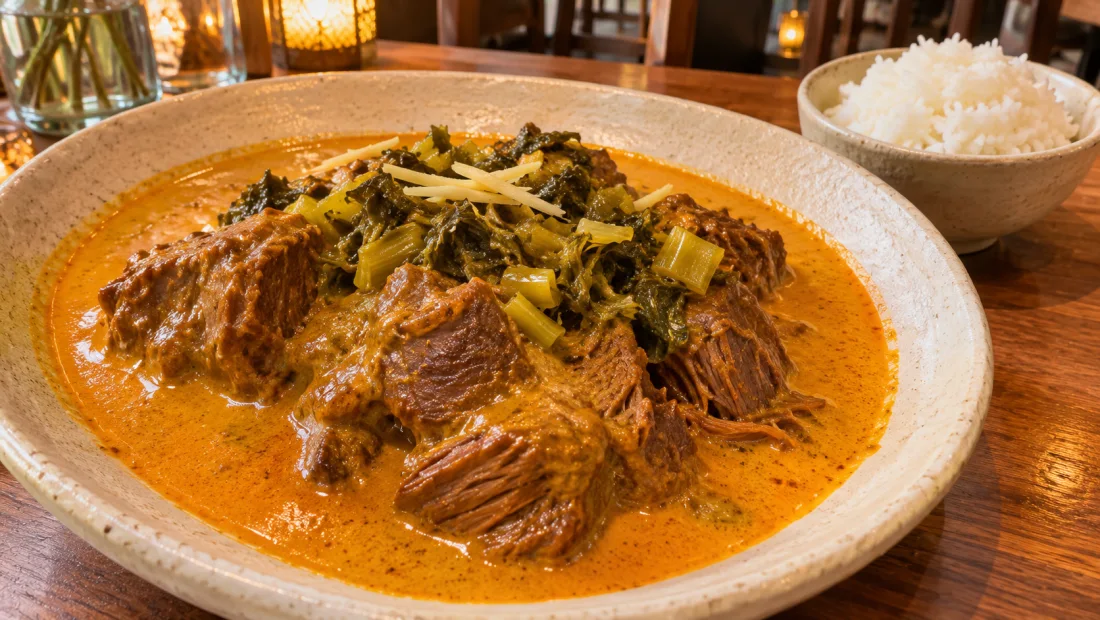
Farang's event menu lists beef cheek, coconut curry, pickled mustard greens and ginger. The chef's published recipe adds tamarind and finishes the bowl with a mustard-green pickle. The name can identify the coconut sauce, meat and pickle. The restaurant's documentation describes a particular Thai-style restaurant preparation in London, with room for changes in the garnish at different services.
Beef cheek, coconut and the mustard-green pickle
Braised beef cheek has large grains and softens during a slow cook. The recipe uses beef stock, coconut milk and Thai curry paste, seasoned with fish sauce, tamarind, palm sugar and makrut leaf. The separate mustard-green pickle brings both leafy pieces and crunchier stems. The recipe gives the quick pickle a rice-vinegar base and aromatics. Ginger appears in the event-menu description.
Braising and adding the garnish
Cook the cheeks until tender in the aromatic sauce. The pickle is prepared separately and added at service as a contrast to the rich curry. The published recipe finishes rice and beef with pickled greens, lightly pickled cucumber, crispy shallots and sweet basil. A large tray can present the curry with rice alongside, while a single bowl can bring the rice and curry together.
Flavour and serving
Beef stock and coconut give depth and body. The tamarind adds a clean sour note, and the chopped mustard greens and cucumber add freshness and crunch. Rich amber sauce contrasts with green leaves, and its colour can vary with the paste and stock. Ginger gives a fragrant warmth in the event-menu version. Share it over warm jasmine rice or serve the rice and curry as one composed bowl.
Allergens and recipe changes
The chef uses fish sauce, so the documented beef version contains fish. Curry paste and stock can introduce crustacean, mollusc, wheat, soy or celery ingredients depending on their composition. Tell the kitchen about mustard, mustard-green or coconut allergies because these plants feature in the dish. Ask about the paste, stock, pickle and shared utensils. A seafood variation has different allergens depending on the actual fish, prawn or stock used.
Showing portion and origin on the menu
Thai-style coconut beef cheek curry with pickled mustard greens identifies the cut of meat, sauce and finished garnish. A sharing portion can show large cheek pieces and mustard greens in a shallow dish. An individual serving can show the rice under the curry, topped with cucumber, herbs and crispy shallots. Mention the actual garnish and serving size. Credit the London restaurant version where relevant and use an image that matches the dish served.
If you have a food allergy, tell the restaurant before ordering and ask about ingredients, sauces and shared cooking equipment.