
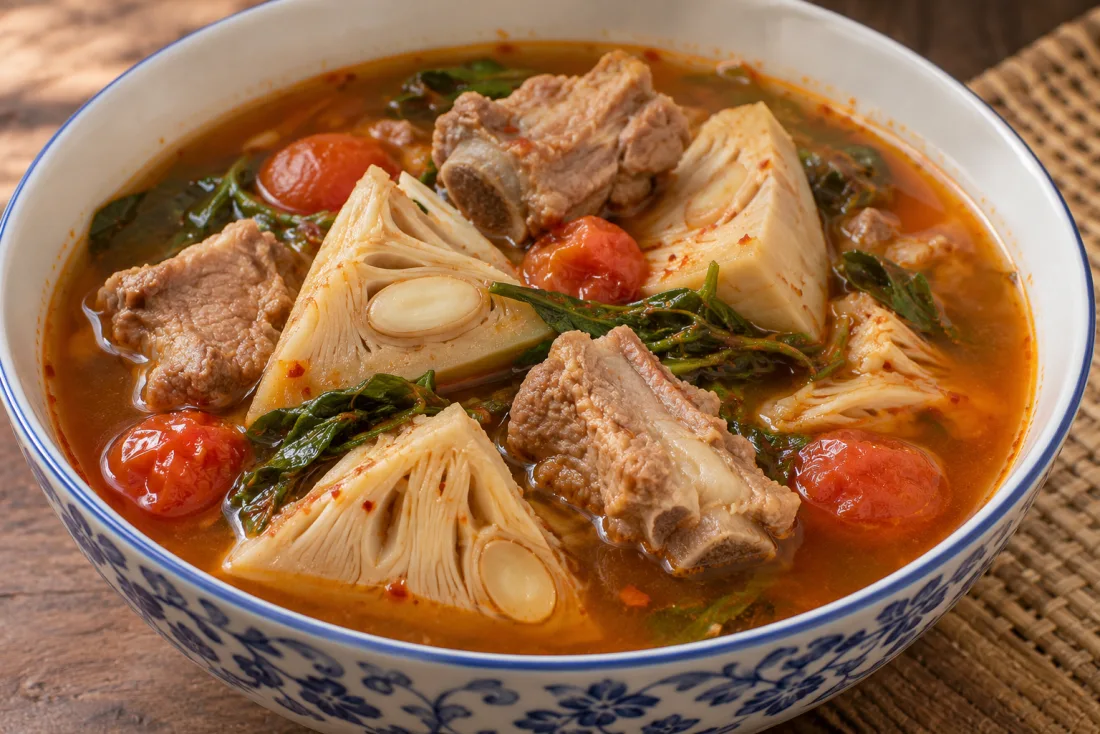

 pork ribs
 fermented fish
A Lanna curry and its occasions
Chiang Mai University’s Lanna archive links young jackfruit curry with weddings and New Year, recording an auspicious association with the fruit’s name. The MICHELIN Guide documents it in Chiang Mai. These accounts describe regional practice without identifying a first inventor.
Young jackfruit, pork and leaves
Unripe jackfruit has a mild flavour and a fibrous bite. KRUA.CO adds pork ribs, tomato, chilli, galangal, garlic, shallot and fermented fish. Wild betel leaves and climbing wattle shoots add different herbal notes. The example does not use coconut milk.
How the broth seasons the jackfruit
The chilli base is dissolved in water, then pork and jackfruit simmer in it. The fruit softens and absorbs the broth while keeping visible fibres. Tomato can add acidity and the leafy herbs are added near the end. A clear broth can still have colour from seasonings.
The texture and taste
Jackfruit carries the savoury broth and contrasts with tender meat. Tomato adds tartness, dried chilli gives warmth and fermented fish may deepen the flavour. Taste a fruit piece and the broth separately, then try it with rice.
Telling it apart from other jackfruit dishes
Tam khanun is a separate pounded young-jackfruit dish, while med khanun is a sweet named for its seed-like shape. The curry can be served with rice or as part of a shared spread. Ask about the cut of meat or herbs if you want a specific version.
Allergens, fermented seasoning and stock
Fermented fish and fish sauce contain fish, and some pastes contain shrimp. Pork may already be in the broth. Ask about the actual stock, pastes and shared pots or ladles. If avoiding coconut, check whether equipment is shared with other curries.
If you have a food allergy, tell the restaurant before ordering and ask about ingredients, sauces and shared cooking equipment.