

 chicken
 fish sauce
Where you can encounter it in Thailand
Thai cook Pailin Chongchitnant associates gaeng kari with Thai Muslim cooking. The Tourism Authority of Thailand describes a Satun restaurant that combines yellow curry powder, coconut milk and red curry paste for a local chicken curry breakfast with turmeric sticky rice. That example gives a sense of how yellow spices, coconut and rice fit together in southern Thai dining.
The Satun meal is one documented preparation, while other restaurants serve the curry in a bowl with steamed rice ordered separately. These references describe regional traditions and ways of serving the dish, and do not establish a specific year of invention.
What gives the gravy its colour and aroma
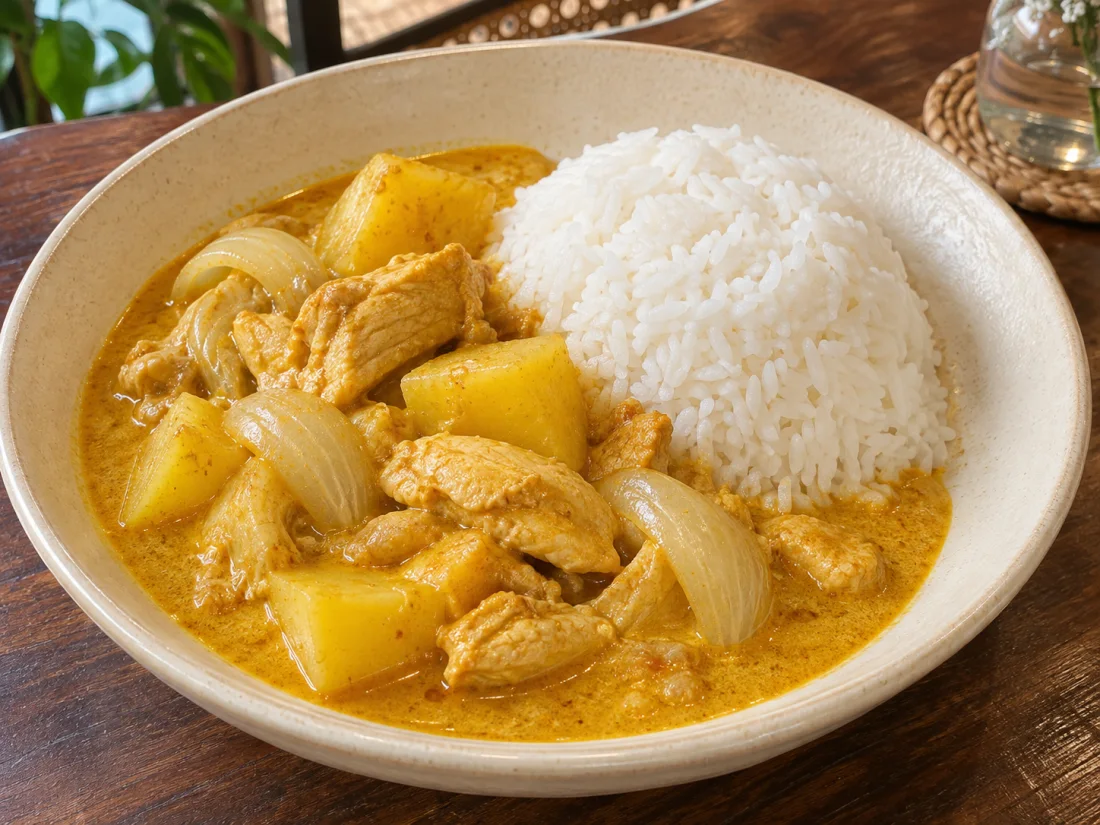
Turmeric and other spices colour the paste. Warm dried spices mingle with aromatics such as garlic and lemongrass, while coconut milk makes the gravy fuller. Chicken and potatoes often make up the bulk of the dish, and some recipes add onion for a sweet note.
The paste sets the flavour, the coconut milk governs the richness, and the chicken and potatoes give you the main pieces in each bite. Fish sauce, sugar or a little tamarind can balance the saltiness, sweetness and acidity. A prepared paste may also include fermented shrimp paste.
How the chicken and potatoes take up the flavour
A preparation published through Thailand’s Ministry of Public Health system cooks the chicken with the yellow paste before adding broth, then adds the potatoes later so they have their own cooking time. In a coconut version, the paste can also be heated until fragrant before adding the coconut milk and the other ingredients.
Chicken thigh has a substantial bite, while potatoes absorb the sauce on the outside and keep a different texture within. Their size affects how long they take to soften. Some of the potato starch may thicken the gravy as well as the coconut milk.
How it tastes and how to eat it
The gravy feels rich, with the warm fragrance of turmeric and dried spices, savoury chicken and soft potatoes. Yellow curry paste can still contain chilli, and two bowls of the same colour can differ in heat. A little tamarind can provide a bright finish, while stewed onion can give the sauce a sweeter note.
Try some gravy on plain steamed rice first, then with chicken and potato. The documented Satun breakfast uses turmeric sticky rice, which offers a different colour and a stickier texture than steamed rice.
How to read the names of similar curries
Gai means chicken. A version using beef may appear under a different name. Two chicken versions may also look different, depending on whether they use bone-in pieces or boneless meat, and on how the potatoes are cut. Check whether rice comes with it or is ordered separately.
An English menu may call gaeng kari “yellow curry,” but a southern sour curry of a similar colour can also be translated that way. Check the Thai name and ask whether it is a coconut-based chicken curry or a sour curry with different ingredients.
Food allergens in the paste and stock
Ask about fish sauce and fish, shrimp paste and crustaceans, and any other seasonings in the paste and broth. Coconut milk contains coconut. If the kitchen adds milk or cream, check that separately. If the restaurant buys the paste, staff may be able to check its label.
Also ask about shared pans, utensils, work surfaces and seasoning containers. Colour gives no reliable indication of the paste ingredients, and removing something visible cannot remove ingredients already cooked into the gravy. If staff cannot provide enough information, decide according to your allergy requirements.
If you have a food allergy, tell the restaurant before ordering and ask about ingredients, sauces and shared cooking equipment.