

 prawn
Shrimp in the Thai green curry family
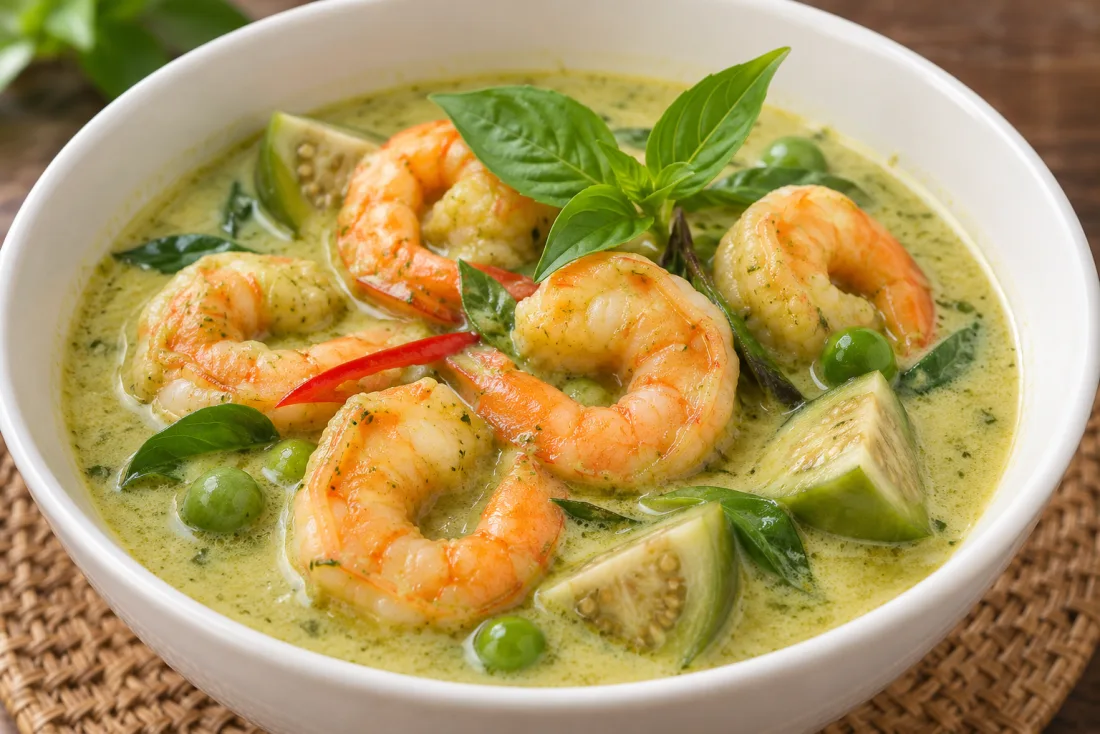
Kung means shrimp. Green curry is associated with central Thai coconut curries, and shrimp is a seafood option alongside chicken and beef. Shrimp may be peeled with the tail left on. Species, size and provenance depend on the kitchen.
Green chili paste, coconut milk and shrimp
Green chili, galangal, lemongrass, shallot, garlic and makrut peel give the paste its character. Fry it in oil or in reduced coconut cream and add more coconut milk. A KRUA recipe uses white shrimp, purple eggplant, pea pods, salt, sugar and Thai basil. Other kitchens may use Thai eggplant, pea eggplant or fish sauce. A documented variation uses bamboo shoots in place of the eggplant, giving a crisper bite.
Springy shrimp and fresh chili heat
Coconut milk gives body, shrimp contributes a clean sweetness and Thai basil scents the dish. Eggplants soften and absorb sauce. Pea eggplant has a slightly bitter pop; edible pea pods are crisp. Green curry can be hot, depending on the fresh chilies and paste.
Rice and rice noodle accompaniments
Spoon curry over steamed rice or khanom chin. Remove the tails as needed and share shrimp and vegetables together. Ask whether chili can be adjusted if the curry is already prepared.
Red curry and coconut galangal soup
Thai red curry commonly uses dried red chili. Green curry uses fresh green chili for its base. Tom kha kung shares shrimp and coconut milk but puts greater emphasis on galangal and lime acidity.
Allergens in shrimp and curry paste
Shrimp and shrimp paste contribute crustacean allergens. Fish sauce adds fish when used. Declare coconut allergy and ask about soy or wheat in packaged paste or broth. Ask if pots, utensils and paste-making equipment are shared with seafood.
If you have a food allergy, tell the restaurant before ordering and ask about ingredients, sauces and shared cooking equipment.