
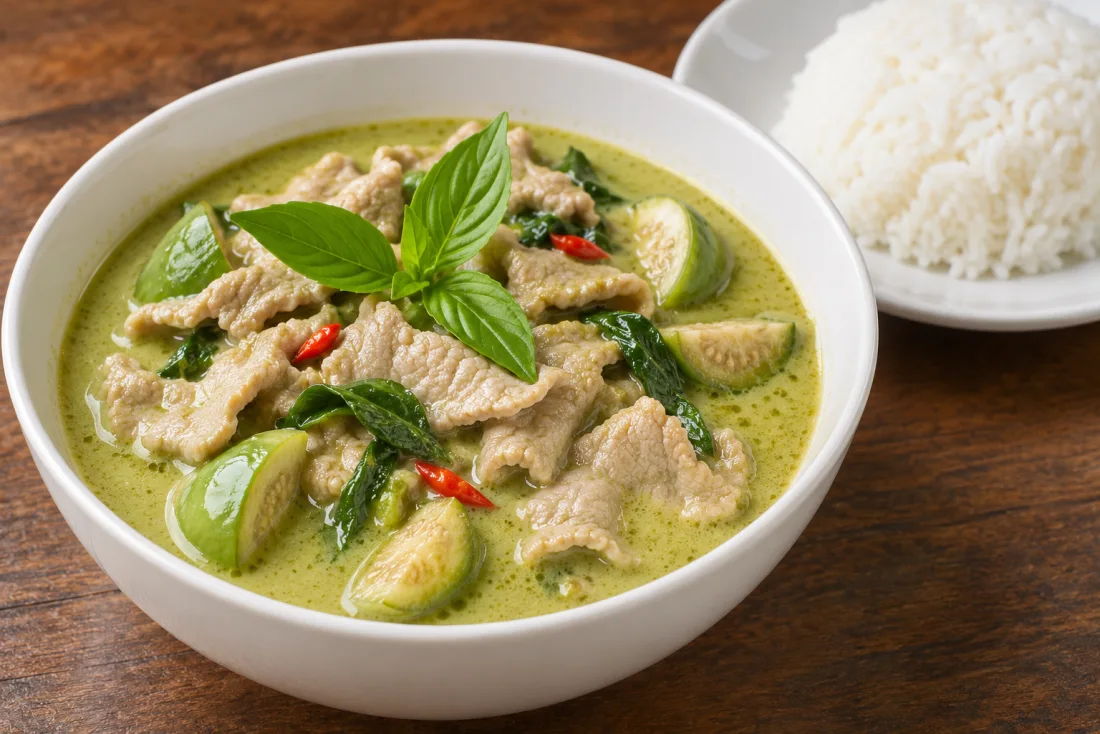

 pork
Pork in central Thai green curry
Moo means pork. Fresh green chili identifies the coconut-based curry family. Household recipes use pork with rice or khanom chin. Shoulder, neck, thin pork slices or ribs are possible. The name identifies the meat, while the cut and vegetables depend on the recipe.
Tender pork and carefully cooked vegetables
Fry the fresh green chili paste, then use coconut cream and thinner coconut milk to cook the pork. Simmer thicker or bone-in cuts longer. Recipes use round Thai eggplant and pea eggplant or bamboo shoots. Add Thai basil toward the end. Grilled pork is another documented preparation.
Creamy, herbal and savory
Coconut milk feels round, green chili gives heat and basil brings a herbal aroma. Round eggplant softens, pea eggplant can be gently bitter and bamboo shoots stay crisp. Palm sugar can round the seasoning. Grilled or fatty pork adds its own aroma to the coconut.
Rice and khanom chin noodles
Spoon pork, vegetables and sauce onto plain rice or thin rice noodles. Set aside bones if it uses ribs. Ask about the cut, vegetables and chili level. Removing fresh chili garnish will leave the chili already dissolved in the paste.
Red curry, panang and grilled pork versions
Dry red chilies give red curry a different color and aroma. Panang tends to have a thicker sauce and a clear makrut lime-leaf aroma. Moo yang indicates grilled pork, which can be cooked with green curry or alongside it.
Allergens in paste, coconut and marinade
Shrimp paste adds crustaceans and fish sauce adds fish when used. Declare coconut allergy. Check packaged paste and marinades for soy and wheat, and ask about shared pots, ladles, strainers and grinders.
If you have a food allergy, tell the restaurant before ordering and ask about ingredients, sauces and shared cooking equipment.