

 beef
 fish sauce
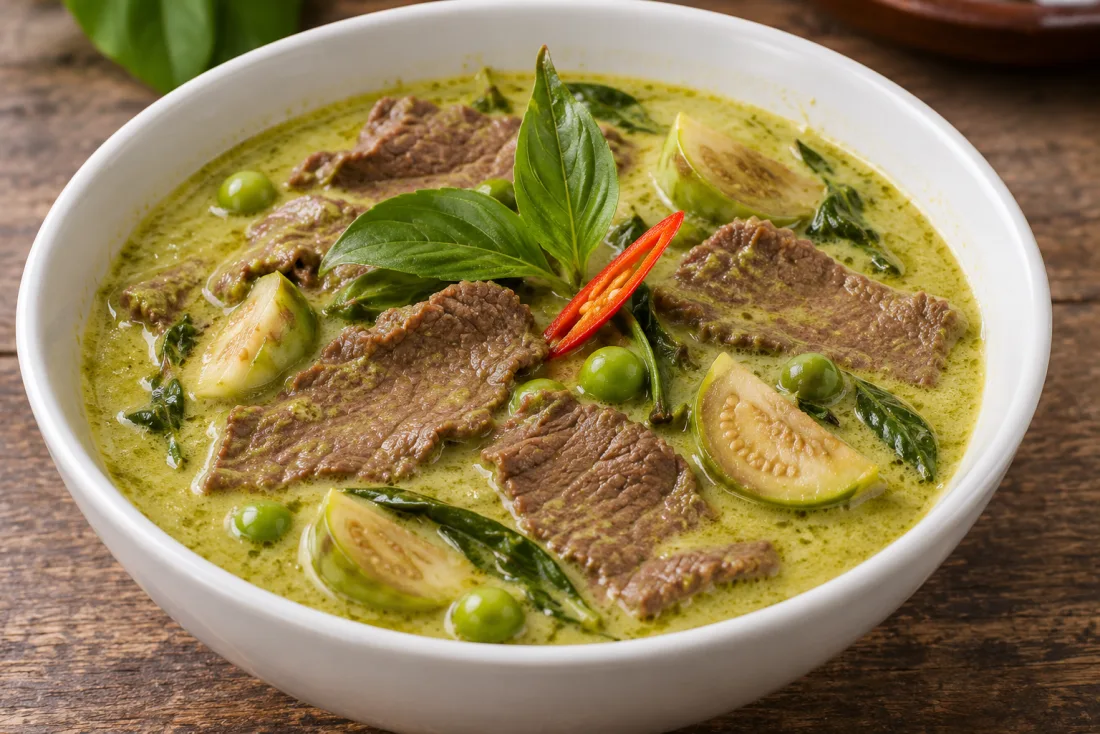
Beef green curry in central Thai cooking
Neua means beef here. A National Identity Foundation cookbook lists sliced ribeye green curry among central dishes. Thai cooks also make it with shank or ground beef. The name identifies beef and green curry, and the cut depends on the kitchen.
Beef cuts, green chili paste and coconut
Fry green chili paste with fresh aromatics and combine it with coconut milk. Thin ribeye can be browned before simmering, while shank can be cooked gently in thin coconut milk before the curry is assembled. Eggplants, fish sauce, palm sugar, Thai basil and makrut lime leaves can finish the sauce.
Fresh chili heat and deep beef flavor
Coconut milk carries green chili and herbal aromas. Fatty cuts enrich the sauce and slow-cooked shank can be soft, with tender connective tissue. Thin slices give a distinct bite. Pea eggplant can be lightly bitter and long eggplant absorbs the sauce. Color alone cannot predict chili heat.
Serving with rice or rice noodles
Spoon beef, eggplant and curry over rice or khanom chin, and distribute the meat and vegetables when sharing. Ask which cut is used and whether the chili can be adjusted, especially if the batch is already prepared.
The difference from panang and massaman
Panang tends to have a thicker, reduced sauce, fragrant makrut lime leaves and sometimes ground peanuts. Massaman can use potato, tamarind and warm dried spices. Green curry emphasizes the aroma of fresh green chili and herbs.
Allergens in the sauce and prepared meat
Shrimp paste in green curry contributes crustaceans, and fish sauce brings fish. Declare coconut allergy and check soy and wheat in marinades and packaged ingredients. Ask about shared grinders, pots, utensils and boards.
If you have a food allergy, tell the restaurant before ordering and ask about ingredients, sauces and shared cooking equipment.