
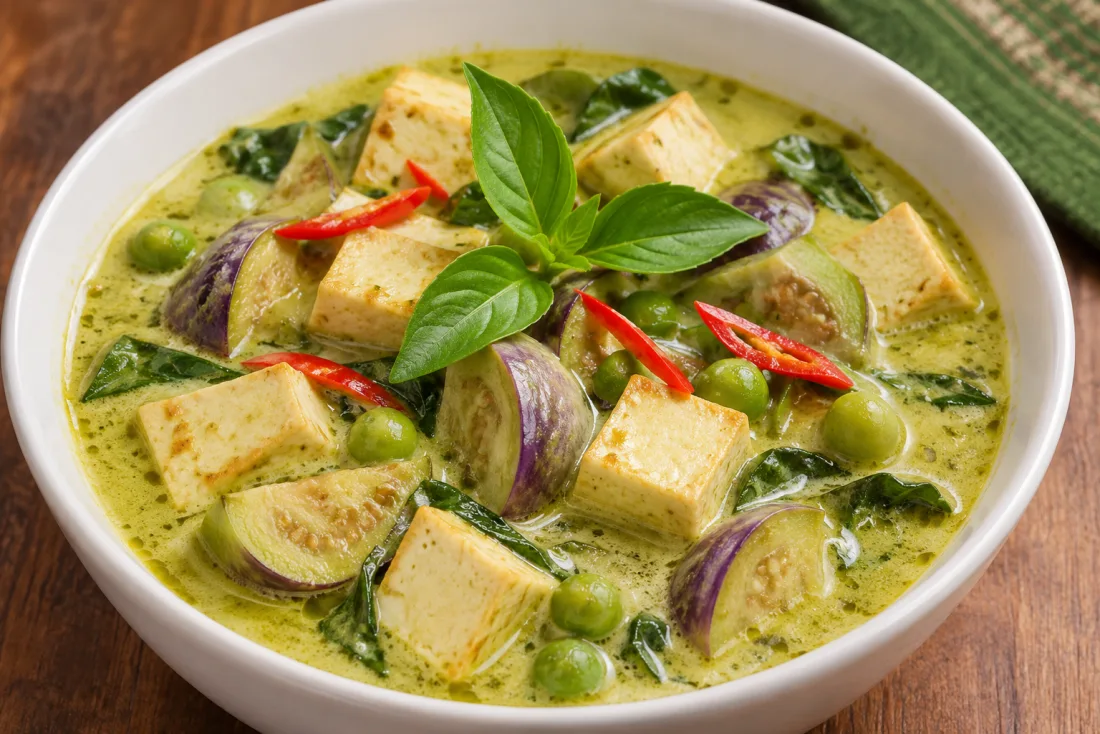

Vegetables in the green curry family
Pak means vegetables. Central Thai green curry uses fresh green chilies and coconut milk. Vegetables and tofu can be the main ingredients. Some cooks use deliberately vegan paste for vegetarian festivals, while the menu name alone only identifies the visible ingredients.
Eggplant, winter melon, bamboo shoots and tofu
Use round or pea eggplants, winter melon or bamboo shoots. Chefs also document baby corn, carrot, bell pepper and tofu. Fry green curry paste and add coconut milk. Vegan cooks may use soy sauce, mushrooms, miso or vegan fish sauce and finish with basil and makrut leaves. Add bell peppers late so they keep a little crunch.
Fresh chili, Thai basil and sweet vegetables
Coconut gives body, the chili and lemongrass smell fresh and Thai basil fragrant. Carrot can taste sweet and eggplant a little bitter, while bamboo shoot and fried tofu have different bites. The color and word sweet are unreliable measures of chili heat.
Serving with rice or thin rice noodles
Spoon lightly over rice or khanom chin noodles and share vegetables and tofu with the sauce. Ask whether the curry is already prepared if you need it milder, and check any accompaniments separately.
Vegetable, vegan and meat curries
Ask whether a vegetable curry uses shrimp-free paste, no fish sauce and a plant-based stock if required. Je often identifies a Thai vegetarian practice; ask how the dish is made. Red vegetable curry can use similar vegetables with a different chili paste, and meat versions can still have plenty of vegetables.
Allergens in the paste and plant seasonings
Shrimp paste contributes crustaceans and fish sauce brings fish if used. Tofu, miso and soy sauce contain soy; some sauces also contain wheat. Declare coconut allergy and ask about shared grinders, pans, ladles and frying oil.
If you have a food allergy, tell the restaurant before ordering and ask about ingredients, sauces and shared cooking equipment.