

 shrimp
 fish sauce
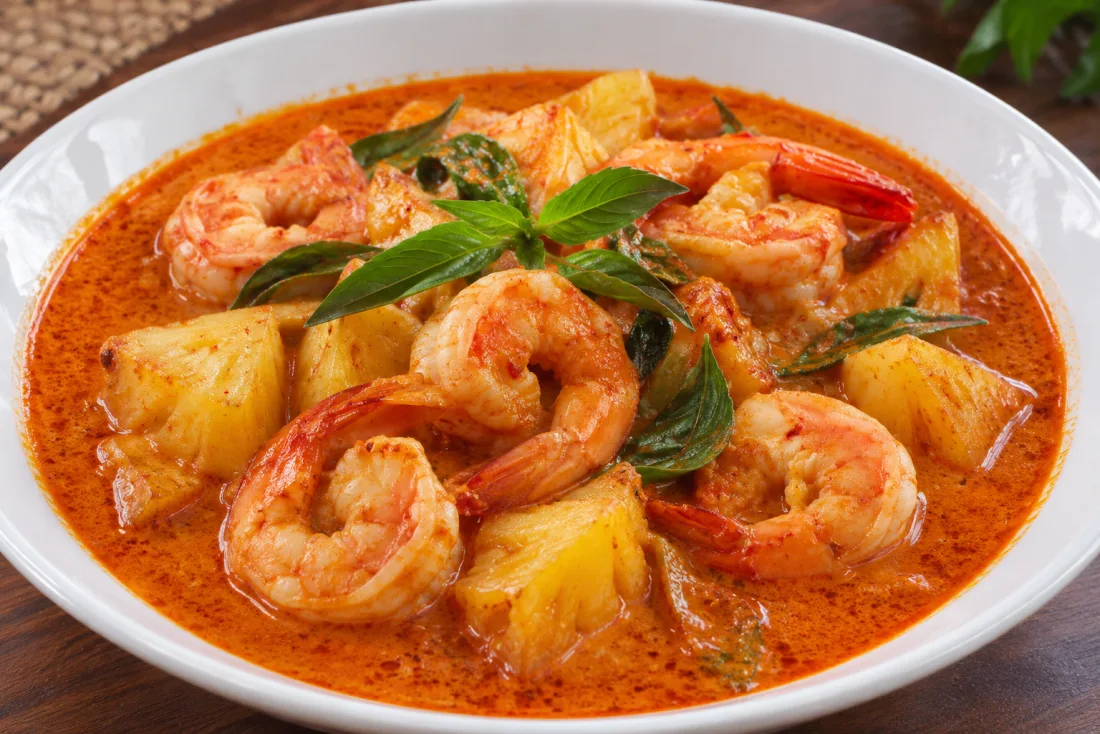
Shrimp is the main ingredient and pineapple names one version
Goong identifies shrimp. This coconut version uses pineapple and can name the fruit explicitly. Other versions can use different vegetables. The name alone does not specify a province or a particular shrimp size.
Timing the coconut, pineapple and shrimp
Cook khua curry paste in part of the coconut milk, then add remaining coconut milk, pineapple, tamarind, fish sauce, salt and coconut sugar. Add shrimp later. Some kitchens add makrut lime leaves or red chili.
Springy shrimp and sweet-tart fruit
Shrimp pick up the chili and coconut flavor while remaining springy. Pineapple provides acidity and sweetness, and tamarind can deepen the tartness. Coconut rounds the flavor. The color depends on the paste and concentration.
Serving shrimp curry with rice
Portion shrimp and fruit before spooning the curry onto rice. Check shrimp tails and ask whether rice is included. A larger portion can mean more sauce or more shrimp depending on the menu.
Pineapple coconut curry, sour curry and mussel curry
A broad pineapple coconut curry may contain mussels or chicken. A shrimp-specific name highlights that main ingredient. Pineapple can also appear in a southern water-based sour curry. Red coconut curry with shrimp does not necessarily contain fruit.
Allergens in shrimp, fish sauce and curry paste
Shrimp contains crustaceans and fish sauce contains fish. Some paste contains shrimp or dried fish; mussels add mollusks. Check coconut, soy and wheat when relevant. Ask about shared utensils. Removing pieces does not remove allergens from the sauce.
If you have a food allergy, tell the restaurant before ordering and ask about ingredients, sauces and shared cooking equipment.