

 beef
 fish sauce or salt
 optional bamboo shoots and shrimp paste
The Name and Its Regional Context
Kaeng khua names a family of curries seasoned with khua paste, and nuea refers here to beef. Thai home cooks document Southern-style khua beef curry, and Southern restaurants may list a khua coconut beef curry as a dish in its own right. These two examples are Southern-style preparations. Separately, a field account from the Mon community of Chet Rio, Samut Sakhon, records a curry under the broad name at ordination meals. The shared name does not establish a shared recipe or a line of descent between those regions.
Chili, Salt and Coconut
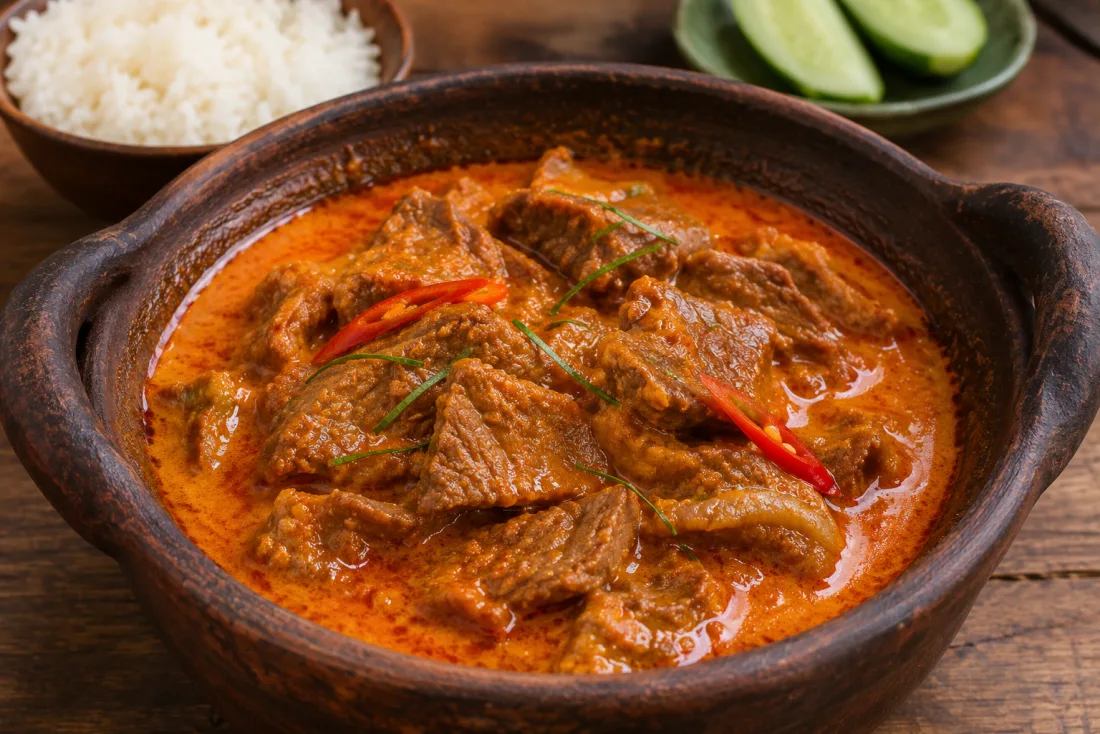
Heating the curry paste brings forward the chili and spice aroma. Coconut milk gives the hot savory sauce a rich mouthfeel with enough liquid to spoon over rice. Tiny orange oil flecks may show on the surface. Fish sauce or salt supplies much of the savory taste, and makrut lime leaves in some bowls add a citrus fragrance. A little tamarind can bring a tart edge when used. The coconut, cooked beef and curry paste remain the principal flavors in both versions.
Beef Shank With Makrut Leaves
One Southern home cook uses shank, rump or tendon, heats the curry paste in thicker coconut milk, and then simmers the beef with thinner coconut milk until tender. Shank keeps its fine seams, while tendon gives a more elastic bite. Fish sauce or salt and a little palm sugar balance the paste, and tamarind is an optional addition. Torn makrut leaves and cut chili add fragrance at the end. The reduced sauce lightly coats the cooked meat and still pools in the serving bowl.
Beef With Bamboo Shoots
A second Southern home recipe combines beef tenderloin and fresh coconut milk with previously boiled bamboo shoots. The cook uses Southern coconut curry paste, additional Southern hot curry paste and shrimp paste. Pale cooked bamboo adds a firmer bite among the tender beef slices. The recipe does not call for tamarind or makrut leaves. Both bowls show recognizable khua curry characteristics, while the cut of beef and presence of bamboo shoots make the finished food visibly different. Ask if a menu does not list the vegetables.
Rice and the Table
Southern restaurants sell the curry as a dish to eat with rice, which can be served separately so each person can choose how much sauce to add. Cucumber or long beans might be served on the side. One home cook also suggests boiled egg as an accompaniment. A deeper bowl keeps the sauce warm for sharing; a shallow bowl can display the beef and bamboo. A deeper red shade may reflect curry paste and coconut-milk proportions, so ask the cook if heat level matters. The aroma is strongest when the curry is served warm with rice.
Allergens and Menu Details
Coconut milk is central to both examples. Fish sauce contains fish. The bamboo shoot recipe adds shrimp paste, which contains a crustacean allergen. A shop may use curry paste containing fish or shrimp even if its menu only names beef. Shared cookware, ladles and serving areas can cause cross-contact. Check the actual paste and seasonings if you need to avoid an allergen. Rice, boiled egg and raw vegetables are accompaniments in some services; their presence or absence should not be inferred from illustrations.
If you have a food allergy, tell the restaurant before ordering and ask about ingredients, sauces and shared cooking equipment.