
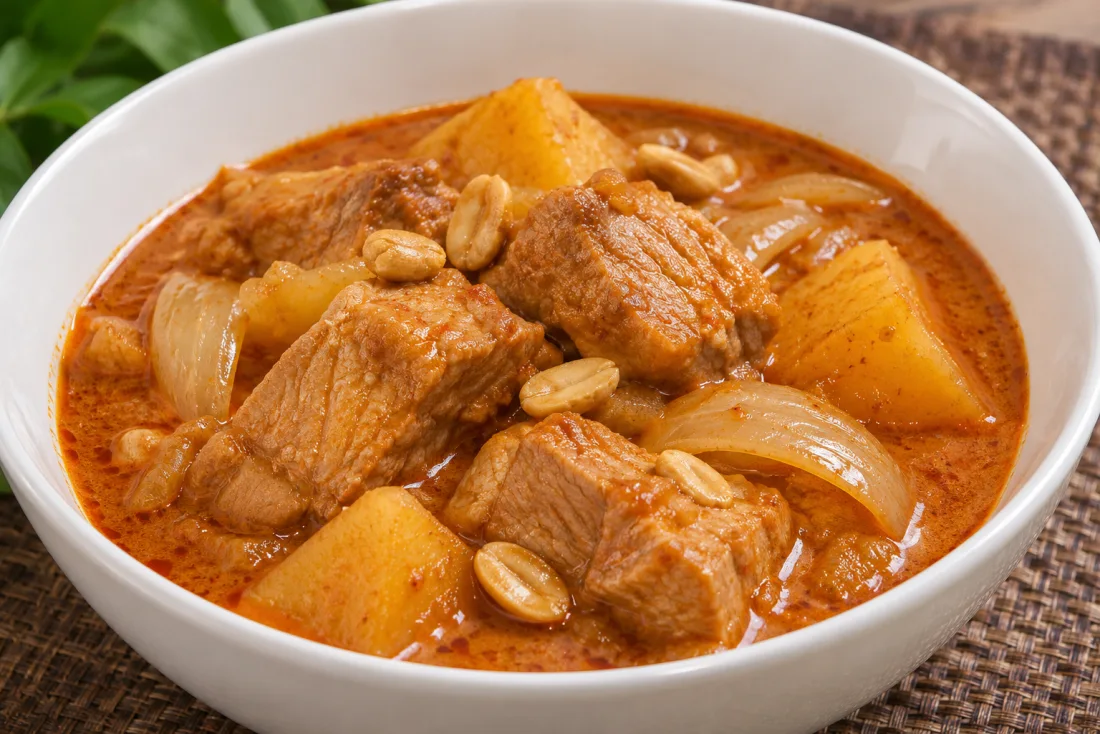

 pork
The pork adaptation of massaman
Moo means pork. Massaman is associated with Thai Muslim culinary history, and chicken and beef are familiar choices. Thai home and show recipes document versions with pork. The pork version is unsuitable for halal diners.
Slow-cooked pork, potato and coconut curry
Fry the paste before mixing with coconut milk and simmering pork. Typical aromatics include dried chilies and Thai herbs alongside cinnamon, cardamom, cumin and cloves. Add potatoes, onions and roasted peanuts. Fish sauce, palm sugar and tamarind can complete the seasoning. Let thick cuts soften before adding delicate vegetables.
Warm spices, tamarind and creamy body
Coconut is smooth, tamarind brings a fruity sourness and toasted spices bring warmth. Soft pork and potatoes sit in a rich sauce. Peanuts add their own flavor and can soften if simmered. Heat and thickness depend on the paste and reduction.
Rice, roti and a crisp accompaniment
Serve with steamed rice or roti and distribute pork, potatoes and gravy when sharing. Remove whole cinnamon or cardamom as needed. A sweet-and-sour cucumber relish can go alongside. Ask how spicy the prepared batch is.
Massaman, yellow curry and panang
Yellow curry often takes its color from turmeric. Massaman has warm dry spices, tamarind and often peanuts. Panang can also contain peanuts but often has a reduced sauce with strong makrut lime leaf aroma. Moo, gai and neua identify pork, chicken and beef versions.
Peanuts and other allergens
Peanuts may be cooked into the curry and be present even if whole nuts are not visible. Shrimp paste adds crustaceans and fish sauce adds fish when used. Declare coconut allergy and ask about soy or wheat, including wheat, milk or egg in roti. Ask about shared grinders, pots and utensils.
If you have a food allergy, tell the restaurant before ordering and ask about ingredients, sauces and shared cooking equipment.