
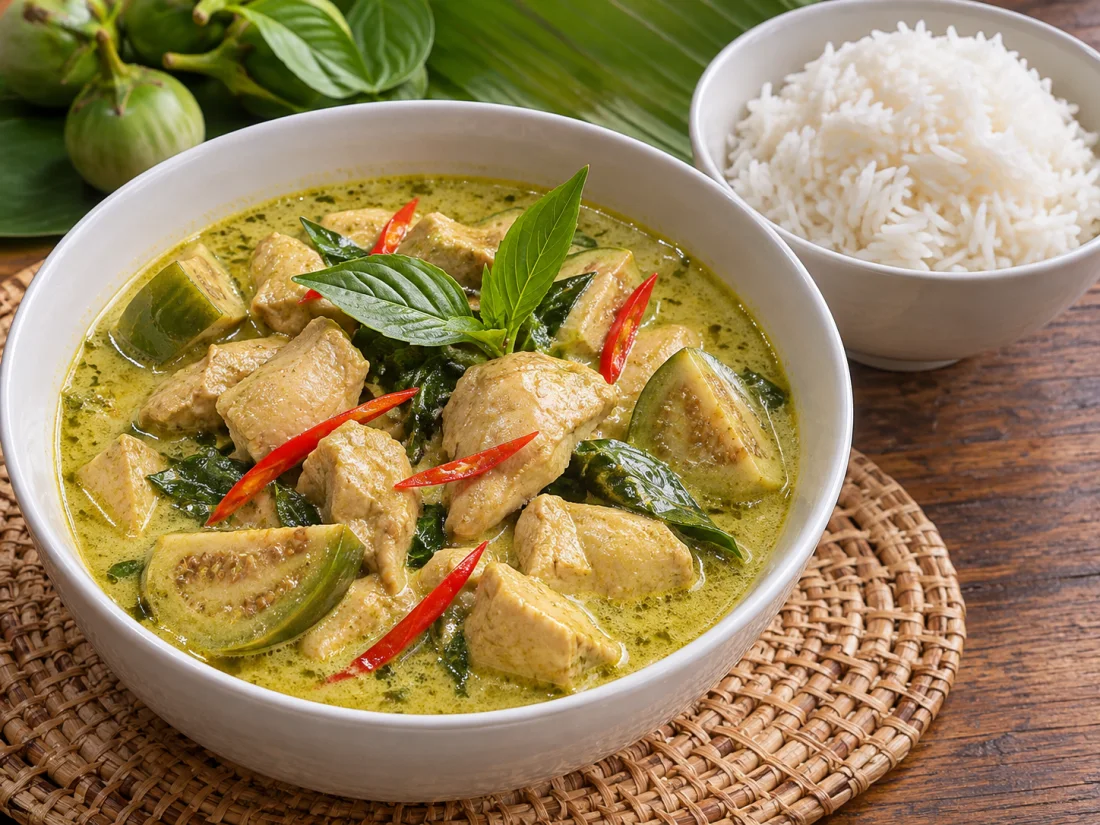

 chicken
Where does Thai green curry with chicken come from?
Green curry belongs to the coconut curries associated with central Thai cooking. The Thailand Foundation includes it in its introduction to central Thai cuisine. This regional association helps explain why it is served with steamed rice alongside other dishes. The sources describe a culinary tradition and do not establish a first cook, province or date for the chicken recipe.
A Thai menu gives you three clues in the name. Gaeng refers to the curry, keow wan identifies the green curry style, and gai means chicken. Despite the sweet element in the name, the paste contains chili and can be quite hot. Ask the restaurant about its own preparation if heat matters to you.
What goes into the bowl?
The foundation is green curry paste. Green chilies provide color and heat. Galangal, lemongrass, coriander root, shallots and garlic each add a different aroma. Grinding these ingredients together helps distribute them throughout the sauce. Coconut milk gives the sauce its body and softens the green color of the paste.
Chicken is the main meat, and pieces of eggplant provide a contrasting bite. As eggplant cooks, its interior softens and takes up some of the curry. Makrut lime leaves and sweet basil add a fresher fragrance. Fish sauce and palm sugar are examples of seasonings that give the rich sauce a savory and sweet balance. Red chili can appear as a garnish on a green curry.
How the curry develops its texture and aroma
One method in a Thai foreign ministry cookbook starts by heating coconut cream and frying the curry paste in it until fragrant. The paste disperses in the coconut fat before the cook adds chicken and the remaining coconut milk. The balance of coconut milk and paste, and how the sauce is simmered, can give one bowl a coating consistency and another a thinner one.
The eggplant cooks in the curry. In the example recipe, makrut lime leaves and sweet basil are added near the end. This makes room for aromas from two stages, the cooked paste in the sauce and the leaves added for a fresher finish. The eggplant variety, the amount of paste and the timing of those additions all affect the result.
What does green curry taste like, and how is it eaten?
Coconut and sweet basil are often noticeable first, followed by a savory taste, a little sweetness and the heat of the chilies. A silky sauce can still be very spicy if the paste is strong. The thickness of the sauce and the amount of chili change independently, so appearance gives limited clues about the intensity.
Try a little sauce over steamed jasmine rice, then take a bite of chicken with eggplant to taste the contrast. The rice carries the curry without extra seasoning. Large makrut lime leaves are used for fragrance and can be set aside if you prefer. Tender sweet basil leaves are usually eaten with the curry. Another documented pairing is khanom chin, soft rice noodles served with green curry ladled over them.
Green curry, red curry and different versions
Green curry paste takes much of its color from green chilies. Red curry uses a different paste with a different aromatic profile. A pale green curry, a dark green curry and one garnished with red chilies can all be hot. For a milder choice, ask how the restaurant seasons its curry rather than relying on the color.
Thailand's Department of Agricultural Extension describes pork and beef options alongside the chicken version. The Thai SELECT cookbook also includes a shrimp version, where coconut milk, eggplant and sweet basil remain part of the dish. Changing the main protein changes the texture and flavor of the bowl. The kitchen may still use the same base paste or seasoning.
How widely is this curry recognized?
Thailand's Department of Cultural Promotion records green curry in the national intangible cultural heritage register in 2012. The agricultural extension department features green curry with chicken in its Thai food collection. Cookbooks intended for international audiences give recipes for both chicken and shrimp versions. On an English-language menu, Thai green curry can therefore appear with a second label identifying the protein.
Those examples explain its visibility as a representative Thai curry. They do not measure sales volumes or rank its popularity against other dishes. Depending on the menu, a restaurant may serve the curry as a separate bowl to eat with rice, as part of an individual meal or for a table to share.
Allergens and questions to ask before ordering
A chicken curry can include fish from fish sauce and crustaceans from shrimp paste in the curry paste. Ask about both the sauce and the ingredients of any prepared paste. If the kitchen adds other sauces, ask about the actual products used, especially if you need to avoid soy or wheat. Coconut milk is made from coconut. Tell the restaurant if coconut is an allergen for you.
Changing the protein or asking the kitchen to leave out a shrimp topping does not remove shrimp paste already incorporated into the seasoning. If you have a food allergy, say what you need to avoid before ordering and ask about pots, ladles, mortars and containers that might be shared with other dishes. The curry's taste, color and main protein cannot tell you whether cross-contact occurred.
If you have a food allergy, tell the restaurant before ordering and ask about ingredients, sauces and shared cooking equipment.