

 chicken
 fermented fish sauce
Isan chicken om and the same name in the north
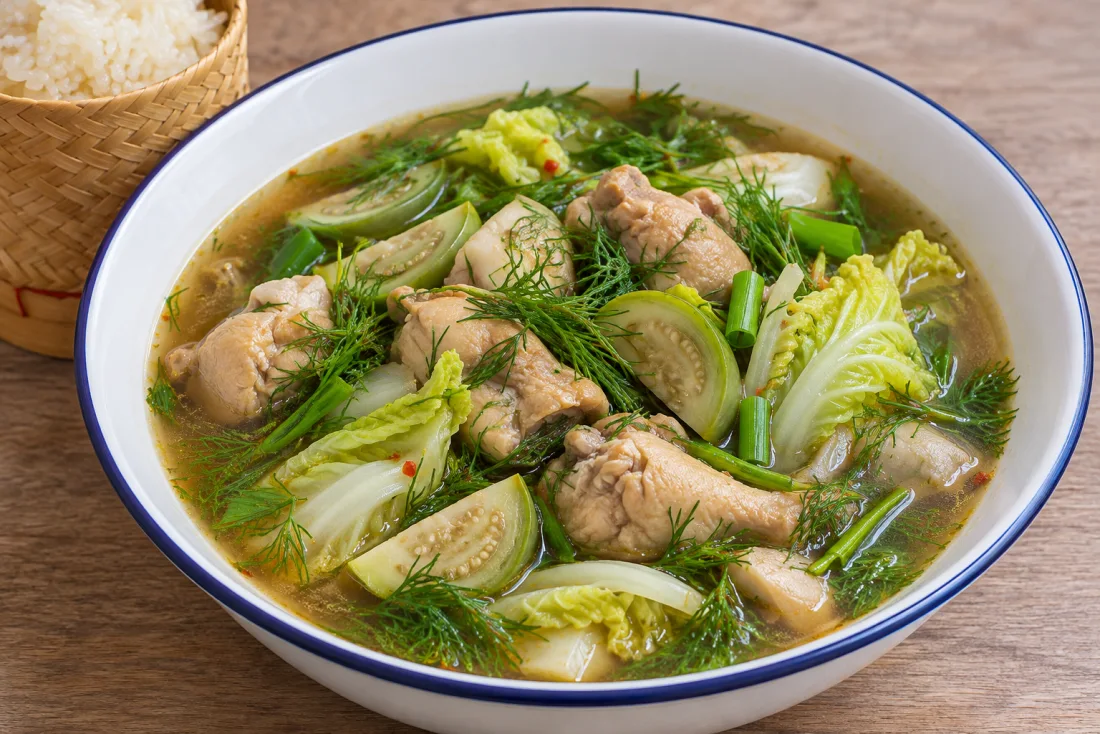
Gai means chicken. In Isan, gaeng om is a stew with relatively little liquid, plenty of herbs and vegetables. Thai cooks document a version with bone-in village chicken and other om dishes with fish or beef. This entry describes the northeastern style, with its vegetables and the recognizable aroma of dill.
Northern Lanna cuisine also has a dish called gaeng om gai. Some northern recipes fry the curry paste and meat before adding water, with different herbs and other ingredients. Ask if a restaurant makes the Isan version and what vegetables and herbs go into it.
Chicken, pounded aromatics and vegetables
One Isan version cooks bone-in chicken pieces until tender to flavor the broth. Chilli, lemongrass and shallots can be pounded and simmered before the chicken goes in. Cooked fermented fish seasoning and fish sauce can give saltiness and savor.
Dill, scallions and lemon basil can go in toward the end. Some recipes include leafy greens such as choy sum, while others add round Thai eggplant or bitter melon shoots. A paste of soaked ground rice can thicken the stew slightly. Vegetables vary by season and availability.
Dill, fermented fish and chicken broth
Fresh herbs are apparent first, with distinctive dill and the fragrance of lemon basil. Chicken gives the liquid savor, and fermented fish adds a salty, fermented note. Chilli brings warmth according to the variety and amount used. Lemongrass and shallot contribute to the aroma under the fresh herbs.
Chicken cooked on the bone can have a firmer bite, alongside softer leaves. Ground rice can make the broth cling to meat and greens. Even without the look of coconut milk, the broth can taste strongly of herbs and fermented fish. Try a little broth by itself before adding rice.
A shared bowl with rice
Serve the stew at an Isan table with steamed or sticky rice and ladle it into small bowls. Some people drink the broth and then pick up the chicken and vegetables. Rice can take up a little of the liquid. A shallow bowl can hold plenty of vegetables and several pieces of chicken.
Dill and lemon basil give the meat a fresh herbal taste alongside a grilled dish, meat salad or fresh vegetables. Move bone-in pieces to a small plate to eat, and leave tough pieces of lemongrass as needed. Ask what cuts are included if you prefer more meat or fewer bones.
Telling it apart from coconut curry and other stews
The referenced Isan om uses water, pounded aromatics and greens where green chicken curry uses coconut milk. A green color may come from vegetables and herbs. Isan om also comes with beef or fish, which can appear in the name.
Some pots are clear and others slightly thickened with rice and vegetables. Amounts of vegetables, chilli and fermented fish differ. If you encounter a northern version or a modern restaurant serving the broth with dumplings, ask whether chicken pieces and leafy greens are still the main ingredients.
Fish allergens and the broth ingredients
Fish sauce and fermented fish seasoning usually contain fish. A prepared sauce or shrimp paste can introduce crustaceans, soy or wheat, depending on its ingredients. Chicken in the name does not establish whether the bowl is suitable for a fish allergy. Removing condiments from the table leaves the ingredients already in the broth.
Tell the kitchen what you need to avoid and ask about the broth, pounding equipment, pots and ladles. Batch cooking can affect whether the kitchen can prepare an individual portion separately. If the broth is thickened, ask whether it uses ground rice or a blended starch.
If you have a food allergy, tell the restaurant before ordering and ask about ingredients, sauces and shared cooking equipment.